Laboratory products
Published over 4 years ago. See the latest and most current information on Laboratory products.
From traces of solvents on glassware to the accidental release of airborne viruses, contamination is a major risk in laboratories. While it’s not possible to completely eliminate contamination sources, steps can be taken to reduce the risks.
So, what happens when laboratories are contaminated? Below we take a look out some of the consequences of contamination in the laboratory, and how to avoid these worst-case scenarios.
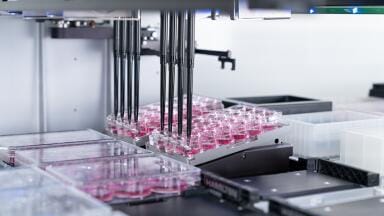
Most laboratories exist to establish scientific facts and unlock new information. This is done through observation, analysis, testing and experimentation. Contamination can compromise the integrity of results and the credibility of the laboratory. This is why it’s so important to establish clear and easy-to-follow cleaning and sanitation protocols in the laboratory. Automated technologies have also emerged as a smart way for laboratories to reduce the contamination risks associated with manual sample handling.
Repeatability forms the backbone of most scientific experiments. If an experiment isn’t repeatable, it’s not considered valid in the scientific community. Strict cleaning protocols ensure all laboratory equipment, surfaces and supplies are contaminant-free. This minimises the risk of cross-contamination and ensures all experiments are repeatable.
Supplies are one of the biggest overhead costs laboratories must absorb. As mentioned above, contamination instantly compromises results. This means data can’t be considered valid. For laboratories using expensive supplies like okadaic acid to analyse cellular processes, the costs of repeating the experiment can be high.
It’s not just physical supplies that are wasted. Unnecessarily repeating experiments has an environmental cost. Laboratories not only produce extra waste but use additional electricity. In the face of climate change, this is an issue the scientific community takes seriously. Thermo Fisher Scientific Inc is spearheading the movement to embrace renewable energy and slash the industry’s carbon footprint. Over the next eight years the company will source 400,000 megawatt hours (MWh) of electricity from a sustainable wind power plant in Oklahoma.
“By sourcing electricity from new wind and solar facilities we can help our customers meet their Scope 3 greenhouse gas reduction targets," says Konrad Bauer, SVP Global Business Services at Thermo Fisher. “This project will more than double our use of renewable energy and, combined with our $20 million investment in green infrastructure earlier this year, supports our commitment to a net-zero value chain by 2050.”
Compromised results aren’t the only risk associated with contamination in the laboratory. Free-roaming pathogens can also put the health and safety of staff at risk. This is especially true in labs handling infectious viruses, such as SARS-CoV-2 and HIV-1.
Good hygiene can also help prevent the spread of common ailments like influenza and the common cold. Simple handwashing protocols and easy access to washbasins are an effective way to minimise the risk of human-to-human infection in laboratories.
Want to know more about how laboratories keep equipment clean and contaminant free? We cover best-practice cleaning protocols for glassware, hot plates and more in ‘Laboratory Hygiene - A Comprehensive Guide’
ILM 51.6 Sept 2026


 Product directory