Laboratory products
Published over 12 years ago. See the latest and most current information on Laboratory products.
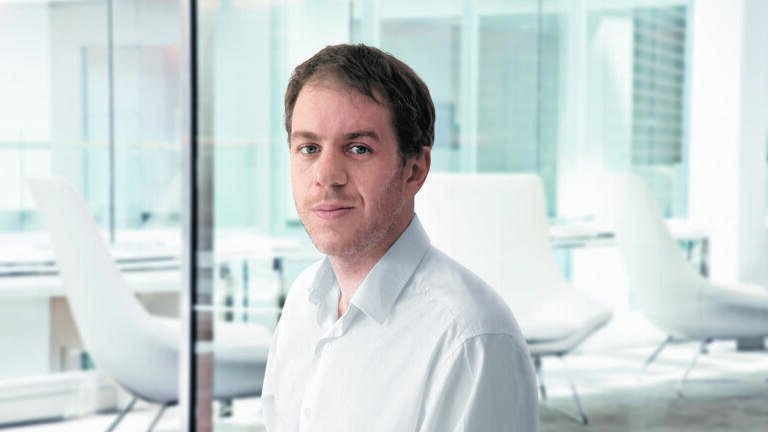
The British scientist Ben Lehner, PhD, ICREA Research Professor, EMBL-CRG Systems Biology Unit at the Centre de Regulació Genòmica, in Barcelona, Spain, has won the 2013 Eppendorf Young Investigator Award.
Lehner, born 1978, receives the Eppendorf Award for his discoveries concerning the fundamental question why mutations in the genome result in variable phenotypes. His work has contributed to the understanding how the function of genes is modulated during development by environmental factors and by the interplay with other gene products. The results obtained by Lehner are ground-breaking and offer novel approaches towards the understanding of genetic predispositions for diseases, particularly cancer. The insights obtained by his work are likely to lead to the development of novel therapeutic strategies.
With the €15,000 Eppendorf Young Investigator Award which was established in 1995, Eppendorf AG honors outstanding work in biomedical research and supports young scientists in Europe up to the age of 35. The Eppendorf Award is presented in partnership with the scientific journal Nature.
The Award winner is selected by an independent committee composed of Professor Reinhard Jahn (Chair), Professor Hans Clevers, Professor Dieter Häussinger, Professor Maria Leptin and Professor Martin J. Lohse.
The official Award ceremony took place at the EMBL Advanced Training Centre in Heidelberg, Germany, on 6 June 2013. Dr Axel Jahns (Vice President Global e-Business & Marketing Support of Eppendorf AG) and Professor Matthias Hentze (Associate Director EMBL) welcomed the audience from the scientific community, related industry and the press. The laudatio honouring Ben Lehner’s achievements was held by Professor Reinhard Jahn (Director of the Max Planck Institute for Biophysical Chemistry in Göttingen, Germany).
“Individual patients do not want to know the possible outcomes of mutations that they carry; they want to know what will actually happen to them. We use model organisms (yeast, worms and tumours) to understand when you can, and why you often cannot, accurately predict the characteristics of individuals from their genome sequences alone”, explained Lehner. “This Award is a testament to the commitment and energy of the past and present members of my laboratory and to our colleagues and collaborators in Barcelona and around the world. Individuals are thankfully all different. One of the main goals of our research is to understand where these differences arise and how they can be predicted”.
ILM Guide 2026/27



.jpg)
 Product directory