Laboratory products
Published over 16 years ago. See the latest and most current information on Laboratory products.
For laboratories tasked with concentrating or drying samples in wide ranging sample formats, Genevac presents a new online movie that demonstrates the ease of use and excellent consistent results achievable using its EZ-2 Personal Solvent Evaporator.
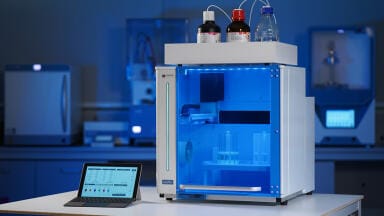
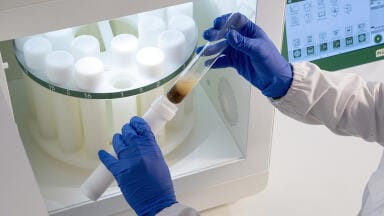
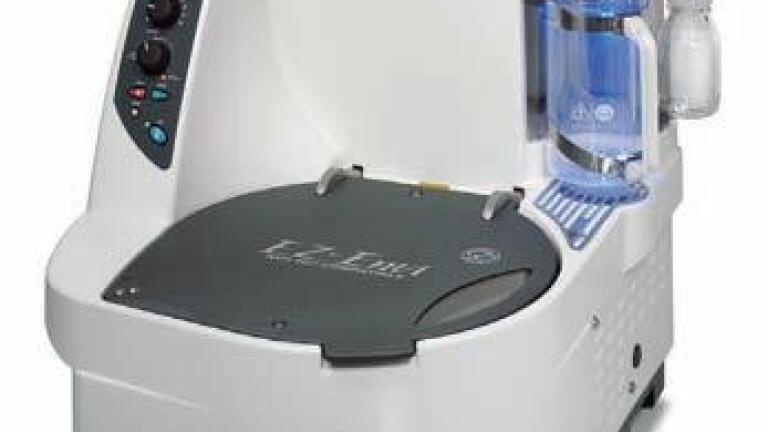
Using advanced evaporation science, the EZ-2 Personal Solvent Evaporator has been designed specifically for productive, sample-safe solvent removal, be that concentration of samples, or complete drying. Genevac’s long experience in vacuum engineering has resulted in the creation of a compact sample evaporator combining great performance, ease of use and compatibility with all commonly used solvents and acids.
Easily viewable via the Internet, the new movie provides an informative introduction to the science behind solvent evaporation technology. Following this the viewer is shown how the EZ-2 works.
To enable all users to achieve excellent results every time, the compact EZ-2 has been made easier to use than a conventional rotary evaporator. Capability to input up to 10 stored methods allows users to benefit from Genevac’s wealth of experience in developing optimised protocols for a wealth of applications. In addition to accommodating a wide range of sample formats it can operate entirely unattended. Simply set the temperature, select the solvent type, and press Start. The EZ-2 is fitted with an enhanced version of Genevac’s revolutionary SpeedTrap. This highly chemically resistant cold trap is designed to condense solvents, in order to protect the environment, and help to speed evaporation.
Incorporating state-of-the-art evaporation technology the EZ-2 is able to remove solvents in typically half the time of traditional evaporator designs. Requiring no peripherals for operation the compact EZ-2 fits neatly onto a laboratory bench or into a fume hood. All key components on the robust and reliable system are user serviceable ensuring low cost of ownership.
ILM 51.6 Sept 2026



 Product directory