Acoustic pipetting techniques continue to gain popularity for their ability to accurately transfer small volumes of liquid with zero possibility of contamination. With the development of a 1536 well COC microplate for acoustic liquid handling Greiner Bio-One GmbH initiated the high-throughput of this technique.
In acoustic pipetting, compound solutions are transferred in the nanolitre to picolitre range from a starting plate into a target plate by means of ultrasound. Besides polypropylene, which is the usual resin of choice for storage microplates, solvent resistant cycloolefins are now being used more routinely because of their enhanced manufacturing characteristics.
Reduced evaporation and minimized edge effects are due to optimized geometry of the 1536 well cycloolefin plate, which was developed in collaboration with Novartis AG, Basel, Switzerland. The microplate features a continuous groove around the edges of the plate, in which a matching cycloolefin plate lid fits.
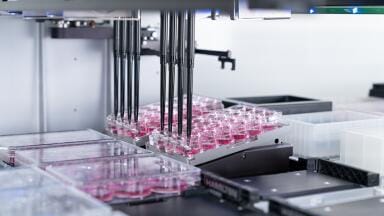
The new 1536 well microplate is designed for use in conjunction with automation systems for storage of compounds in the 1536 well format as well as applications where a microplate with improved evaporation properties is required.




 Product directory