Laboratory products
Published over 15 years ago. See the latest and most current information on Laboratory products.
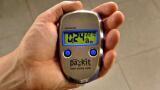
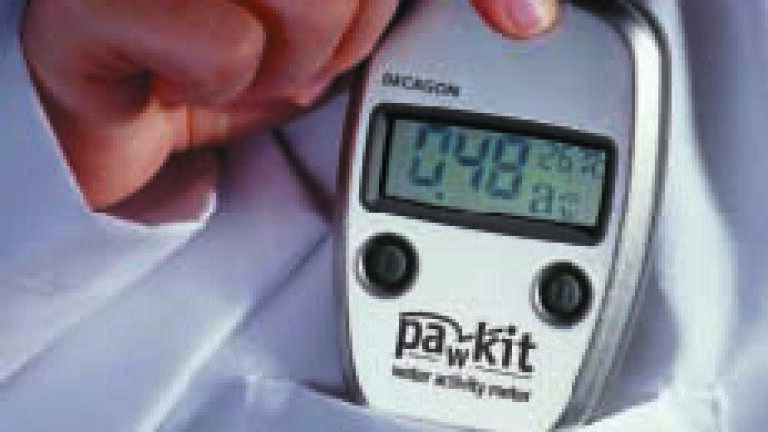
Scientists from the New Zealand Terrestrial Antarctic Biocomplexity Survey (nzTABS) project are using a Decagon Devices Pawkit portable water activity meter to study soil samples and gain a better understanding of biodiversity in the McMurdo Dry Valleys of Antarctica.
The nzTABS project, which is hosted by the International Centre for Terrestrial Antarctic Research (ICTAR) at the University of Waikato, New Zealand, is investigating biodiversity in one of the world’s coldest and driest habitats by combining soil water activity data with the results from molecular genetic and geochemical analyses. Doug McCauley and Dr Charles Lee, both of the University of Waikato, have used the Pawkit for three successive field seasons, finding it a very simple and effective way to obtain water activity (aw) measurements immediately after soil samples have been collected. The instrument’s robustness, ease of calibration and simple operation make it a straightforward task to collect reliable aw readings that are accurate to +/-0.02aw.
Using the battery-powered, pocket -sized Pawkit is very easy: the user simply has to open the clamshell case, place the sample dish inside and press a button. Readings are obtained in just five minutes from samples of solid, liquid or powdered material, with an accuracy of +/-0.02 aw and a resolution of 0.01 aw over the instrument’s measurement range of 0 to 1.00 aw. A large, clear LCD display shows both the water activity value and the temperature at which the measurement was taken. Despite its small size, the Pawkit is a highly capable instrument thanks to the use of dielectric humidity sensor technology. The robust sensor permits operation in environmental conditions of 5-50 degrees C and 0-90% relative humidity, and it is easy to check the calibration at any time. Battery life is typically three years.
ILM 51.6 Sept 2026



 Product directory