Laboratory products
Published over 16 years ago. See the latest and most current information on Laboratory products.
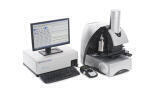
Waxy semisolids, today the formulation vehicle for many pharmaceutical and personal care products, present a considerable challenge when it comes to particle size analysis, primarily because they are not liquid at ambient temperature. By taking a new approach to particle sizing for these materials using the Mastersizer 2000 system from Malvern Instruments, researchers at Unilever are now confident in their ability to make reliable measurements that are feeding back into improved product development, manufacturing and quality control.
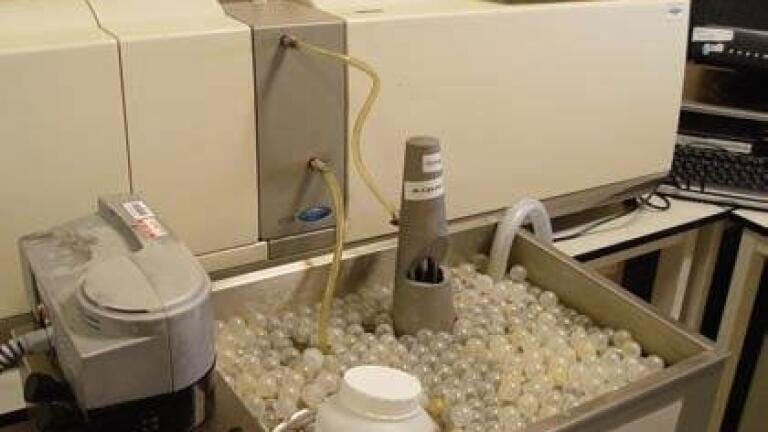
“Particle size is a critical parameter that influences the quality and performance of many of our products,” said Mark Flanagan, Process Chemist at Unilever, “but measuring materials that are not liquid at room temperature has posed considerable problems. Our solution has been to place the Hydro 2000SM small volume sample dispersion unit for the Mastersizer 2000 in a high temperature waterbath. We have been fully
supported in this by Malvern’s applications teams, who have helped to overcome the technical challenges involved. The result is that we can now achieve hot dispersion of semisolid samples, and generate truly reliable particle size measurements.”
This new and highly successful approach to particle size measurement in semisolids is significant for Unilever since it provides the company’s formulators and QC specialists with a tool for improved understanding and control of their products, and one that will also inform product development. The Mastersizer 2000 has become the laser diffraction system of choice in many industries thanks to its rapid measurement capabilities, accurate and reproducible analysis, broad measurement range and the flexibility to measure many different sample types. It is especially sensitive to changes in coarse particle fraction and is therefore an excellent tool for studying the sample instability that results from, for example, agglomeration, creaming or sedimentation.
ILM 51.6 Sept 2026



 Product directory