Laboratory products
Published over 10 years ago. See the latest and most current information on Laboratory products.
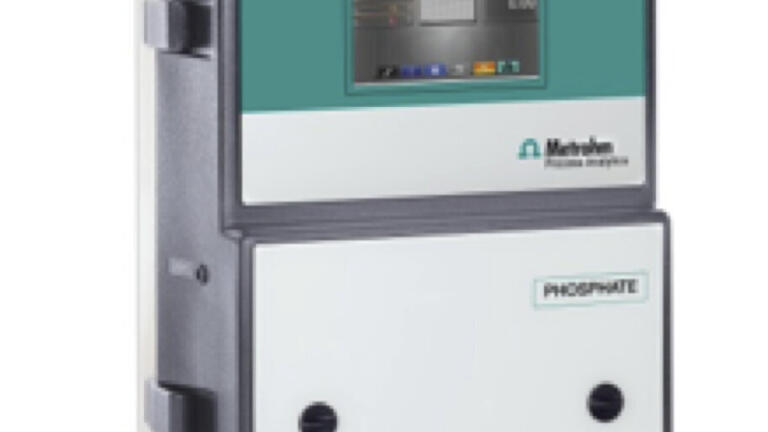
Metrohm Process Analytics is pleased to present a solution for the online monitoring of chromate (hexavalent chromium) in industrial wastewater streams. This turn-key solution uses photometric determination and is performed on the ICON Analyser, a dedicated online photometer for water and wastewater analysis.
Chromate is useful in many industries – in the production of pigments and dyes for textiles, paints and coloured glass, anodised or plated onto metals for surface finishing applications, as an oxidising agent to tan and process leather, and as a corrosion inhibitor in industrial cooling towers.
Chromate easily leaches from soil to ground and surface waters and can enter the air through evaporation and combustion processes. Monitoring waste streams containing chromate is extremely important because chromate is highly toxic even in minute concentrations; a property which is enhanced by the high solubility of chromate and its affinity for leaching.
In the method concerned, the target analyte is mixed with reagents in a fully automated procedure, resulting in a soluble product which can be measured photometrically at a wavelength of 560 nm.
ILM 51.6 Sept 2026




 Product directory