Laboratory products
Published over 12 years ago. See the latest and most current information on Laboratory products.
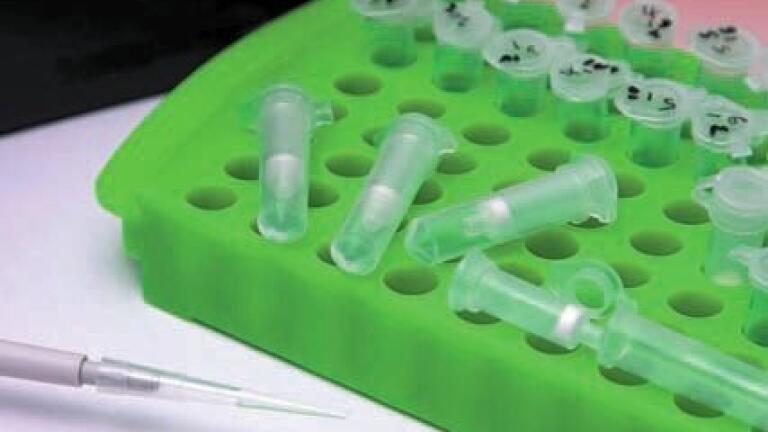
Porvair Sciences reports on positive commentary by researchers in published papers citing how using the fast, sensitive ChromaTrap™ Chromatin Immunoprecipitation (ChIP) technology has benefited their research.
In a paper by C.R Williams et al (Am J Physiol Cell Physiol 303: C213–C223, 2012) - Chromatrap was used to assess the occupation of NFkB p65 onto the Nox4 promoter in human aortic endothelial cells which had been treated with normal and high glucose. ChIP data using Chromatrap pro A spin columns demonstrated that in high glucose concentrations NfkB binding to the Nox4 promoter was increased when compared to normal glucose concentrations and rosiglitazone attenuated NfkB binding to the promoter. Their findings illustrated that NFkB/p65-Nox4 axis as an important target of rosigliatzone in vascular endothelial cells following hyperglycemia.
In a paper by C.Sullivan et al (PLOS ONE, Dec 2012, 7 (12), pp 7-13) Chromatrap was used to look at the association of FOXM1 transcription factor onto the CDC25A gene in a human (U205) osteosarcoma cell line and a CWR22rv prostate cancer cell line. Binding activity of FOXM1 onto CDC25A was assessed using Chromatrap Pro A columns which showed a significant enrichment of FOXM1 onto the CDC25A gene when compared to negative IgG in both cell lines. The study supports the hypothesis and reports a novel mechanism by which CDC25A is a direct target gene of the FOXM1 transcription factor. Both papers make use of the higher speed of the Chromatrap ChIP protocol, the ease of use of a solid-state assay and the excellent DNA pull down and high signal to noise ratio driven by the kit’s very low non-specific binding.
Chromatrap® solid-state ChIP technology has been shown in many projects to be more efficient than conventional bead-based methods. This is because the solid phase porous polymer, functionalised with either protein A or G, provides a greater surface area for chromatin antibody binding with very low non-specific binding. In addition, it uses a spin column approach, offering significant speed, process and carry-over advantages over sepharose or magnetic beads. DNA pull down with Chromatrap® is up to 25 times more than conventional methods, whilst the signal to noise ratio for DNA enrichment is 2 to 3 times better, even with low chromatin samples between 50ng to 3000ng per immunoprecipitation.
ILM 51.6 Sept 2026




 Product directory


















.jpg)