Laboratory products
Published over 5 years ago. See the latest and most current information on Laboratory products.
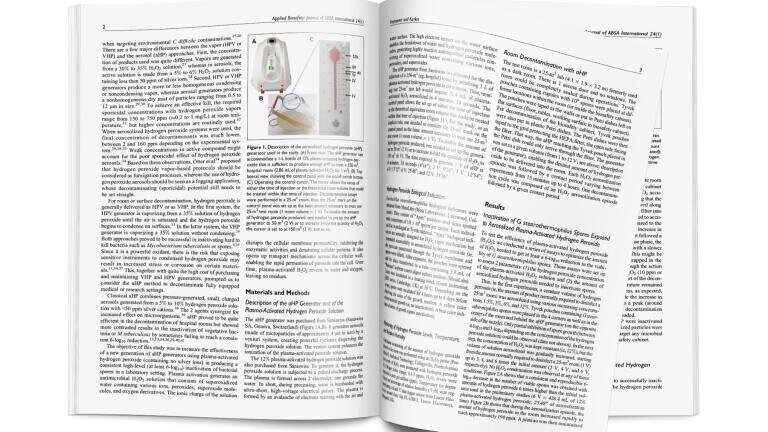
A study published in the Applied Biosafety Journal of ABSA International concluded that Saniswiss Ahp would probably become the method of choice for room and biosafety decontamination in the near future.
Formaldehyde, ethylene oxide and chloride dioxide are sometimes used for fumigation and although highly efficient and reliable are potentially harmful to users. At best they act as respiratory and mucosal irritant, while at worst they are highly toxic.
Hydrogen peroxide is also used for decontamination and is currently delivered as VHP (Vapourised Hydrogen Peroxide ) or HPV (Hydrogen Peroxide Vapour) normally at a 35% concentration which is delivered as a wet vapour and although effective at inactivating spores but, as a powerful oxidant, there is of course a risk of exposing sensitive instruments and electrical equipment to this high concentration which can cause corrosion and damage.
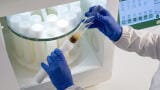
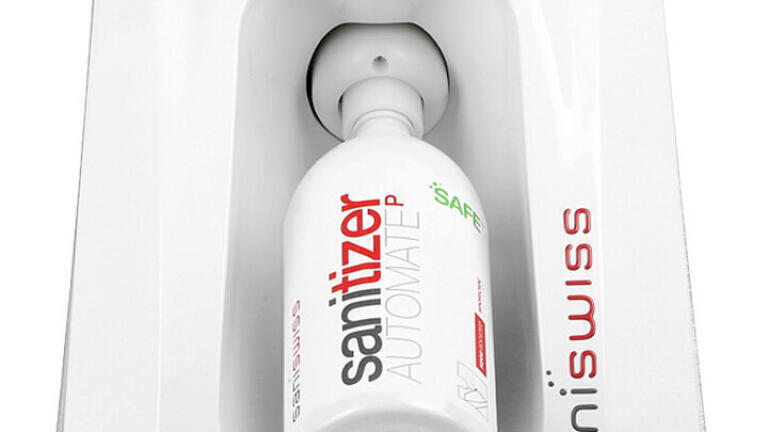
Saniswiss developed aHP - Aerosolised hydrogen peroxide - which proved a safer, more consistent and highly effective way to disinfect potentially contaminated areas. aHP is a 12% plasma boosted hydrogen peroxide which is delivered as a dry mist so avoids the problems associated with the high concentrations of hydrogen peroxide delivered as a wet vapour. The plasma boosted Hydrogen peroxide is subjected to a pulsated discharge process and contains no silver ions. This is generated by subjecting hydrogen peroxide to a pulsed discharge process and the plasma is formed by an avalanche of electrons reacting with the air and water surface.
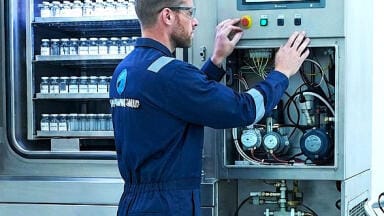
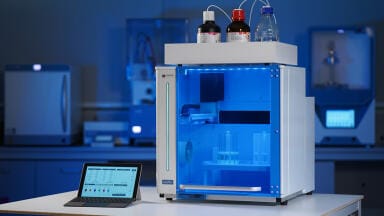
The Saniswiss Automate machine is much less costly than the HPV or VHP generators, it is quick to set up, environmentally friendly and because of the low concentration of hydrogen peroxide and it is well tolerated by standard laboratory equipment including electronics.
For more details, ask for a copy of the study published in Applied Biosafety Journal or arrange an on site demonstration.
ILM 51.6 Sept 2026



 Product directory


.jpg)









.jpg)