Laboratory products
Published over 15 years ago. See the latest and most current information on Laboratory products.
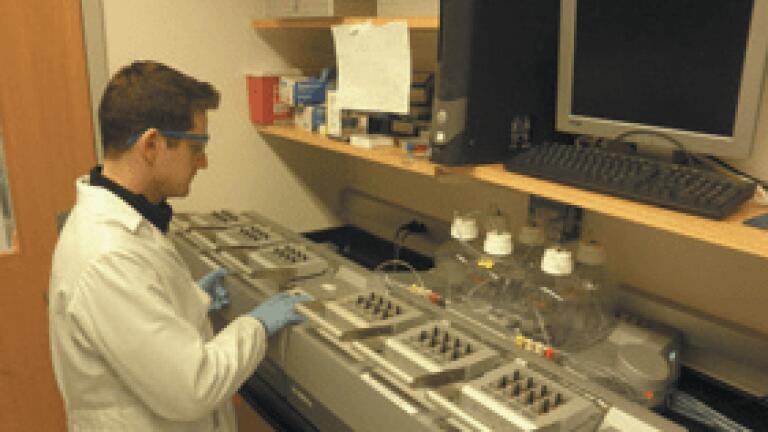
Dr Francisco Quintana from the Centre for Neurologic Diseases at the Brigham and Women’s Hospital, Harvard Medical School, Massachusetts, is using Tecan microarray solutions as part of a systems biology approach to studying the immune response in multiple sclerosis. The laboratory has developed antigen and reverse phase protein microarrays for a wide range of studies, as Dr Quintana explained: “We construct microarrays using proteins, peptides or lipids of interest, and hybridise these with samples from either MS patients or animal models of disease using a HS 4800™ Pro hybridisation station. The arrays are read with a PowerScanner™ and analysed with the help of Tecan’s software to identify potential biomarkers for MS, elucidate mechanisms of pathogenesis and ascertain which signaling pathways are activated in response to therapeutic interventions.”
“Automation was a major consideration when assessing microarray instruments as, although we were already performing a majority of these studies manually, automation reduces the ‘noise’ inherent in manually processed experiments. This helps to improve the quality of results and simplify data interpretation. Coupling the HS Pro with the walkaway operation provided by the PowerScanner gives us the capacity we need, without causing an excessive drain on resources,”
ILM 51.6 Sept 2026



 Product directory























.jpg)
