Laboratory products
Published over 7 years ago. See the latest and most current information on Laboratory products.
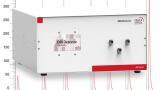
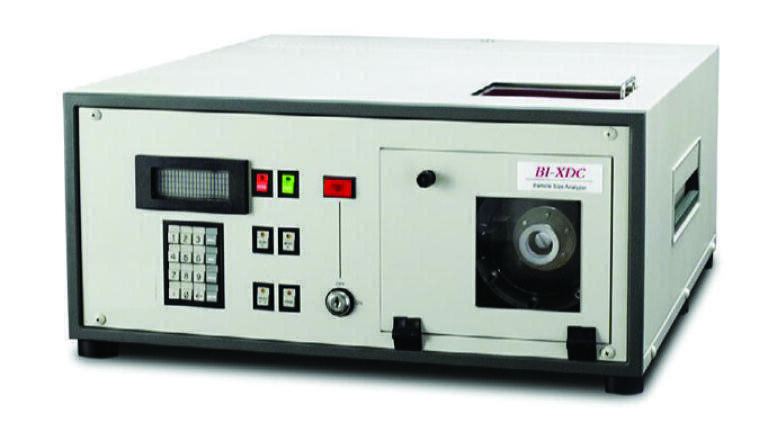
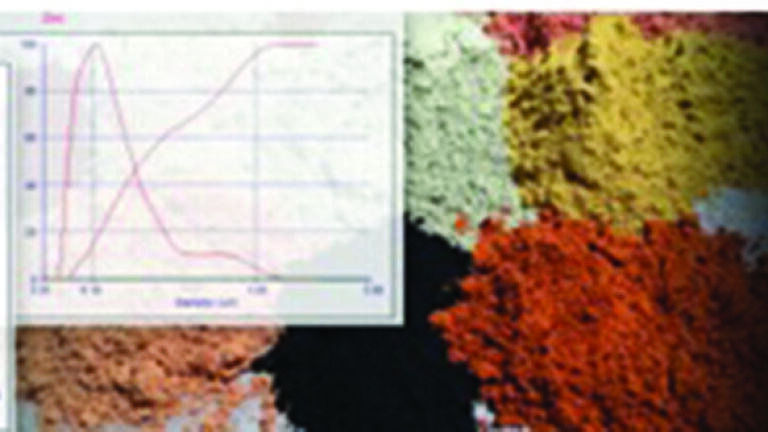
Testa Analytical Solutions eK reports that its BI-XDC X-Ray Disc Centrifuge is enabling scientists to make accurate, high resolution particle size distribution measurements, from nanometres to tens of micrometres, without time consuming calibration or absorption correction.
Based on the principle of photosedimentation, the BI-XDC measures the size of particles according to the time the particle takes to sediment in the detector according to Stokes law. Combining centrifugal and gravitational sedimentation in a single instrument the BI-XDC sets a new standard for these well-established methods of particle sizing.
Leveraging a highly reliable orthogonal method, the BI-XDC is proven to give error free quantitative measurements across a broad range of samples including nanoparticles, minerals, clays, ceramics and metal oxides.
Using the Bl-XDC there are no optical corrections and no optical properties to worry about, just a simple mass sensitive response based on x-ray absorption. The BI-XDC features a reproducible digitally controlled disk speed to ensure high performance and accuracy. The proprietary scanning x-ray head enables measurements to be made typically in just 8 minutes.
For further information please click here.
ILM 51.6 Sept 2026



 Product directory


.jpg)
.jpg)










.jpg)
.jpg)
.jpg)