.jpg)
Laboratory products
Published over 5 years ago. See the latest and most current information on Laboratory products.
Using a photochemical [2+2] cycloaddition, followed by a thermal electrocyclic cascade, researchers at the School of Chemistry, University of Bristol, have successfully prepared bicyclic lactams in high overall yield and excellent purity, under flow through conditions.
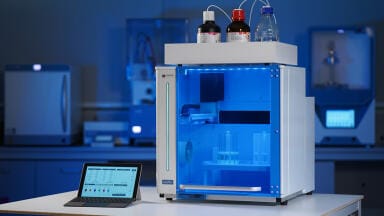
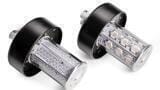
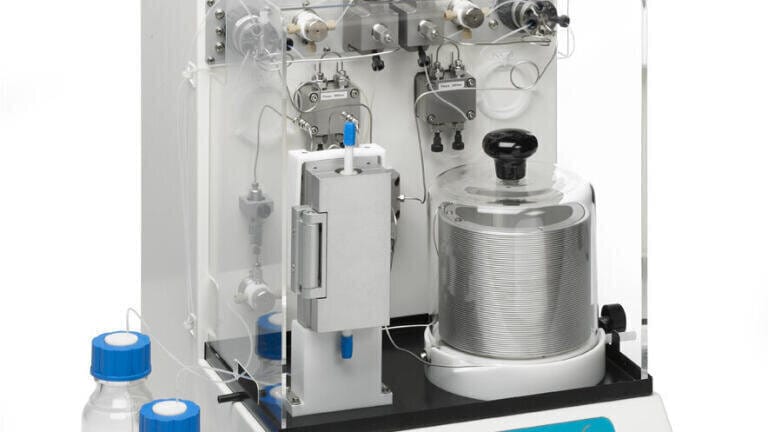
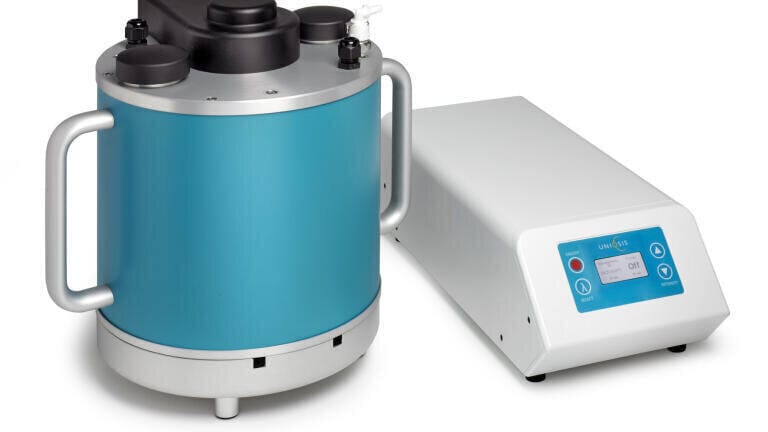
By moving the photochemistry, performed using Uniqsis’ PhotoSyn™ LED photoreactor, from ultraviolet (UV) to visible, the Bristol researchers were able to make their [2+2] ring closure much more energy-efficient. Integrating this with a FlowSyn™ Continuous Flow Reactor they were also able to apply automated high-temperature flow chemistry to the thermal cascade step facilitating safe and reliable scale-up with short reaction times.
Using this experimental set-up, the researchers were able to demonstrate a unique example of a photothermal daisy-chained process combining a visible-light-mediated photochemical initiation and a thermal cascade reaction as a fully continuous process yielding 20 grams/hour. This process was facilitated by the ability to employ acetonitrile as solvent at high temperature under pressurised conditions and the precise control of residence time and temperature in the flow reactor which enabled the isolation of a reactive diene intermediate on a scale and yield not achievable under batch conditions.
For further information on the research work undertaken by the University of Bristol please download application note 32
More information online
ILM 51.6 Sept 2026



 Product directory


.jpg)










.jpg)