Laboratory products
Published over 2 years ago. See the latest and most current information on Laboratory products.
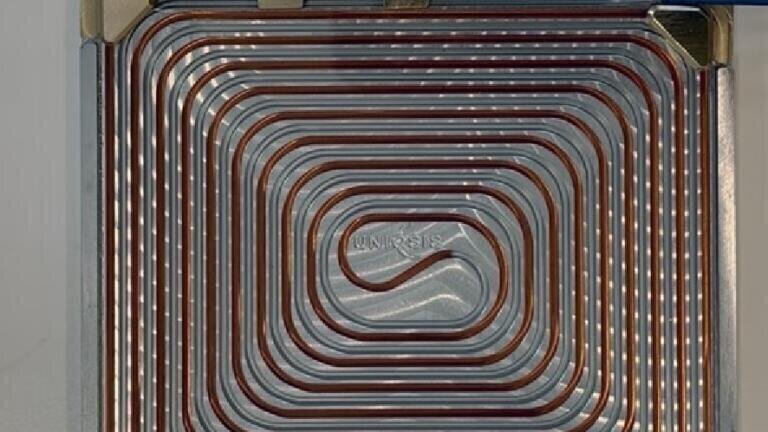
Uniqsis has unveiled a new Tube-in-Plate (TIP) reactor designed for synthetic chemistry experiments that require efficient heat transfer. This innovative TIP reactor offers a cost-effective alternative to traditional glass static mixer (GSM) reactor blocks, particularly for highly exothermic or rapid, mixing-dependent reactions.
While GSM reactor blocks are known for their ability to produce efficiently mixed reagent streams with excellent heat transfer due to their narrow internal channels and large surface area, they can be prone to blockages. To address these challenges, Uniqsis has developed the TIP reactor, which is ideal for applications where static mixing is not a priority. The TIP reactor features narrow bore perfluoro polymer tubing embedded in channels within an aluminium block, covered with a glass plate for temperature stabilisation and visibility. The glass cover and tubing are easily removable, allowing for quick replacement if blockages or contamination occur.
The TIP reactor has an internal volume of 9.5ml, making it suitable for both photochemistry and conventional thermally mediated reactions. This reactor provides a cost-effective solution for experiments where static mixing is less critical, and it is fully compatible with Uniqsis HotChip, ColdChip, PhotoChip, and Polar Bear Plus GSM reactor modules.
More information online
ILM 51.6 Sept 2026



 Product directory





















.jpg)
