Research news
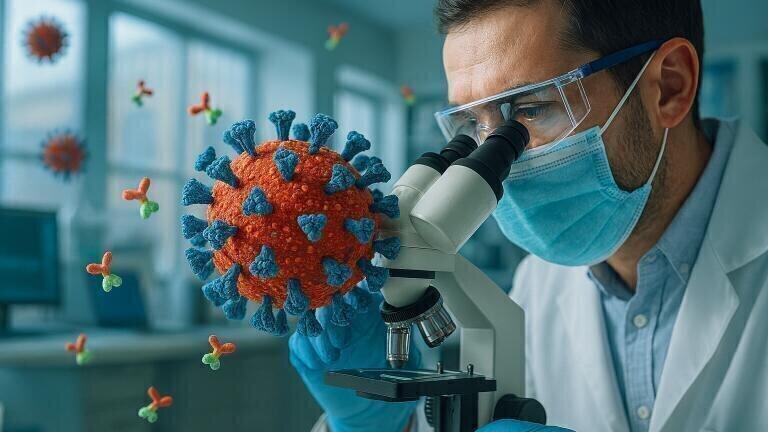
A team of researchers at the Nanoscience Initiative within the Advanced Science Research Center at the City University of New York Graduate Center (CUNY ASRC) has reported a significant development in the fight against viral diseases. The study has set out a path towards the creation of the world’s first broad-spectrum antiviral therapy – which could be deployed against a wide range of lethal viruses – including those that may cause future pandemics.
Unlike bacterial infections, which clinicians can often begin to treat immediately with broad-spectrum antibiotics while identifying the specific pathogen, viral infections are managed with antivirals that are narrowly targeted and effective against only a small group of related viruses.
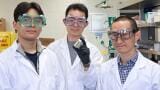
“This lack of treatments [for viruses] can leave populations vulnerable for years, while vaccines and therapeutics are developed,” said Professor Adam Braunschweig, principal investigator at the Nanoscience Initiative at CUNY ASRC and professor of chemistry and biochemistry at Hunter College, Park Avenue, New York.
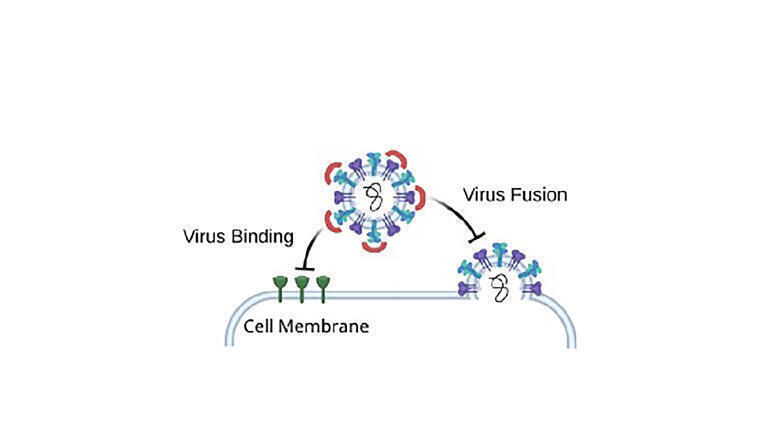
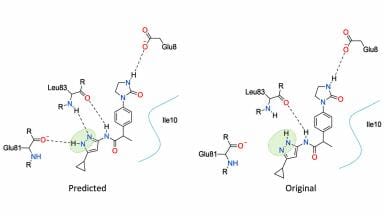
Braunschweig and his team addressed this challenge by focusing on a feature shared by many viruses – viral envelope glycans – which are sugar molecules structurally conserved across unrelated viral families. These molecules have until now remained an untapped target for antiviral drug development.
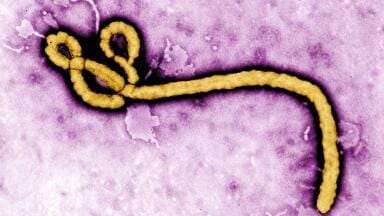
The researchers tested 57 synthetic carbohydrate receptors, small molecules designed to bind to viral glycans. They identified four lead compounds that blocked infection from seven viruses across five unrelated families, among them Ebola, Marburg, Nipah, Hendra, SARS-CoV-1 and SARS-CoV-2, more commonly known as the virus behind the COVID-19 pandemic of December 2019 to May 2023.
One of the lead compounds was used to treat mice infected with SARS-CoV-2. Ninety per cent of the treated mice survived, while none of the control group did so. Further analysis confirmed that the compounds acted by binding to viral envelope glycans, a novel mechanism with potential applications not only in infectious disease but also in cancer and immune disorders.
“This is the kind of antiviral tool the world urgently needs.
“If a novel virus emerges tomorrow, we currently have nothing to deploy. These compounds offer the potential to be that first line of defence,” said Braunschweig.
The next stage of the research will be to advance the most promising compounds towards clinical trials.
For further reading please visit: 10.1126/sciadv.ady3554
ILM 51.6 Sept 2026



 Product directory
















,-photo-Karin-Allander.jpg)







.jpg)
