Research news
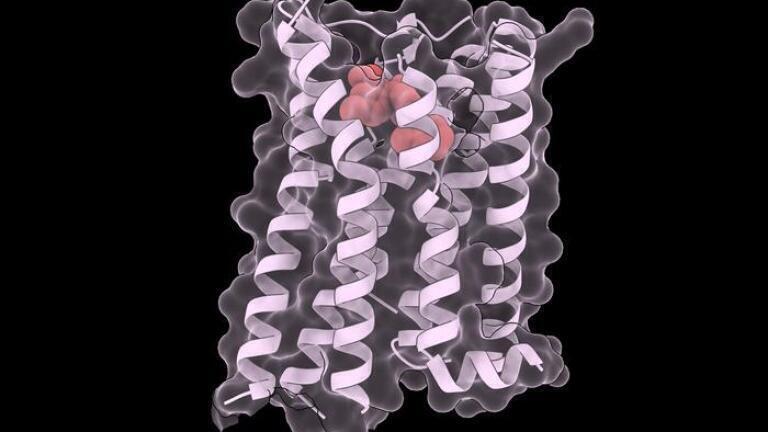
Researchers have shown that tolvaptan, an existing kidney medicine, can stabilise nearly all mutated variants of a critical human receptor linked to nephrogenic diabetes insipidus. The discovery provides the first evidence that a single drug can act as a near-universal molecular stabiliser, potentially transforming rare-disease drug development
A recent study has reported the first demonstration that an individual, already licensed drug can stabilise nearly all mutated versions of a human protein, regardless of where the mutation lies in its sequence.
Researchers engineered approximately seven thousand variants of the vasopressin V2 receptor (V2R), a G-protein-coupled receptor essential for normal kidney function, creating virtually every possible single-amino-acid substitution in the laboratory. Mutations in V2R prevent kidney cells from responding to the hormone vasopressin, which leads to an inability to concentrate urine. This results in excessive thirst and the production of large volumes of dilute urine – the hallmark of nephrogenic diabetes insipidus (NDI), or arginine vasopressin resistance – a rare disorder affecting roughly one in 25,000 people.
When the team focused on mutations known to occur in patients, they found that the oral drug tolvaptan – already approved for certain kidney conditions – restored receptor levels to near normal for 87 per cent of destabilised variants, including 60 of 69 known disease-causing mutations and 835 of 965 predicted disease-causing mutations.
“Inside the cell, V2R travels through a tightly managed traffic system. Mutations cause a jam, so V2R never reaches the surface. Tolvaptan steadies the receptor for long enough to allow the cell’s quality control system to wave it through,” said Dr Taylor Mighell, first author of the study and a postdoctoral researcher at the Centre for Genomic Regulation (CRG) in Barcelona.
The research group has previously shown that most disease-causing mutations alter a protein’s stability, making its structure less robust than normal. According to the authors, tolvaptan works regardless of mutation location because proteins naturally shift between folded and unfolded forms. Most V2R mutations increase the likelihood of the unfolded form. When tolvaptan binds to V2R, it favours the folded state, thereby counteracting this instability.
The study provides the first proof-of-principle that a drug can act as a ‘nearly universal’ pharmacological chaperone – a compound that binds to and stabilises a protein irrespective of mutation site. In this case, the effect was seen in nearly nine out of ten variants.
These findings could help address one of the major challenges in rare-disease medicine. A rare disease is defined as one affecting fewer than one in 2,000 people, yet collectively such conditions impact around 300 million individuals worldwide. Most are caused by mutations in DNA, and even when the same gene is implicated, patients can carry different mutations. This genetic heterogeneity makes drug development slow, fragmented and often commercially unviable. As a result, most available therapies aim to manage symptoms rather than to correct the underlying molecular defect.
Previous work has indicated that between 40 and 60 per cent of rare-disease mutations destabilise proteins. If further research confirms that the rescued V2R receptors function normally, this approach could redefine rare-disease drug discovery. Rather than designing treatments for each specific mutation, scientists could seek compounds that stabilise the entire protein structure.
V2R belongs to the human body’s largest receptor family, the G-protein-coupled receptors (GPCRs), which comprise around 800 genes and account for roughly one third of all approved drug targets. Many diseases, both rare and common, arise when GPCRs fail to fold or reach the cell surface correctly, even though their signalling mechanisms remain intact.
“If the behaviour we found holds for other members of the GPCR family, drug developers could forgo years of searching for bespoke therapeutic molecules and instead pursue general or universal pharmacological chaperones, greatly accelerating the drug development pipeline for many genetic diseases,” concluded ICREA Research Professor Ben Lehner, group leader at the Wellcome Sanger Institute in Hinxton and at the CRG in Barcelona.
For further reading please visit: 10.1038/s41594-025-01659-6
ILM 51.6 Sept 2026



 Product directory




















,-photo-Karin-Allander.jpg)








.jpg)
