Research news
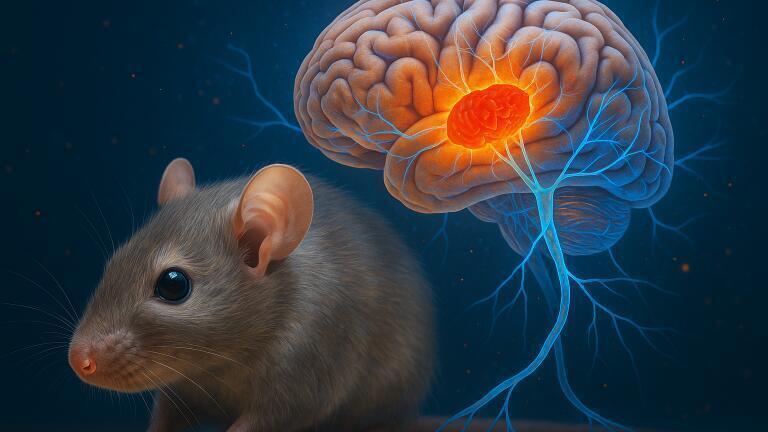
Scientists at Stanford Medicine, Stanford University, California, have reported that hyperactivity in a specific brain region may drive behaviours associated with autism spectrum disorder. Using a mouse model, the researchers identified the reticular thalamic nucleus – which regulates the flow of sensory information between the thalamus and cortex – as a potential therapeutic target.
They have shown that symptoms resembling those of autism: hypersensitivity to stimuli, increased motor activity, repetitive actions and reduced social interaction – and including the large proportion of autism patients who experience epilepsy – could be reversed by drugs that suppressed overactivity in this brain region. These drugs are under investigation as treatments for epilepsy, underlining the overlap between the neurological mechanisms of autism spectrum disorder and epilepsy and why both conditions occur in up to 30 per cent of the same individuals.
“The findings suggest that a hyperactive reticular thalamic nucleus could be a central driver of autism-related behaviours,” said Dr. John Huguenard, professor of neurology and neurological sciences at Stanford and senior author of the study. He added that drugs already in development for epilepsy may provide a route to treat autism spectrum disorder. The research was led by first author Dr. Sung-Soo Jang, a postdoctoral scholar at Stanford.
The team recorded neural activity in the reticular thalamic nucleus of genetically modified mice that lacked the Cntnap2 gene, a widely used model of autism. They observed heightened activity when the animals encountered sensory stimuli, such as light or a puff of air, as well as during social encounters with other animals. Bursts of spontaneous activity also triggered seizures.
To test potential interventions, the scientists administered Z944 – an experimental anti-seizure drug – and reported that it reversed behavioural deficits in the autism mouse model. They also used a chemogenetic approach called DREADD-based neuromodulation, which allowed neurons to be modified to respond to designer drugs. This method suppressed hyperactivity in the reticular thalamic nucleus and restored normal behaviour. By contrast, the researchers could induce autism-like behaviours in healthy mice by artificially increasing activity in the same brain region.
The study has highlighted the reticular thalamic nucleus as a novel target for future therapies for autism spectrum disorder.
For further reading please visit: 10.1126/sciadv.adw4682
ILM 51.6 Sept 2026



 Product directory


















,-photo-Karin-Allander.jpg)






.jpg)
