Research news
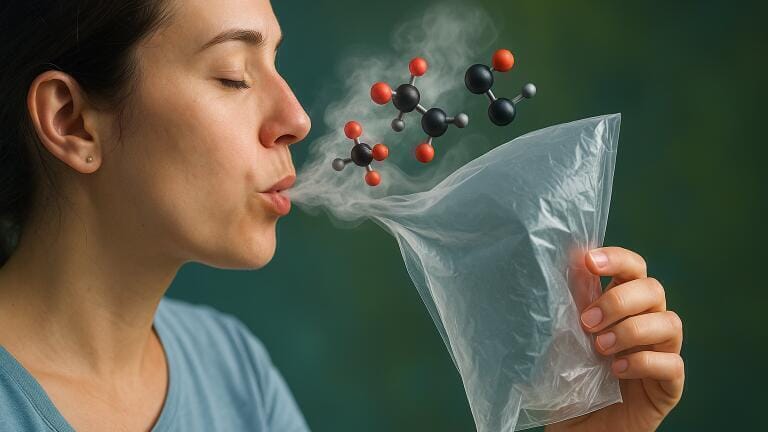
Current diagnostic approaches to diabetes usually require a visit to a doctor’s surgery or laboratory analysis, which can be costly and time-consuming. Researchers have now reported a novel sensor that can diagnose diabetes and prediabetes within minutes using only a breath sample.
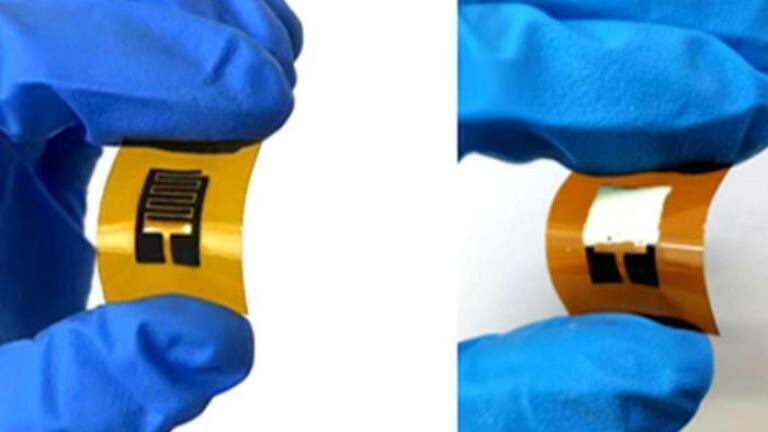
A team led by Dr. Huanyu ‘Larry’ Cheng, James L. Henderson Jr Memorial Associate Professor of Engineering Science and Mechanics at Pennsylvania State University, has developed the sensor. The device detects acetone levels in exhaled breath – acetone has been established as a biomarker for both type 1 and type 2 diabetes – and rises above a threshold of about 1.8 parts per million in people with the condition.
“While we have sensors that can detect glucose in sweat, these require us to induce sweat through exercise, chemicals or a sauna, which are not always practical or convenient,” said Cheng.
“This sensor only requires that you exhale into a bag, dip the sensor in and wait a few minutes for results.”
Earlier attempts to use breath analysis typically identified biomarkers that needed laboratory testing. The ability to detect acetone directly at the point of care makes this sensor both cost-effective and convenient.
The design relied on laser-induced graphene, a porous material created when a carbon dioxide laser burns carbon-containing substances such as polyimide film.
“This is similar to toasting bread to carbon black if toasted too long.
“By tuning the laser parameters such as power and speed, we can toast polyimide into few-layered, porous graphene form. ,” said Cheng.
The porosity of laser-induced graphene increases the likelihood of capturing gas molecules which the researchers combined with zinc oxide to achieve selectivity for acetone.
“A junction formed between these two materials that allowed for greater selective detection of acetone as opposed to other molecules,” said Cheng.
To address the problem of water vapour in exhaled breath – which can compete with acetone – the researchers added a selective membrane that blocked water while allowing acetone to pass through.
At present, users must breathe into a bag to minimise interference from airflow in the surrounding environment. The researchers now aim to adapt the device for direct use under the nose or within a face mask, exploiting the condensation of exhaled breath.
“If we could better understand how acetone levels in the breath change with diet and exercise, in the same way we see fluctuations in glucose levels depending on when and what a person eats, it would be a very exciting opportunity to use this for health applications beyond diagnosing diabetes,” said Cheng.
The research has received support from the United States National Institutes of Health and the United States National Science Foundation. Li Yang, who was a visiting scholar in the Department of Engineering Science and Mechanics at Pennsylvania State University during the study, was the first author. A full list of collaborators and funding sources is available in the published paper.
For further reading please visit: 10.1016/j.cej.2025.164857
ILM 51.6 Sept 2026



 Product directory



















,-photo-Karin-Allander.jpg)







.jpg)
