Research news
Researchers at Indiana University Bloomington have identified a chemical molecule that disables a bacterial immune system, allowing bacteriophages to overwhelm antibiotic-resistant pathogens
Antimicrobial resistance, in which bacteria and fungi protect themselves against drugs designed to eliminate them, remains an urgent threat to global public health, according to the US Centers for Disease Control and Prevention. As the effectiveness of antibiotics continues to be eroded, researchers have sought out alternative approaches that do not rely solely on antibiotics.
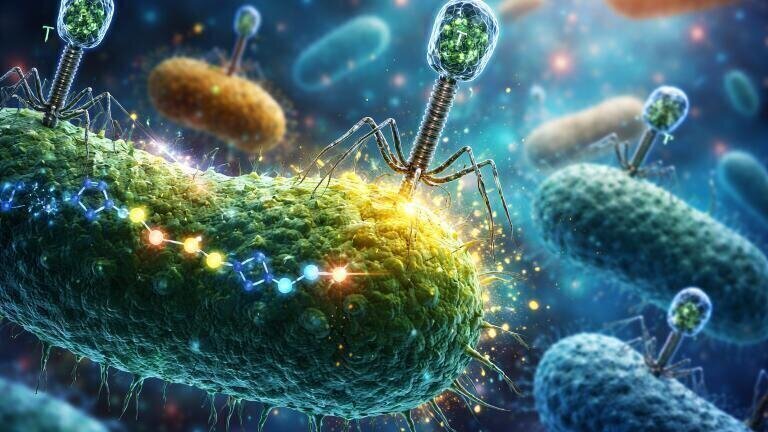
One such approach has focused on bacteriophages, viruses that can infect and kill bacteria. Unlike antibiotics, which often destroy beneficial microbes alongside harmful pathogens, bacteriophages can act with extreme specificity, targeting a single bacterial strain while leaving the surrounding microbiome intact. This precision has attracted interest not only in human medicine but also in agriculture, where antibiotic use has contributed substantially to the spread of resistance.
However, bacteria have not remained passive targets. Just as they have evolved resistance to antibiotics, many species have also developed immune systems capable of neutralising bacteriophages. Understanding and undermining these defence mechanisms against viral attack has therefore become a central challenge for phage-based therapies.
In the USA, at Gerdt Lab of Indiana University Bloomington, its team has examined how bacterial immune systems operate and how they might be inhibited. The group has now reported the discovery of a small chemical molecule that – when paired with a bacteriophage – allowed the virus to overcome bacterial immune defences.
“Bacteria get sick too,” said Dr. J. P. Gerdt, assistant professor of chemistry in the College of Arts and Sciences at Indiana University Bloomington.
“Our lab tries to understand how their immune systems work so we can figure out how to inhibit them,” he said.
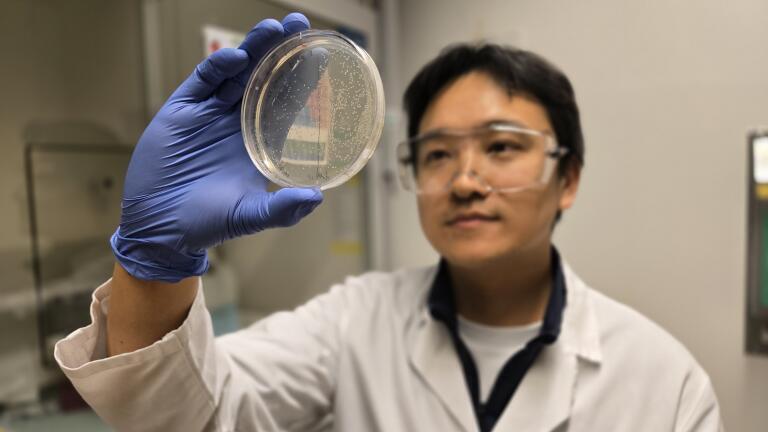
The discovery was made by Zhiyu Zang, a former member of the Gerdt Lab who is now a doctoral candidate at the Swiss Federal Institute of Technology, Lausanne, Switzerland. Zang identified a chemical inhibitor that disrupted a bacterial immune pathway, enabling the bacteriophage to replicate successfully inside the host cell.
The study described the first documented example of a small molecule that can suppress a bacterial immune system rather than killing the bacterium directly.
“Our study is important not just because we found the first example of a small molecule that can inhibit a bacterial immune system,” Zang said.
“It’s also important because the immune system we’re studying in this paper is present in around 2,000 different bacterial species,” he added.
The research team deliberately began with a bacterial species that was safe and straightforward for undergraduate researchers to handle. This decision allowed students to contribute directly to the discovery process.
Olivia Duncan, is the second author on the paper and worked in the Gerdt Lab as an undergraduate, collaborated closely with Zang to identify chemical molecules that interfered with the bacterium’s immune response. Duncan is now a doctoral student at Cornell University.
The presence of this immune system in thousands of bacterial species means the findings could have broad relevance. In particular, the work may inform strategies to target pathogens such as Pseudomonas aeruginosa and Staphylococcus aureus, which frequently show resistance to multiple antibiotics and are responsible for many hospital-acquired infections.
Although antibiotics are likely to remain the first line of defence against bacterial infections in humans, the researchers argued that immune-system inhibitors could complement existing treatments, particularly for infections that prove difficult to manage. The approach may also have significant value in agriculture, where reducing antibiotic use has become a priority.
Given the enormous diversity of bacterial species, the number of potential immune-system inhibitors may be equally vast. Gerdt has suggested that, within the next 10 to 15 years, his laboratory aims to assemble a library of chemical inhibitors tailored to different bacterial immune systems.
“Our goal is to have a collection of inhibitors that will work for different immune systems,” Gerdt said.
“We hope that this paper will be a catalyst for other labs to work on this with us as a community. That’s what makes this work exciting.
“We are starting something novel and seeing where it takes off,” he concluded.
For further reading please visit: 10.1016/j.chom.2026.01.003
ILM 51.6 Sept 2026




 Product directory




















,-photo-Karin-Allander.jpg)