Research news
Researchers have identified a dual therapeutic strategy that combined inhibition of a key SARS-CoV-2 viral enzyme with suppression of a host inflammatory pathway, with preclinical evidence that this approach reduced viral load and cytokine-driven pathology in infected mice
Severe acute respiratory syndrome coronavirus 2 (SARS-Cov-2) – the virus responsible for COVID-19 – has continued to circulate globally and remains capable of causing severe disease, particularly in older adults, the immunocompromised and those with underlying conditions. Vaccination has reduced mortality and hospitalisation in many countries, yet viral evolution has produced variants with partial resistance to existing immune protection. Antiviral drug resistance has also remained a recognised risk as direct acting antivirals have entered routine clinical use. There is therefore a clear need to expand therapeutic options, especially for patients who progress to severe inflammatory disease.
Several antiviral and immunomodulatory agents have demonstrated clinical benefit. Direct acting antivirals that target viral replication can reduce viral load and shorten disease duration when administered early enough. Corticosteroids and other immunosuppressive agents can improve outcomes in patients with hyperinflammatory responses.
However, all of these approaches have their limitations. Antivirals do not always prevent progression to severe disease, particularly if treatment is delayed. Immunosuppressive therapies can blunt protective immune responses when used too broadly. This tension has prompted interest in strategies that address both viral replication and host inflammation in a more targeted manner.
Host directed therapy has emerged as one such strategy. Rather than target viral proteins alone, this approach interferes with cellular pathways that viruses exploit for replication or that drive damaging immune responses. Because host targets mutate less readily than viral proteins, they may offer more durable benefit.
In the context of SARS-Cov-2, two targets have drawn particular attention: the viral papain like protease, known as PLpro, and the host kinase receptor interacting protein kinase 1, abbreviated as RIPK1. PLpro plays an essential role in viral replication. It processes viral polyproteins into functional units required for viral assembly and interferes with host antiviral signalling which dampens innate immune responses. These dual functions make PLpro an attractive, though comparatively underexplored, antiviral target.
RIPK1, by contrast, is a host factor implicated in inflammatory cell death and cytokine production. Previous studies have suggested that RIPK1 activity can amplify inflammatory cascades, including those associated with cytokine release syndromes. More recent evidence has indicated that RIPK1 may also enhance viral replication, which links viral burden and immune pathology. Despite this conceptual appeal, inhibitors of PLpro and RIPK1 have faced practical obstacles. Many candidate compounds have lacked sufficient potency, selectivity or pharmacokinetic properties to support progression into preclinical animal models. Although both targets have been studied independently, their combined therapeutic potential in vivo has not been explored in detail.
In a recent study, researchers identified potent and selective inhibitors of both PLpro and RIPK1 through high throughput screening. Large compound libraries were screened to detect molecules capable of inhibiting each target with high specificity. Subsequent optimisation improved activity and selectivity, which led to two lead compounds: SHY1643 targeting PLpro, and QY1892, which inhibits RIPK1.
Both compounds demonstrate favourable biochemical and cellular profiles. In vitro assays confirmed that SHY1643 inhibited PLpro mediated processing of viral proteins, while QY1892 suppressed RIPK1 signalling pathways associated with inflammatory cytokine production. Each compound exhibited selectivity for its intended target, reducing the risk of off target effects.
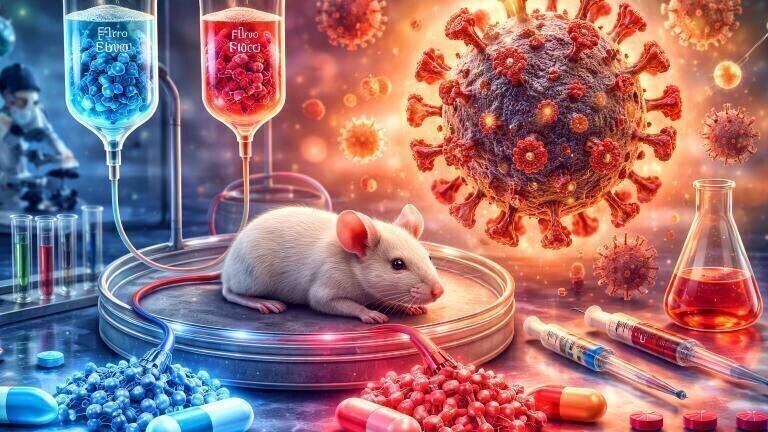
The most significant findings arose from in vivo experiments in a mouse model of infection. When administered individually, each compound reduced viral load and inflammatory markers to a measurable degree. When administered in combination, the effects were markedly enhanced. Combined treatment produced robust reductions in viral load within infected tissues and substantial attenuation of cytokine release syndromes associated with severe disease.
This apparent synergy suggested that simultaneous inhibition of viral replication and host inflammatory amplification may provide greater benefit than either approach alone. By lowering viral burden and tempering excessive immune activation, the combination addressed two central drivers of severe pathology. This dual mechanism contrasts with existing therapies that focus primarily on a single aspect of disease.
The findings remain confined to preclinical models and further work will be required before clinical translation. Safety assessment, dose optimisation and evaluation in additional animal models will be essential. Nevertheless, identification of SHY1643 and QY1892 provides a foundation for future drug development.
More broadly, the study highlights the potential value of integrated therapeutic strategies for complex viral diseases. As SARS-Cov-2 continues to evolve, treatments that combine antiviral activity with precise modulation of host responses may prove critical to reduce severe outcomes.
For further reading please visit: 10.1016/j.apsb.2025.09.026
ILM 51.6 Sept 2026




 Product directory




















,-photo-Karin-Allander.jpg)