Research news
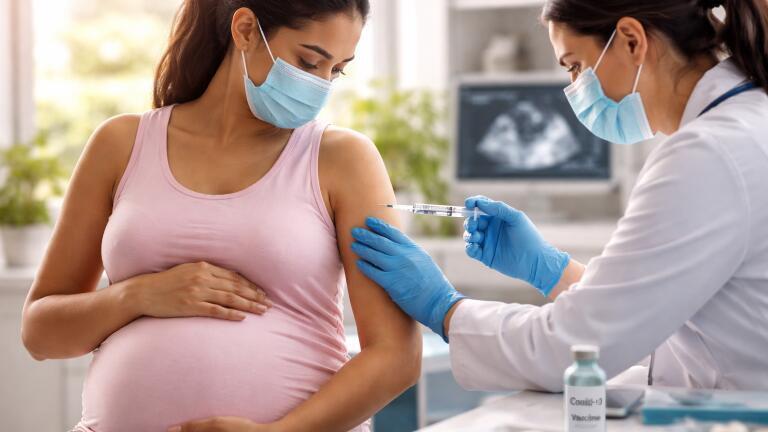
A multinational cohort study across 18 countries has reported that COVID-19 vaccination during pregnancy – particularly with a booster dose – has been associated with a substantially lower risk of preeclampsia, alongside reductions in preterm birth and other severe maternal and perinatal outcomes
A multinational study from the INTERCOVID Consortium has reported that COVID-19 vaccination during pregnancy has been associated with a lower risk of preeclampsia, a potentially life-threatening hypertensive disorder that remains a leading cause of maternal and neonatal illness and death, worldwide. The protective association appeared strongest among women who received a booster dose and it persisted after the researchers accounted for key potentially confounding clinical and demographic factors.
The analysis, which included investigators from the ‘Ann & Robert H. Lurie’ Children’s Hospital of Chicago, Illinois, USA and the University of Oxford, UK, drew on data from 6,527 pregnant women enrolled across 18 countries between 2020 and 2022.
Researchers compared outcomes among vaccinated and unvaccinated participants and considered infection status with severe acute respiratory syndrome coronavirus 2 (SARS-CoV-2), the virus that causes COVID-19, to test whether vaccination status related to preeclampsia risk independently of documented infection.
“Our results support the importance of strengthening COVID vaccination programmes during pregnancy, emphasising [uptake of] boosters and ensuring that pregnant people across the world have equitable access to the vaccine,” said Dr. Jagjit S. Teji, a neonatologist at Lurie Children’s and clinical assistant professor of paediatrics at Northwestern University Feinberg School of Medicine, Chicago.
“We offer evidence from the first large study suggesting that COVID vaccination may protect against one of the most serious pregnancy complications,” he said.
In the cohort, SARS-CoV-2 infection during pregnancy was with an overall 45 per cent higher risk of preeclampsia and that increased to 78 per cent among those unvaccinated.
By contrast, vaccination with a booster dose was associated with a 33 per cent reduction in the risk of preeclampsia, an effect described by the investigators as statistically significant.
The analysis has suggested that the association may matter most for women who entered pregnancy with established risk factors. Among women with pre-existing conditions such as diabetes, hypertension, or thyroid disorders, vaccination with a booster dose has associated with a 42 per cent reduction in the risk of preeclampsia, which the researchers also reported was statistically significant.
Beyond hypertensive disease, vaccination status has correlated with broader improvements in pregnancy outcomes. Vaccinated women experienced lower chance of preterm delivery as well as lower risk of maternal morbidity and mortality and severe perinatal morbidity and mortality.
Among women who received a booster dose, the protective association reached 33 per cent for preterm birth, 32 per cent for maternal morbidity and mortality and 29 per cent for severe perinatal morbidity and mortality, with all three results being reported as statistically significant.
“These results go beyond the known benefits of COVID-19 vaccination in pregnancy,” said Dr. José Villar, senior co-author and principal investigator of the INTERCOVID Consortium at the Nuffield Department of Women’s and Reproductive Health, University of Oxford.
“We now have evidence that maternal vaccination may influence pathways involved in preeclampsia development, suggesting a broader immunological or vascular benefit of vaccination,” he added.
Preeclampsia affects up to eight per cent of pregnancies worldwide, depending on population risk, healthcare access and diagnostic practice. Although its root causes are not completely understood, researchers have linked the condition to abnormal placental development, systemic inflammation and endothelial dysfunction. Those mechanisms have overlapped with pathways that clinicians have implicated in severe COVID-19 which therefore strengthened interest in how vaccination might alter inflammatory or vascular responses during pregnancy.
The authors argue that their findings supported the hypothesis that COVID-19 vaccination may modulate immune and vascular pathways that contribute to preeclampsia, potentially conferring benefits even in the absence of documented infection. They also noted wider debate about ‘non-specific’ vaccine effects, a term that researchers have used to describe immune-modulatory benefits that extend beyond protection against a single pathogen.
As an observational cohort analysis, the study could not prove causation, and residual confounding remained possible even after adjustment. However, the scale and geographical spread of the dataset, which incorporated more than 40 hospitals across 18 countries, has provided one of the clearest pandemic-era views to date of how vaccination status, infection and major obstetric outcomes have related at the population level.
The researchers said that the results reinforced the public health case to integrate COVID-19 vaccination, including booster doses, into routine antenatal care and to prioritise equitable access for pregnant people globally.
For further reading please visit: COVID-19 Vaccination Status During Pregnancy and Preeclampsia Risk: The Pandemic-Era Cohort of the INTERCOVID Consortium
ILM 51.6 Sept 2026



 Product directory
















,-photo-Karin-Allander.jpg)