Research news
Study shows how viral single-gene lysis proteins lock the peptidoglycan flippase MurJ into an outward-facing state highlighting a promising target for antibiotic-resistant infections
Scientists have reported that viral peptides derived from bacteriophages can disable a crucial bacterial membrane protein – MurJ – and in doing so expose a promising strategy to tackle antibiotic resistance. The research has clarified how distinct viral proteins converge on the same bacterial target which offers fresh avenues for antimicrobial drug discovery.
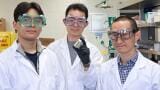
The lead author, Yancheng Evelyn Li, a doctoral candidate in the laboratory of Dr. Bil Clemons at the California Institute of Technology, USA, conducted the structural work. Clemons is the Arthur and Marian Hanisch Memorial Professor of Biochemistry at the institution and served as corresponding author.
“Evolution is powerful – and in bacteria – resistance to antibiotics develops quickly. This means that we now [have to] deal with bacteria that are resistant to all the medicines that we have,” Clemons said.
The peptidoglycan biosynthesis pathway has long attracted attention as a potential antimicrobial target. Peptidoglycan, a mesh-like polymer that surrounds bacterial cells, provides structural integrity and acts as a form of molecular chainmail. Because peptidoglycan is unique to bacteria, it presents an appealing target for selective antibiotic design.
“Peptidoglycan is a unique feature of bacteria and that makes it an attractive [novel] antibiotic target,” Clemons stated.
Many components of this biosynthetic pathway have been characterised in detail and have already informed antibiotic development. The first widely used antibiotic – penicillin which was derived from the mold which was discovered by Sir Alexander Fleming at St Mary’s Hospital in London in 1928 – and its derivatives such as amoxicillin, inhibit a late enzymatic step in peptidoglycan assembly. These drugs disrupt cell wall synthesis and ultimately cause bacterial death.
Earlier steps in the pathway, however, depend on three membrane-associated proteins: MraY, MurG and MurJ. These proteins coordinate the assembly and transport of peptidoglycan building blocks from the cytoplasm across the inner membrane. If any one of them fails, bacteria cannot construct an intact cell wall and they die. Although structural and biochemical data have illuminated many aspects of their function, Clemons noted that fundamental mechanistic questions have remained unresolved.
Despite clear therapeutic promise, no approved medicines currently target these early membrane steps. Clemons explained that small molecules, whether isolated from natural sources or synthesised in chemical libraries, can inhibit such proteins. He added that recent discoveries have shown that bacteriophages, viruses that infect bacteria, have evolved strategies to exploit this pathway.
Phages must enter a bacterial cell, replicate their genetic material and then exit in order to spread. To escape, they must breach the peptidoglycan layer.
“Getting back out means that they have to get past the peptidoglycan layer. Because it acts like chainmail, the phages get stuck if they cannot break through it,” explained Clemons.
To solve this problem, many small single-stranded DNA and RNA phages encode compact protein toxins known as single-gene lysis proteins – Sgls – which act as protein antibiotics.
In 2023, the Clemons laboratory reported on the phage φX174, a historically significant model system at Caltech. That work established that certain Sgl proteins target MurJ, a flippase that transports peptidoglycan precursors across the inner membrane. A flippase operates by alternately exposing its binding site to either side of the membrane, which allows substrate transport without formation of an open pore.
MurJ binds a lipid-linked peptidoglycan precursor on the cytoplasmic side of the membrane. A conformational change then transfers the molecule to the periplasmic side, where cell wall assembly proceeds. Collaborators had previously shown that two unrelated Sgl proteins, SglM and SglPP7, both inhibit MurJ and cause bacterial death.
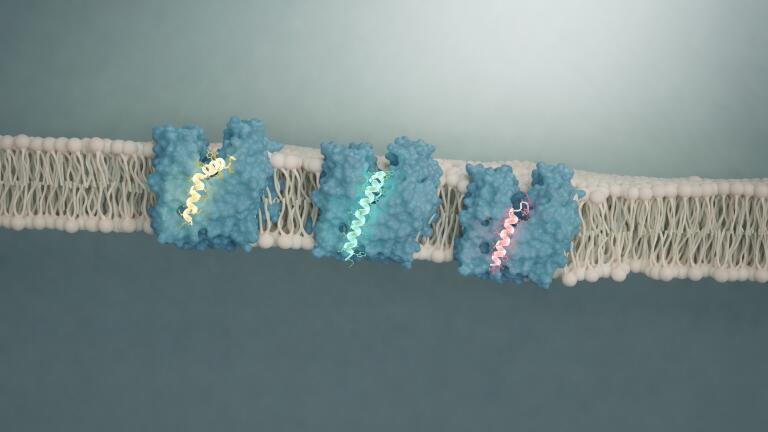
To determine how these viral proteins exert their effect, Li employed cryogenic electron microscopy at Caltech’s Beckman Institute Biological and Cryogenic Transmission Electron Microscopy Resource Center. She resolved high-resolution structures of MurJ in complex with each Sgl. The data showed that both Sgl proteins bound to a groove in MurJ and prevented the structural rearrangements required for substrate flipping.
“It is clear that both of these Sgls bind to MurJ in an outward-facing conformation, locking it into this position,” Li said. This outward-facing state exposes MurJ to the periplasmic environment which may render it more accessible to therapeutic agents than an inward-facing conformation buried within the membrane.
“These peptides – which have no evolutionary links to each other – have both figured out how to target MurJ in a very similar way.
“These are two examples of convergent evolution, in which different evolutionary paths arrive at the same solution. We were surprised!” he said.
Convergent evolution occurs when unrelated organisms independently evolve comparable solutions to a shared biological challenge.
The team extended its analysis to a further candidate identified through genomic mining. Because phages evolve rapidly and exist in vast numbers, their genomes constitute a rich reservoir of functional diversity. In collaboration with external partners, the researchers identified a predicted phage genome named Changjiang3 and characterised its encoded SglCJ3 protein. Structural analysis revealed that SglCJ3 also bound MurJ in the outward-facing conformation.
“This is a third genome that evolved a distinct peptide to inhibit the same target in a similar way,” Clemons said.
“It is the first strong evidence that evolution identifies MurJ as a great target for killing bacteria, which means we should follow evolution’s lead and develop therapeutics that target MurJ.
“This demonstrates the power of basic biology to help us solve problems in medicine. Our path is set on leveraging Sgl discovery and we hope to continue to be supported to turn these concepts into realities,” he concluded.
The study has strengthened the case for MurJ as a high-value antibiotic target at a time when resistance has outpaced drug development.
For further reading please visit: 10.1038/s41586-026-10163-w
ILM 51.6 Sept 2026




 Product directory




















,-photo-Karin-Allander.jpg)