Research news
Researchers at the University of Queensland have reported that the balance of dietary fats can alter the composition and resilience of T cells, key immune cells that help protect the body from infection and cancer. The findings suggest that lipid metabolism could become a practical target to improve vaccine responses and support immunotherapy in oncology
The types of dietary fat people consume may have a direct effect on the survival, strength and disease-fighting capacity of crucial immune cells, according to research led by the University of Queensland (UoQ), Woolloongabba, Australia.
An international team, led by scientists at the UoQ’s Frazer Institute, found that diet could alter the fat composition within T cells, the immune cells that help coordinate the body’s defence against infections and cancers. The work has added to growing evidence that nutrition does not merely support general health but can influence immune performance at the cellular level.
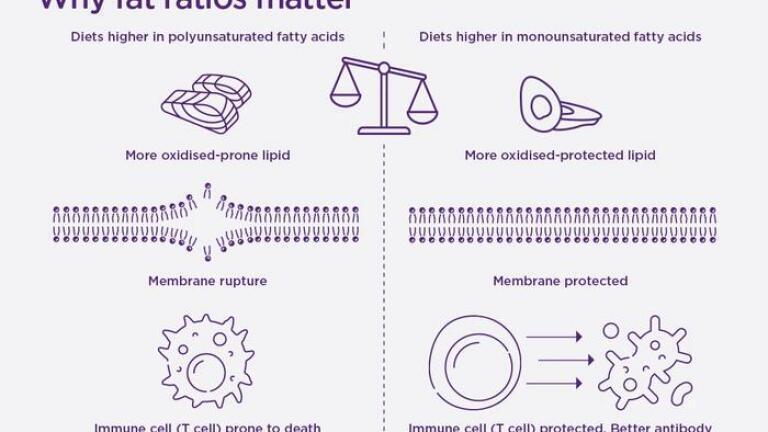
The researchers found that a diet with a lower ratio of polyunsaturated fatty acids to monounsaturated fatty acids made T cells more resilient and less susceptible to a destructive form of cell death. That finding is important because T cells sit at the centre of adaptive immunity, the arm of the immune system that allows the body to recognise and respond more effectively to specific threats.
“The findings mark a profound leap in understanding of how our diet directly impacts immune system function,” Professor Di Yu of the UoQ’s Frazer Institute said.
“How our bodies and cells process dietary fats – called lipid metabolism – is a critical part of the immune system. This discovery shows that dietary changes could potentially boost the effectiveness of vaccines and cancer therapies.
“Our immune system relies on T cells to manage the body’s immune response. The kinds of fats you eat change the [lipid] composition inside your T cells and those changes can make T cells either weaker or stronger in terms of immune protection,” he added.
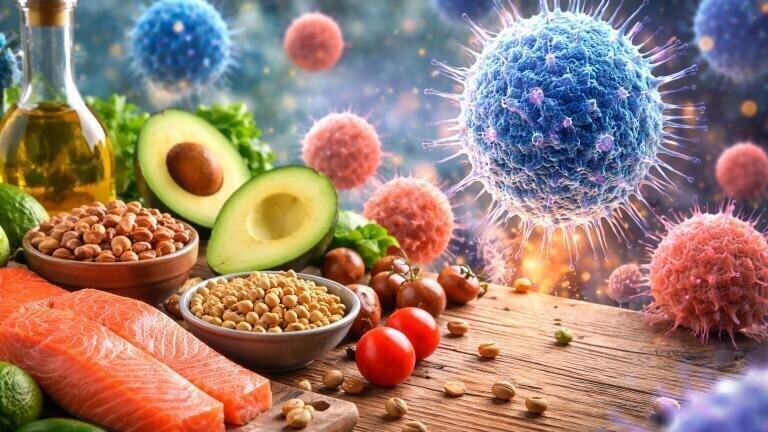
Polyunsaturated fatty acids are found in foods such as fatty fish and soybeans. Monounsaturated fatty acids are found in foods including olive oil and avocados. Although both classes of fat are widely present in normal diets and both have recognised roles in health, the study suggested that their relative balance may matter greatly for immune-cell durability.
At the centre of the work was the discovery that T cells are vulnerable to a type of oxidative stress in which damaged fats accumulate and compromise the integrity of the cell membrane. Once that outer membrane becomes unstable, the T cell can die before it has carried out its protective function. In practical terms, that means the immune system may lose part of its capacity to mount a strong response precisely when it is needed most.
“When T cells are protected from this oxidation-induced cell death, specific T cells, called follicular helper T cells, become much better at assisting the body in producing antibodies, which could suggest enhanced vaccine protection,” Professor Yu said.
“Stronger, more resilient T cells are also better at multiplying and actively attacking tumours. Experimental models demonstrate that dietary fat modifications could improve the success of cancer treatments which could help eliminate tumours and significantly prolong survival,” he added.
Follicular helper T cells are particularly important because they help B cells produce antibodies, the proteins that recognise and neutralise pathogens such as viruses and bacteria. If these helper T cells survive for longer and function more effectively, the result could be a more robust antibody response after vaccination. That possibility places the findings in a wider biomedical context, especially as researchers continue to search for practical ways to improve vaccine efficacy and to support immune function in vulnerable patients.
The implications for oncology research are also significant where cancer immunotherapies rely on immune cells to recognise and attack malignancy. Yet tumours often create harsh biochemical environments that weaken immune responses. If dietary fat balance can help T cells remain viable and functional in those conditions, clinicians may eventually gain a relatively accessible way to support treatment. The concept remains at an early stage but it has clear translational appeal because diet is modifiable and – in principle – easier to adjust than many complex biological variables.
Professor Yu said the work pointed to a future in which dietary optimisation could sit alongside conventional medical treatment rather than outside it.
“In future, optimising a patient’s diet and targeting lipid metabolism could become an easily accessible way to enhance our immunity.
“This could represent a powerful approach, used alongside vaccines or cancer immunotherapies, to ensure immune cells are strong enough to fight off disease,” he said.
The researchers cautioned, however, that the ideal dietary ratio of polyunsaturated to monounsaturated fatty acids remains unknown. More work will be required to determine exactly how different fats contribute to T-cell death, how those effects vary across diseases and whether the same biological patterns seen in experimental models will translate reliably into clinical settings.
That uncertainty matters because nutrition science rarely yields simple one-size-fits-all prescriptions. The immune system is shaped by genetics, age, infection history, overall diet and metabolic health, as well as by the balance of specific nutrients.
Even so, this study has opened an important line of inquiry by showing that dietary fats are not merely fuel or structural components of cells. They have also influenced whether immune cells survive long enough and remain strong enough to protect the body.
Taken together, the findings have suggested that what people eat may affect immune defence in a more direct and mechanistic way than previously understood. For vaccines, that could mean stronger antibody responses. For cancer therapy, it could mean more resilient immune cells with greater capacity to attack tumours.
For further reading please visit: 10.1038/s41586-026-10193-4
ILM 51.6 Sept 2026



 Product directory




















,-photo-Karin-Allander.jpg)








.jpg)
