

Research news
Analysis of more than 770,000 women has reported that vaccination against human papillomavirus has associated with a markedly lower risk of high-grade precancerous lesions of the vulva and vagina, with the strongest effect in those who received the vaccine before age 17
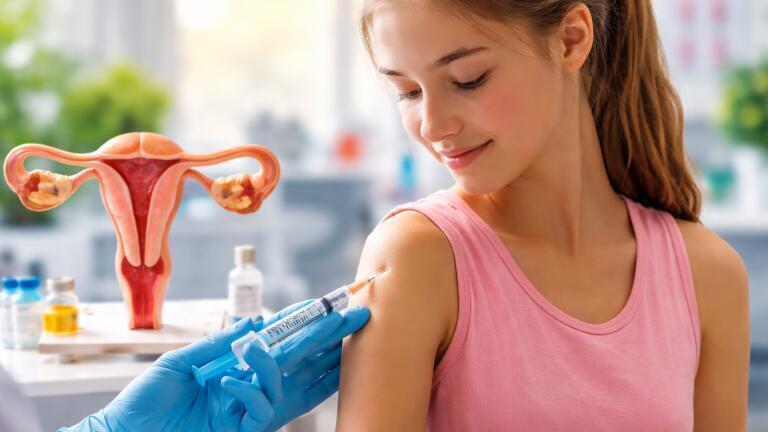
Women who receive vaccination against human papillomavirus (HPV) appear to get protection the known cervical cancer risk, with a large Swedish study reporting a lower risk of severe precancerous lesions of the vulva and vagina, particularly when vaccination takes place before aged 17.
Sweden, like many European countries including the UK, offers HPV vaccination to children during their school years as part of a national programme. Although HPV is best known for its role in cervical cancer, persistent infection with high-risk HPV types can also drive disease across the anogenital tract. In the vulva and vagina, HPV can cause high-grade precancerous lesions – described clinically as high-grade squamous intraepithelial lesions – which can progress to cancer if clinicians do not detect and treat them.
The Karolinska Institute, Stockholm, Sweden, team assessed the quadrivalent HPV vaccine, which targets HPV types 6, 11, 16 and 18. HPV subtypes 16 and 18 account for a substantial share of HPV-associated cancers, while HPV 6 and 11 more commonly cause genital warts. The researchers set out to test whether real-world vaccination, at population scale, had associated with lower rates of serious vulvar and vaginal precursor disease.
The study drew on nationwide Swedish health registries and included more than 770,000 women born between 1985 and 1998 who lived in Sweden during 2006 to 2022. The researchers followed individuals over time and compared the incidence of high-grade lesions of the vulva and vagina between women who had received at least one dose of HPV vaccine and those who had not received HPV vaccination.
After the researchers adjusted for factors that could influence both vaccination uptake and disease risk, including age, education, income and maternal medical history, a positive vaccination status remained linked to a lower incidence of severe lesions.
Overall, vaccinated women had a 37 per cent lower risk than unvaccinated women. The association strengthened further among those who received vaccination before age 17, with a 55 per cent lower risk relative to unvaccinated women.
“Our study is the largest of its kind to investigate the link between HPV vaccination and serious diseases of the vulva and vagina,” said Dr. Yunyang Deng, postdoctoral researcher in the Department of Medical Epidemiology and Biostatistics at Karolinska Institute and the study’s first author.
“The results highlight the importance of offering the HPV vaccine to girls at an early stage in life, before they become sexually active,” he added.
The age pattern matters because HPV typically transmits through direct skin-to-skin during sexual contact. Vaccination before exposure to the virus can prime the immune system to neutralise targeted HPV types before infection becomes established, which helps to prevent the cellular changes that can precede cancer.
Vaccination after exposure can still provide benefit but it cannot reliably eliminate an infection that has already taken hold.
The researchers have planned to examine how long protection persists and whether effectiveness differs across vaccine formulations. Many countries have shifted from quadrivalent vaccines to later-generation products that cover more high-risk HPV types, with the aim to broaden cancer prevention. The group has also indicated that it intends to evaluate vaccine effects across other HPV-associated cancers.
“We also want to study the vaccines’ effect on other HPV-related cancers, including in men,” said Assistant Professor Jiayao Lei, of the Department of Medical Epidemiology and Biostatistics and the Center for Cervical Cancer Elimination within the Department of Clinical Science, Intervention and Technology at Karolinska Institute, who led the study.
Although vulvar and vaginal cancers are less common than cervical cancer, they can cause substantial morbidity and can require extensive treatment. High-grade precancerous lesions can also recur after therapy and often demand prolonged clinical follow-up. From a public-health perspective, evidence that vaccination has associated with lower rates of these lesions strengthens the case for early vaccine delivery and for sustained efforts to improve uptake in eligible groups.
The research took place in collaboration with the Public Health Agency of Sweden and Karolinska University Hospital. Funding came from the Swedish Research Council, the Swedish Cancer Society, Forte, Karolinska Institute’s strategic research area in epidemiology and biostatistics and the European Union’s Horizon 2020 programme.
For further reading please visit: 10.1001/jamaoncol.2025.5511
ILM 51.6 Sept 2026




 Product directory





















,-photo-Karin-Allander.jpg)