Research news
Spatial transcriptomics has revealed that premalignant pancreatic cells organise into defined microenvironments that interact with immune cells to suppress host defences, offering potential routes for earlier detection and intervention
A study from the Hebrew University of Jerusalem, Israel, has provided detailed insight into the earliest stages of pancreatic cancer development, with evidence that premalignant cells establish structured, immune-modulating niches long before their clinical detection. The findings suggest that the disease begins to evade immune surveillance at a far earlier stage than previously understood, with potential implications for earlier diagnosis and better therapeutic intervention.
Pancreatic ductal adenocarcinoma remains one of the most lethal malignancies, in large part because diagnosis often occurs at an advanced stage and treatment options remain limited. Although premalignant lesions can persist for more than a decade before progression to invasive cancer, the spatial organisation and biological behaviour of these early cellular states have remained poorly understood.
The research team, led by Dr. Oren Parnas and Dr. Sebastian Arcila-Barrera with contributions from Dr. Sharona Tornovsky-Babeay, applied a combined analytical framework that integrated single-cell RNA sequencing with spatial transcriptomics. This approach enabled the investigators to preserve tissue architecture while simultaneously characterising gene expression at single-cell resolution across pancreatic samples.
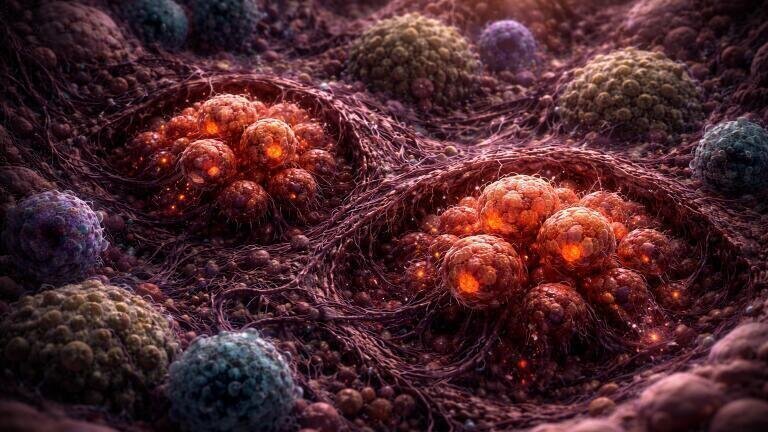
Through this methodology, the researchers demonstrated that acinar-derived metaplastic cells within premalignant lesions do not distribute randomly. Instead, they assemble into discrete, semi-homogeneous clusters – or ‘niches’ – defined by shared cellular identity. These niches appeared to function as localised microenvironments that support coordinated cellular behaviour and interaction.
“Our findings show that these early altered cells are not randomly distributed,” said Parnas.
“Instead, cells with similar identities tend to cluster together, forming semi-homogeneous niches that appear to actively interact with specific immune cell populations,” he added.
The study has further shown that these metaplastic niches localise in close proximity to immune cell populations associated with immunosuppression, including defined subsets of neutrophils and macrophages. Analysis of gene expression indicates that these interactions correspond with signalling pathways known to attenuate immune activity which supports the hypothesis that immune evasion initiates during the premalignant phase.
“The spatial patterns we observed suggest that cell identity is established early, followed by localised expansion,” said Arcila-Barrera.
“This helps to clarify how premalignant lesions develop and evolve over time,” he said.
This observation reframes the temporal sequence of pancreatic carcinogenesis. Rather than immune escape emerging only after malignant transformation, the data indicate that early lesions actively shape their microenvironment to favour immune tolerance therefore permitting undetected tumour progression.
If these immune-modulating niches can be detected or disrupted at an early stage, clinicians may gain an opportunity to intervene before invasive disease develops.
“Understanding the process of lesion formation and development, we may be able to better identify high-risk lesions and – in the future – design strategies that intervene before cancer fully develops,” said Tornovsky-Babeay.
Importantly, the investigators have reported that similar spatial organisation and immune interactions were present in human pancreatic tissue samples. This concordance strengthens the relevance of the findings and supports their applicability beyond experimental systems.
Taken together, the study has provided a refined model of pancreatic cancer initiation, in which spatial organisation and immune modulation act in concert from the earliest detectable stages. By identifying structured cellular niches that promote immune suppression, the research has opened a potential pathway towards earlier detection strategies and preventive therapeutic approaches in a disease that continues to carry a poor prognosis.
For further reading please visit: 10.1053/j.gastro.2025.12.014
ILM 51.6 Sept 2026



 Product directory

















,-photo-Karin-Allander.jpg)







.jpg)
