![Representative images and viability assessment of the best responder PDOTS to 21h10 [patient 10407 in (F)]. Significance was determined using one-way ANOVA with Tukey’s correction. PI-dead cells in red and Hoechst-nuclei in blue. IP, intraperitoneal. Credit: Jung-Ho Chun](/assets/file_store/pr_files/65843/thumbnails/images/768w-432h-t-fit-engineered-IL-21-cytokine-effect-dead-cell-comparison-02.jpg)
Research news
A team led by the Institute for Protein Design at University of Washington, Seattle, has created an engineered version of interleukin-21 (IL-21) that is more stable and potent than the natural cytokine. The synthetic protein – known as 21h10 – enhanced immune responses and cleared tumours in mouse models and patient-derived organoids, offering promise for future oncology immunotherapies
IL-21 is a naturally occurring cytokine known to promote cytotoxic immune responses, but it has limited stability and weak activity in mice that has hampered preclinical testing of IL-21–based immunotherapies. Although early clinical trials in humans have hinted at therapeutic value, the mixed results have made it difficult to establish efficacy and safety. The lack of reliable animal models has further restricted development.
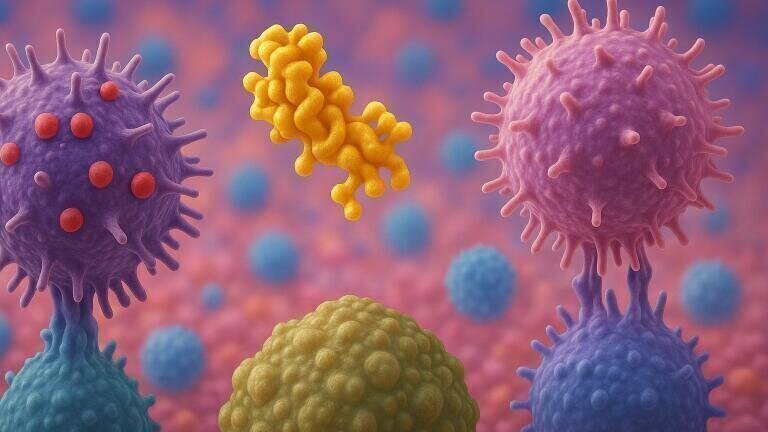
Researchers turned to computational protein design to generate a mimic which was able to engage with both human and mouse IL-21 receptors. The resulting variant – called 21h10 – showed strong in vivo stability and sustained downstream signalling.
In experimental settings it promoted the differentiation of cytotoxic T cells, expanded populations of T helper 1 cells, and reduced levels of regulatory T cells in the tumour microenvironment. These shifts in immune balance translated into enhanced tumour clearance in animal models.
“There is great potential for clinical translation [of 21h10] to treat tumours unresponsive to checkpoint blockade and other existing therapies,” suggested Dr. Jung-Ho Chun of the Institute for Protein Design at the University of Washington after his team designed and tested a synthetic cytokine that mimics interleukin-21 (IL-21).
The team reported that the 21h10 engineered protein displayed greater stability and potency than the human cytokine and produced significant antitumour effects in both mouse models and patient-derived tumour organoids.
The protein’s performance extended beyond standard tumour models. In organoids derived from patients with treatment-resistant melanoma, 21h10 treatment elicited robust antitumour activity. Notably, the mimic improved the function of even low-affinity antitumour T cells, which are often less effective in the hostile conditions within tumours.
However, treatment was not without drawbacks. After two weeks of administration, mice developed toxicity and pancreatitis, accompanied by the appearance of non-neutralising antibodies against 21h10. Responding to this, and importantly, the researchers then administered a tumour necrosis factor blocker alongside the mimic, which prevented these adverse effects without diminishing the therapeutic impact.
The study has provided evidence that an engineered cytokine can overcome species-specific limitations of human proteins to enable meaningful preclinical evaluation. By designing a mimic able to operate in both mouse model and humans, Chun et al have addressed a long-standing bottleneck in the testing of IL-21–based therapies. The results underscore the promise of 21h10 as a candidate for future clinical investigation.
For further reading please visit: 10.1126/sciimmunol.adx1582
ILM 51.6 Sept 2026



 Product directory



















,-photo-Karin-Allander.jpg)








.jpg)
