Research news
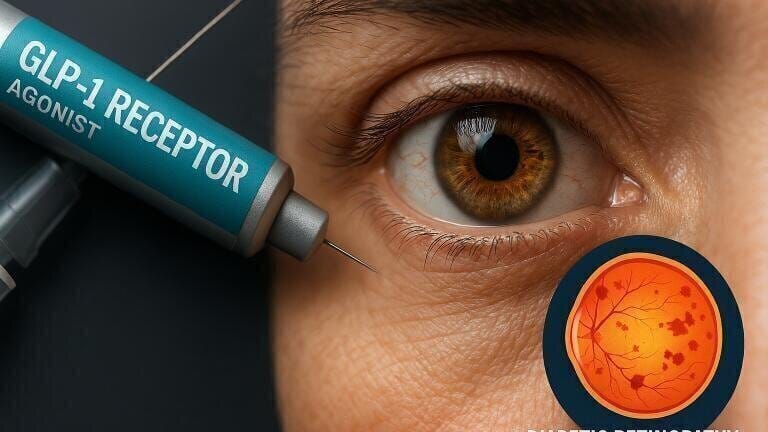
Laboratory research has shown that drugs such as semaglutide, already prescribed for type 2 diabetes and obesity, may shield retinal cells from oxidative stress and repair existing damage. The findings suggest that glucagon-like peptide 1 (GLP-1) receptor agonists could play a wider therapeutic role in protecting against diabetic retinopathy, the leading cause of blindness in working-age adults
Drugs that target glucagon-like peptide 1 (GLP-1) receptors may protect against diabetic retinopathy, one of the most common and serious complications of diabetes, according to research presented at the annual meeting of the European Association for the Study of Diabetes (EASD) in Vienna, Austria between the 15–19 September.
GLP-1 receptor agonists, including drugs such as semaglutide, are now widely prescribed to manage type 2 diabetes and obesity. These therapies work by mimicking the natural activity of GLP-1, a hormone that stimulates insulin release when required, slows gastric emptying, suppresses appetite, and promotes satiety. Beyond these metabolic effects, many tissues across the body express GLP-1 receptors, and emerging evidence has suggested that the drugs also exert anti-inflammatory and antioxidant activity.
Such properties have raised hopes that GLP-1 receptor agonists could help to counter diabetic retinopathy – the leading cause of blindness in working-age adults. The condition develops when persistently high blood glucose levels damage the delicate blood vessels of the retina, the light-sensitive tissue at the back of the eye.
Epidemiological studies have shown that more than 90% of people with type 1 diabetes and between 50% and 60% of those with type 2 diabetes eventually develop some degree of retinopathy.
“Diabetic retinopathy represents a major public health challenge,” said Dr. Ioanna Anastasiou of the National and Kapodistrian University of Athens, Greece, who led the research.
“Globally, it is projected that more than 191 million people will be affected by it by 2030, with around 56 million experiencing vision-threatening stages of the disease. These statistics underscore the critical need for effective screening, early detection, and, crucially, more effective treatments.”
Scientists have long suspected that much of the retinal damage in diabetes is mediated by free radicals, unstable molecules that harm cells and are produced in excess when blood sugar is high. Antioxidants neutralise free radicals, and the working theory is that GLP-1 receptor agonists protect the retina by stimulating antioxidant production. However, conflicting evidence has emerged, with some studies suggesting that GLP-1 therapies may worsen retinopathy in certain patients.
To clarify the picture, Dr Anastasiou and colleagues conducted detailed laboratory experiments to examine the direct effect of semaglutide on human retinal endothelial cells exposed to diabetes-like conditions. The cells were cultured in high-glucose media under oxidative stress for 24 hours, then treated with varying concentrations of semaglutide.
The researchers reported that semaglutide treatment significantly improved cell survival. Retinal cells exposed to the drug were up to twice as likely to remain viable compared with untreated controls, and they retained larger intracellular energy reserves. Measures of oxidative stress were also reduced: apoptosis, or programmed cell death, fell from about 50% in untreated cells to approximately 10% in treated cells; mitochondrial superoxide production dropped from close to 90% to about 10%; and the accumulation of advanced glycation end-products – harmful compounds linked to diabetes complications – also decreased sharply.
Further genetic analysis revealed that key antioxidant genes were more active in semaglutide-treated cells. This heightened activity, combined with the improved cell survival, suggested that the drug not only shielded retinal cells from harm but also promoted repair processes.
“In experiments in the lab, GLP-1 receptor agonists exerted powerful antioxidant effects which protected retinal cells against the type of damage that can occur in diabetes,” said Dr Anastasiou.
“Our study did not find that these drugs harmed the retinal cells in any way – instead, it suggests that GLP-1 receptor agonists protect against diabetic retinopathy, particularly in the early stages. Excitingly, these drugs may be able to repair damage that has already been done and so improve sight.
“Clinical trials are now needed to confirm these protective effects in patients and explore whether GLP-1 receptor agonists can slow, or even halt, the progression of this vision-robbing condition.”
ILM 51.6 Sept 2026



 Product directory




















,-photo-Karin-Allander.jpg)








.jpg)
