Research news
Research from City of Hope, the Broad Institute and Keio University has identified a diet–microbiome pathway that transforms energy-storing white fat into calorie-burning beige fat in mice, which may inform future therapies for obesity and metabolic disease
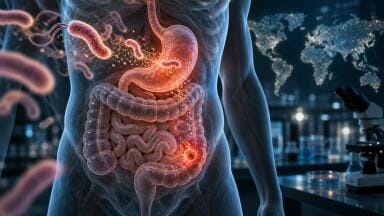
Scientists at City of Hope, Duarte, California, USA, working with colleagues at the Broad Institute, Cambridge, Massachusetts, USA and the Keio University, Minato, Japan, have identified how specific gut bacteria interact with dietary protein intake to alter fat metabolism in mice. The findings describe a biological pathway through which a low protein diet activates defined microbial strains in the gut that in turn triggered the conversion of white adipose tissue into energy-expending beige fat.
White adipose tissue constitutes the majority of adult body fat and serves primarily to store excess calories. By contrast, brown and beige adipose tissue oxidise substrates to generate heat and support metabolic regulation. Human infants possess relatively high levels of brown fat, yet these reserves decline with age. For more than a decade, researchers have sought safe and effective strategies to induce ‘beiging’ – the process by which white fat adopts features of beige fat – as a potential intervention to improve metabolic health.
In this study, mice that received a low protein diet developed substantial beige fat deposits only when they harboured a specific gut microbiome. When researchers administered the same diet to ‘germ-free’ mice that lacked intestinal microbes, the fat-burning response failed to occur. This contrast demonstrated that dietary protein restriction alone was not sufficient for this effect the metabolism to be seen.
“Fat tissue is not fixed – it is surprisingly adaptable,” said Dr. Kenya Honda, co-senior author of the study and adjunct professor at City of Hope.
“We found that certain gut bacteria could sense what the host was eating and translate that information into signals that told fat cells to burn energy,” he explained.
Detailed microbial analysis identified four bacterial strains that proved necessary to initiate fat browning. When investigators introduced these strains into mice that consumed a low protein diet, the animals converted white fat into beige fat, gained less weight, exhibited improved glucose tolerance and recorded lower circulating cholesterol concentrations compared with controls.
Mechanistic experiments indicated that the effect did not depend on a single molecular pathway but rather the gut microbes appeared to operate through coordinated signalling. One microbial signal altered bile acid composition and primed adipose tissue towards an energy-expending phenotype. A second signal prompted the liver to secrete fibroblast growth factor 21, a hormone known to influence systemic metabolism. When researchers disrupted either pathway, the beige fat response disappeared which indicated that both signals were required for the effect to occur.
“This work [has] underscored how the gut microbiome is actively interpreting what we eat and translating that information into signals to which the body responded,” said Dr. Ramnik Xavier, co-senior author, a core member at the Broad Institute and professor of medicine at Harvard Medical School, Cambridge, Massachusetts, USA.
“This opens up an opportunity to examine interactions between microbes, metabolites and metabolic disease, to understand the mechanisms involved, and to consider how to translate those insights into interventions for metabolic health,” he added.
The investigators emphasised that the findings derived from animal models and should not prompt direct dietary changes in people. The low protein diet used in the study fell below recommended protein intake levels for humans. Moreover, previous attempts to improve metabolic parameters through probiotic supplementation alone have achieved limited success.
“Our goal was not to advise extreme diets,” said Dr. Takeshi Tanoue, first author of the study, affiliated with City of Hope and Keio University.
“The real opportunity was to understand these pathways sufficiently well to design therapies that could safely mimic their benefits,” he concluded.
Obesity and metabolic disorders remain major risk factors for type 2 diabetes, cardiovascular disease and several forms of cancer. By delineating a microbiome-mediated route through which diet reshapes adipose tissue biology, the research has contributed to a broader understanding of the links between metabolism, inflammation and chronic disease risk.
City of Hope reported that the work forms part of its Microbiome Program, which seeks to integrate dietary science, immunology and cancer research in order to inform more precise and biologically grounded therapeutic strategies.
For further reading please visit: 10.1038/s41586-026-10205-3
ILM 51.6 Sept 2026




 Product directory




















,-photo-Karin-Allander.jpg)