Research news
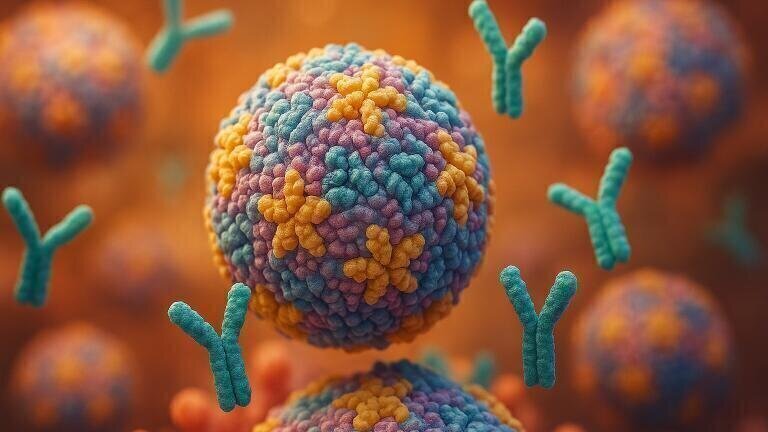
Researchers have discovered that a distinctive antibody profile can increase the risk of dengue virus infection. The findings reveal that the quality if an antibody is critical to protection and may guide the design of safer and more effective future vaccines
Scientists have reported that a specific antibody profile may leave individuals vulnerable to infection by the dengue virus despite a prior vaccination against the pathogen. The findings – based on an analysis of 88 recipients of the vaccine Dengvaxia – have answered a longstanding question in the field and underscored the importance of assessing antibody quality as well as quantity in vaccine research.
Dengvaxia was the first vaccine to be licensed against dengue, a mosquito-borne disease that infects more than 400 million people worldwide each year. The vaccine was shown to offer strong protection to individuals that had already experienced a prior dengue infection but proved less effective in those who had not been exposed.
Concerns about safety and variable efficacy have meant that the product has been phased out of widespread use. Despite this decline, researchers have continued to examine Dengvaxia in order to identify correlates of protection that could inform the design of next-generation vaccines.
Dr. Usama Ashraf of Stanford University School of Medicine led a team of Stanford colleagues alongside others from the Walter Reed Army Institute of Research, the Armed Forces Research Institute of Medical Sciences Library, University of Rhode Island and the Chong Hua Hospital in the Philippines which conducted a detailed analysis of immunoglobulin G (IgG) antibodies in a group of 88 vaccinated participants with confirmed prior exposure to dengue. The researchers compared antibody profiles before and after vaccination, focusing on differences between individuals who subsequently developed breakthrough infections and those who did not.
One of their central observations was that participants who became reinfected displayed higher levels of afucosylated antibodies – immunoglobulin molecules that lack fucose sugars in their structures. To explore the mechanism further, the team turned to mouse models of dengue infection. They were able to demonstrate that administering afucosylated IgG antibodies promoted viral replication which enhanced rather than suppressed infection.
Additional experiments showed that the afucosylated antibodies intensified infection through interaction with the cell surface receptor CD16. This receptor, which is involved in immune signalling, appeared to act as a conduit through which antibody-virus complexes gained an advantage inside host cells.
“These results highlight that IgG1 fucosylation is a predictor of risk for breakthrough dengue virus infection despite vaccination,” said Dr. Ashraf, who noted that CD16 may also represent a viable target for therapeutic intervention to strengthen dengue immune responses.
The work not only clarifies why some vaccinated individuals remain susceptible to dengue but also raises broader implications for the study of other vaccines. By drawing attention to structural features of antibodies, it has provided evidence that the effectiveness of a vaccine cannot be judged solely by the quantity of antibodies it elicits but rather the functional quality of those antibodies may play a decisive role in determining protection against infection.
For further reading please visit: 10.1126/scitranslmed.adx7231
ILM 51.6 Sept 2026



 Product directory


















,-photo-Karin-Allander.jpg)






.jpg)
