Research news
Researchers at Mount Sinai have identified a cellular mechanism that links influenza A virus infection to heart damage and increased cardiovascular risk, while also demonstrating a novel modified mRNA therapy that has mitigated cardiac injury
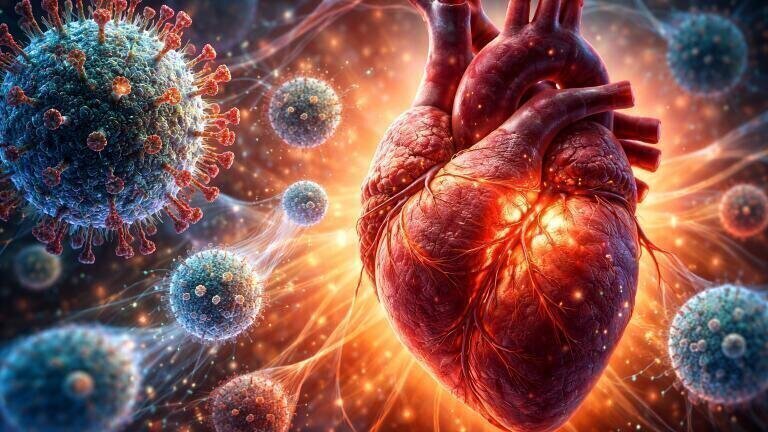
Researchers at Mount Sinai have identified a cellular mechanism that links infection with influenza A viruses to cardiovascular disease, offering detailed insight into how influenza can damage the heart and increase the risk of myocardial infarction and other major cardiovascular events. The findings have also demonstrated that a novel modified messenger ribonucleic acid (mRNA) therapy, designed to dampen a specific interferon signalling pathway in cardiac tissue, has significantly reduced heart damage following viral infection while preserving the immune system’s protective antiviral response.
Through a combination of mouse models and analysis of human clinical data, the research team has shown that immune responses intended to control viral infection can – under certain conditions – drive substantial cardiac injury. Influenza A viruses cause an estimated one billion infections worldwide each year, ranging from seasonal outbreaks to global pandemics. Although most cases are mild and self-limiting, severe disease can occur, particularly when viral infection affects the heart and leads to the death of cardiomyocytes, the specialised muscle cells that generate the heart’s rhythmic contractions.
“We have known for years that the frequency of heart attacks increases during flu season, yet outside of clinical intuition, scant evidence existed of the underlying mechanisms of that phenomenon,” said Dr. Filip Swirski, director of the cardiovascular research institute at the Icahn School of Medicine at Mount Sinai, New York, USA, and senior author of the study.
“Studies like ours are now shedding valuable light on immune system pathways, such as the antiviral cytokine type 1 interferon, that factor into damage to the heart following severe influenza infection.
“These findings offer great promise for the development of novel therapies which are urgently needed since there are currently no viable clinical options to prevent cardiac damage,” Swirski said.
To explore the clinical relevance of their findings, the researchers examined autopsy material from 35 hospitalised patients who had died from influenza infection. More than 85 per cent of these individuals had at least one significant cardiovascular comorbidity, including hypertension, while the majority had multiple conditions such as atherosclerosis and cardiac fibrosis. These observations underscored cardiovascular disease as a major contributor to influenza-associated mortality rather than a coincidental finding.
The study then identified the cellular mechanism that drove this cardiac injury. The researchers found that a previously uncharacterised subset of white blood cells, termed pro-dendritic cell 3, became infected within the lung during influenza infection. These cells subsequently migrated to the heart, where they produced large quantities of type 1 interferon. Rather than clearing the virus effectively from cardiac tissue, this interferon response triggered widespread cardiomyocyte death, leading to impaired cardiac output.
“We found that the pro-dendritic cell 3 acts as the ‘Trojan horse’ of the immune system during influenza infection, becoming infected in the lung, trafficking the virus to the heart, and disseminating it to cardiomyocytes,” explained Dr. Jeffrey Downey, lead author of the study.
“This process causes production of the damaging type 1 interferon that comes with considerable collateral damage to the heart,” he said.
The team then tested a proof-of-concept therapeutic approach that targeted this pathway. By injecting a novel modified mRNA treatment that modulated type 1 interferon signalling within the heart, the researchers reduced markers of cardiac injury, including circulating troponin levels and improved cardiac function as measured by left ventricular ejection fraction. Importantly, this intervention preserved the systemic antiviral immune response, a key consideration for any therapy intended to modulate immune signalling.
As part of ongoing work, Swirski’s group has collaborated with Dr. Lior Zangi, associate professor of medicine and genetics and genomic sciences at the Icahn School of Medicine, to investigate safer and more scalable delivery methods for the modified mRNA therapy.
Current efforts have focused on systemic delivery to cardiomyocytes rather than the direct cardiac injection used in the initial study. Parallel research has also examined the biology of pro-dendritic cell 3 itself, including why this cell type shows heightened susceptibility to influenza infection and whether its protective functions can be harnessed without provoking cardiac injury.
“Pathogens are constantly emerging and evolving which means our strategies to combat them must evolve as well. Better understanding of influenza pathogenesis and the immune pathways that are activated throughout the body will help to fuel the next stage of advanced care,” Swirski said.
Taken together, the findings have provided a mechanistic explanation for the long-recognised association between influenza outbreaks and cardiovascular events. They have also pointed towards a targeted immunomodulatory strategy that could, with further development, reduce influenza-associated heart damage in patients with existing cardiovascular disease.
Article title: ‘Influenza hijacks circulating myeloid cells to inflict IFN-I-fueled damage in the heart’
ILM 51.6 Sept 2026




 Product directory

















,-photo-Karin-Allander.jpg)