Research news
Korea Research Institute of Bioscience and Biotechnology has reported that a pharmaceutical excipient can prime innate immunity and deliver complete survival in mouse models exposed to antibiotic-resistant bacteria and influenza virus
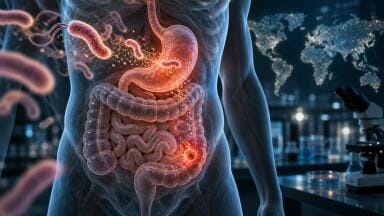
Secondary infections that arise during hospital care have remained a persistent challenge worldwide, despite medical and technological progress. Mixed bacterial and viral infections in critically ill or immunocompromised patients are particularly difficult to treat and have correlated with markedly higher mortality. At the same time, expanding antibiotic resistance and the emergence of viral variants have exposed persistent weakness in existing antimicrobial drugs and vaccines.
These pressures have intensified interest in strategies that prepare the immune system in advance, so that it can respond more rapidly and more effectively when infection occurs. Rather than to attack a defined pathogen directly, this approach seeks to prime host immunity, with the aim to strengthen early defence at the precise moment of microbial challenge.
Against this backdrop, a team led by Dr Choong-Min Ryu and Dr Hwi Won Seo at the Korea Research Institute of Bioscience and Biotechnology, Daejeon, South Korea, has reported a proactive infection-prevention strategy based on the activation of innate immunity through a compound already widely used in pharmaceutical formulations.
The investigators examined n-dodecyl-β-D-maltoside (DDM). This substance has served primarily as an excipient, with the purpose to stabilise active pharmaceutical ingredients during drug formulation. The research team sought to determine whether DDM could also function as an immune-modulating agent capable of priming innate immune responses.
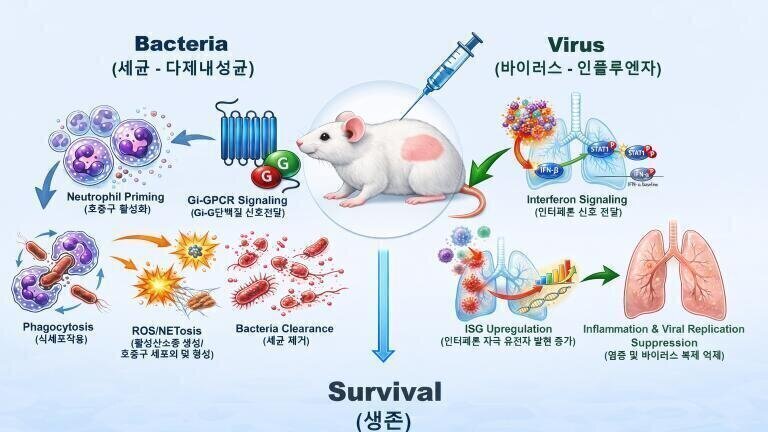
To test this hypothesis, the researchers administered DDM to experimental animals one day before exposure to infection. The animals then faced challenge with highly pathogenic antibiotic-resistant bacteria and influenza virus. All animals in the untreated control group died following infection. By contrast, animals that received DDM pretreatment achieved 100 per cent survival. The authors reported that this striking difference indicated a potent protective effect under the conditions tested.
Mechanistic investigation showed that DDM did not act through direct antimicrobial activity. Instead, it mobilised and activated neutrophils, which serve as rapid-response effector cells of innate immunity. After activation, neutrophils migrated to the site of infection and enhanced their capacity to engulf and destroy invading pathogens. The compound therefore appeared to accelerate and sharpen an endogenous immune pathway, rather than to substitute for it.
Importantly, neutrophil activation occurred selectively in response to infectious challenge. In the absence of pathogens, the researchers did not observe excessive inflammation or overt adverse effects. This finding suggested that the immune response remained tightly regulated, rather than persistently overstimulated. In practical terms, the data implied that DDM primed immune cells to respond decisively when required, without provoking a chronic inflammatory response.
The study has proposed what the authors described as a precision immune-priming strategy. Rather than to amplify immunity indiscriminately, the approach aimed to prepare innate immune cells for accurate deployment at the onset of infection. In an era defined by antimicrobial resistance and emerging infectious disease, a pathogen-agnostic preventive strategy has clear conceptual appeal.
“This study demonstrates a novel infection-response strategy that helps the body cope with complex infections by activating its own immune defences,” said Dr Hwi Won Seo, the study’s lead investigator.
“We expected this approach to evolve into a broadly applicable infection-prevention strategy capable of addressing unpredictable threats, including antibiotic-resistant bacteria and emerging viruses,” she said.
The findings have indicated potential relevance for vulnerable populations, including patients in intensive care, older adults and individuals with impaired immune function. Such groups face higher risk from secondary infections and frequently encounter pathogens that resist standard antimicrobial therapy. A host-directed strategy that enhances early innate immune responses may therefore complement existing vaccines and antibiotics, rather than replace them.
Taken together, the results have underscored the possibility that a familiar pharmaceutical excipient may possess under-recognised immunological properties. Whether this strategy can translate from mouse models to clinical practice will require rigorous evaluation. Nonetheless, the work has contributed to a growing body of evidence that host-directed immune priming may offer a valuable addition to the infection-prevention toolkit in the face of mounting antimicrobial resistance.
Established in 1985, the Korea Research Institute of Bioscience and Biotechnology is the national research institute dedicated to biotechnology and life sciences. It has focused on molecular biology, genomics, bioinformatics, synthetic biology and ageing research, and has played a central role in national research and development strategy in South Korea.
For further reading please visit: 10.1016/j.ebiom.2026.106143
ILM 51.6 Sept 2026




 Product directory


















,-photo-Karin-Allander.jpg)