Research news
Toothpaste derived from hair could provide a sustainable and clinically effective means to protect and repair damaged teeth
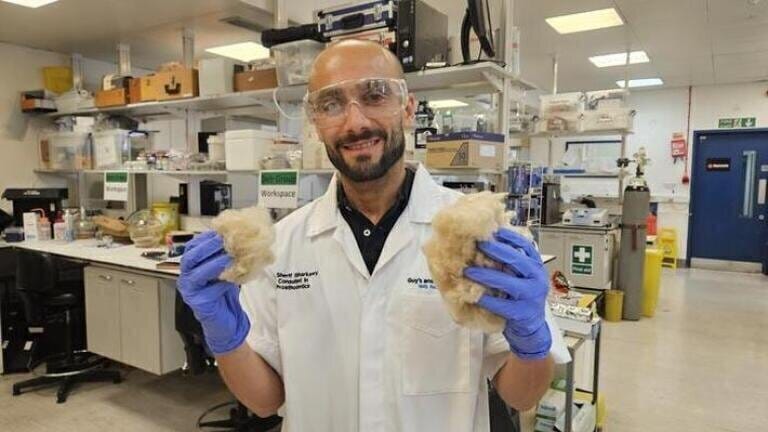
A study published by scientists from King’s College London has reported that keratin – a protein found natural in hair, skin and wool – can effectively restore tooth enamel and halt the early stages of decay. The researchers found that when keratin comes into contact with minerals in saliva, it forms a protective coating that replicates the structure and function of natural enamel.
“Unlike bones and hair, enamel does not [naturally] regenerate. Once it is lost, it is gone forever,” said Dr Sherif Elsharkawy, senior author and consultant in prosthodontics at King’s College London.
Enamel erosion, driven by acidic foods and drinks, poor oral hygiene and ageing, can cause sensitivity, pain and eventual tooth loss. Fluoride toothpastes can slow this process, but the keratin-based treatment was found to stop it completely. The keratin formed a dense mineral layer that sealed exposed nerve channels, offered both structural reinforcement and relief from sensitivity.
The treatment could be delivered with toothpaste or a professionally applied gel. In their experiments, the team extracted keratin from wool and demonstrated that, on contact with saliva, it formed an ordered, crystal-like scaffold on the tooth surface. This scaffold continued to attract calcium and phosphate ions present in saliva to gradually build-up a strengthened enamel-like layer on the tooth.
“Keratin offers a transformative alternative to current dental treatments. It can be sustainably sourced from biological waste, eliminates the need for toxic plastic resins, and produces a more natural appearance,” said first author Sara Gamea, a doctoral researcher at King’s College London.
Dr Elsharkawy said the work signalled: “an exciting era where biotechnology allows us to not just treat symptoms but restore biological function using the body’s own materials”. Such as your own hair.
The researchers believe that keratin-based enamel regeneration could be available to the public within two to three years.
The study received funding from the Wellcome Trust Seed Award, King’s College London, the Academy of Medical Sciences Starter Grants for Clinical Lecturers, and the National Institute for Health Research.
For further reading please visit: 10.1002/adhm.202502465
ILM 51.6 Sept 2026




 Product directory




















,-photo-Karin-Allander.jpg)