
Research news
Two related studies from the University of California, Riverside, have reported that reduced activity of the PTPN2 gene weakens intestinal defences, allowing harmful Escherichia coli strains to colonise the gut and exacerbate inflammation in people with inflammatory bowel disease
Two complementary studies from the University of California (UC), Riverside have highlighted the critical role of the gene protein tyrosine phosphatase non-receptor type 2 – known as PTPN2 – in protecting the intestine from harmful bacteria associated with inflammatory bowel disease (IBD).
Led by Dr. Declan McCole, professor of biomedical sciences in the UC School of Medicine, the research demonstrated that impaired PTPN2 function left the gut more vulnerable to bacterial infection and persistent inflammation. The findings offered mechanistic insight into why some individuals developed more severe or ongoing disease.
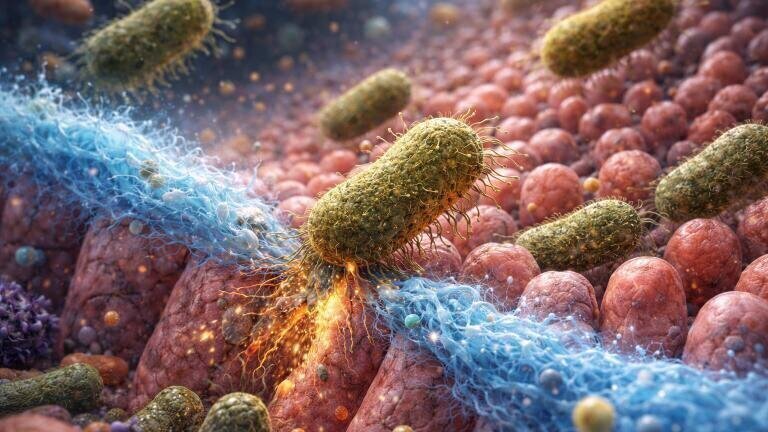
People with IBD often carried elevated levels of adherent-invasive Escherichia coli (AIEC). This pathogenic bacterial strain was shown to adhere to the intestinal lining, invade epithelial cells, disrupt the gut’s protective barrier and amplify inflammatory responses. Such features have long been recognised in clinical cohorts but have remained poorly explained at the molecular level.
Under normal conditions, PTPN2 contributed to intestinal health by restraining inflammatory signalling and supporting a balanced gut microbiome. However, a subset of people with IBD carried a faulty variant of the gene, which reduces PTPN2 activity. When this protective function is compromised, the microbial balance of the gut shifts, increasing susceptibility to harmful microbes.
The researchers found that loss of PTPN2 activity allowed bacteria such as AIEC to attach more readily to gut cells, penetrate the intestinal lining and multiply more efficiently, thereby intensifying local inflammation.
“Our findings help explain why certain people are more prone to ongoing gut inflammation,” said McCole.
“The research also points to potential treatment strategies that could restore gut defences and limit harmful bacteria in patients who are genetically at risk for IBD,” he said.
The first study examined intestinal tissue from patients with IBD who carried the PTPN2 risk variant, alongside laboratory-grown gut cells engineered to mimic the same genetic defect. The researchers reported that reduced PTPN2 activity led gut cells to express increased numbers of surface receptors, effectively creating additional ‘docking sites’ that enabled AIEC to enter cells more easily.
Molecular analysis identified a signalling pathway involving Janus kinase and signal transducer and activator of transcription proteins, together with carcinoembryonic antigen-related cell adhesion molecule six, as central to this process.
“We also found that treatment with a medication already used to treat IBD – a Janus kinase inhibitor – could partially reduce this problem by limiting the bacteria’s ability to invade gut cells,” McCole said.
“Our findings suggest that Janus kinase inhibitors may help to control harmful bacterial growth in people who are genetically predisposed to IBD,” he added.
In the second paper, the researchers reported that PTPN2 activity within intestinal epithelial cells limited colonisation by pathobionts through immune-directed antimicrobial responses. When PTPN2 functioned properly, gut lining cells produced natural antimicrobial molecules and maintained a robust epithelial barrier, both of which restricted bacterial entry and dampened inflammatory signalling.
“This protection works against normal gut bacteria as well as harmful bacteria, such as AIEC. When PTPN2 functions properly, it helps prevent bad bacteria from entering gut cells and triggering inflammation,” McCole said.
Together, the studies have strengthened evidence that host genetics can shape the gut microbiome in ways that directly influence disease risk and severity. The findings have suggested that targeted therapies which restore PTPN2-related pathways, or counteract their loss, could offer more personalised approaches to IBD treatment.
For further reading please visit: 10.1080/19490976.2025.2526136
ILM 51.6 Sept 2026




 Product directory




















,-photo-Karin-Allander.jpg)