
Research news
A comprehensive review has warned that inconsistent international standards for interpreting antimicrobial resistance data are distorting global surveillance, particularly in rivers, soils, and wastewater that increasingly act as reservoirs of resistant bacteria
Antibiotic resistance (AMR) is often seen as an issue confined to clinical settings, yet a growing body of evidence is showing that rivers, soils, wastewater and other aspects of the natural environment have increasingly acted as major reservoirs of resistant bacteria. A comprehensive review has now identified a critical barrier to effective global surveillance, namely the absence of a unified standard to interpret AMR data generated in environmental monitoring.
In the review, the researchers analysed how AMR has been monitored in environmental contexts and why inconsistent interpretation of laboratory results may have distorted understanding of the scale and distribution of resistance worldwide. The authors concluded that differences between international testing standards can lead to conflicting conclusions about whether the same bacterial strain should be classified as resistant or susceptible.
“AMR does not respect borders,” said corresponding author Dr Nyuk Ling Ma, associate professor in the Faculty of Science and Marine Environment, at University of Malaysia, Terengganu.
“If we use different rules to interpret the same data, we risk underestimating or misjudging resistance trends at a global scale,” she said.
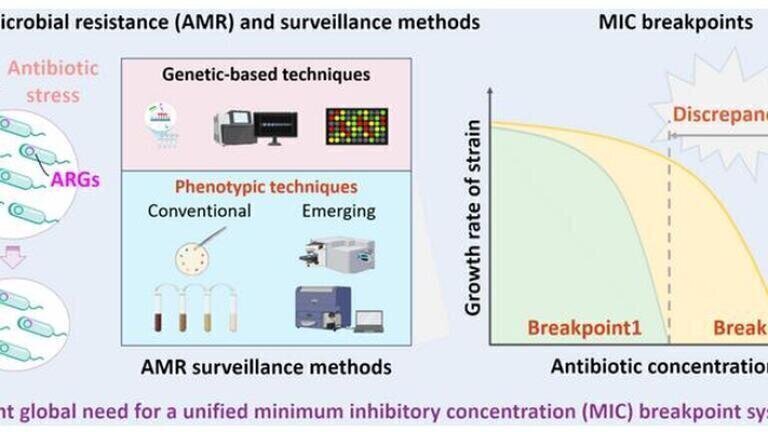
Central to the issue is the minimum inhibitory concentration – or MIC – which is defined as the lowest concentration of an antibiotic that prevents bacterial growth. The MIC is widely regarded as the gold standard for determining AMR, yet its significance depends on the application of breakpoints. These breakpoints are predefined thresholds that classify bacteria as susceptible, intermediate or resistant.
At present, the two most influential breakpoint systems are maintained by the Clinical and Laboratory Standards Institute in the United States and the European Committee on Antimicrobial Susceptibility Testing in Europe. Although both frameworks are science based and widely respected, they differ in breakpoint values, testing approaches, and classification rules.
“As a result, the same bacterial strain tested in two laboratories using different standards may be labelled resistant in one case and susceptible in another,” explained co-corresponding author Dr Hongna Li, a researcher with the Institute of Environment and Sustainable Development in Agriculture, Chinese Academy of Agricultural Sciences, Beijing, China.
“This inconsistency creates serious challenges to compare resistance data [between] regions and over time,” she added.
The review assessed a broad range of AMR surveillance tools, from genetic approaches that detect resistance genes to phenotypic methods that measure how bacteria respond to antibiotics in practice. Genetic techniques such as polymerase chain reaction and metagenomic sequencing have offered speed and sensitivity, yet they cannot always predict whether bacteria will behave as resistant under real world conditions. Phenotypic methods, which directly measure bacterial growth inhibition, have therefore remained essential to make accurate assessments of resistance.
The authors highlighted that environmental monitoring is particularly vulnerable to inconsistent standards. Antibiotics have now been detected at low but biologically active concentrations in rivers, soils and wastewaters worldwide. Even trace levels can promote resistance selection, which has made reliable surveillance critical for environmental protection as well as public health planning.
“Environmental data are increasingly being used to inform policy decisions,” Ma said.
“Without harmonised breakpoints, it becomes difficult to track global trends, assess risks, or evaluate whether interventions are working,” she added.
Beyond surveillance, inconsistent classification of resistance may also influence antimicrobial stewardship and risk communication. Apparent discrepancies in resistance rates could affect decisions about antibiotic use, regulation and investment in mitigation strategies.
The researchers have called for stronger international collaboration to develop a unified and authoritative MIC breakpoint framework that can be applied consistently across clinical and environmental settings. They also emphasised the need to develop affordable and user friendly monitoring technologies that can be deployed more widely, particularly in low resource regions.
“Standardisation is not just a technical issue,” Dr Li said.
“It is a foundation for coordinated global action against one of the most urgent public health threats of our time,” she concluded.
As AMR has continued to rise worldwide, the authors argued that alignment in how resistance is measured and interpreted represents a critical step to understand, manage, and ultimately slow the spread of resistant bacteria across both clinical and environmental domains.
For further reading please visit: 10.48130/newcontam-0025-0023
ILM 51.6 Sept 2026




 Product directory




















,-photo-Karin-Allander.jpg)