Research news
Researchers at McGill University have reported that lithium, a long-established treatment for bipolar disorder, suppressed HIV reactivation in laboratory models through an unexpected biological pathway
Lithium, a widely prescribed treatment for bipolar disorder and other mood disorders, has shown early promise to suppress HIV reactivation, according to researchers at McGill University, Montreal, Canada. The findings have suggested that lithium prevented infected cells from reactivating latent virus through a biological mechanism that differed from prevailing assumptions in the field.
The study has contributed to ongoing efforts to identify so-called ‘functional cures’ for HIV. Unlike sterilising approaches that aim to eliminate the virus entirely, functional cure strategies seek to maintain HIV in a dormant state, thereby preventing viral rebound if antiretroviral therapy stops and potentially reducing reliance on continuous daily medication. Despite major therapeutic progress, HIV can persist in long-lived immune cells, where it remains invisible to both drugs and the immune system.
An estimated 40.8 million people worldwide were living with HIV in 2024. Although antiretroviral therapy can suppress viral replication effectively, interruption of treatment can permit rapid viral rebound. This biological persistence has remained one of the central barriers to curative strategies.
“One major thrust in HIV cure research is asking whether existing drugs can be repurposed. Because lithium is inexpensive and already approved for other uses, it offers a faster starting point than to develop a drug from scratch,” said Professor Andrew Moulandof the Department of Medicine at McGill and head of the HIV-1 RNA Trafficking Laboratory at the Lady Davis Institute for Medical Research.
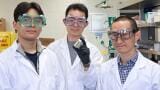
In laboratory experiments that used human immune cells, lithium suppressed the reactivation of dormant HIV, an effect that the team reported had not been demonstrated clearly in previous studies. The work was led by Dr. Ana-Luiza Abdalla, who conducted the research during her doctoral programme at McGill University and has since taken up a postdoctoral position at the Montreal Neurological Institute.
“In our experiments, lithium directly suppressed HIV reactivation in lab-grown human cells, something that had not been clearly demonstrated before,” said Abdalla.
Beyond the antiviral effect itself, the study has provided insight into the biological mechanism involved. Earlier research had suggested that lithium exerted its effects by activating autophagy, the cellular recycling process that removes damaged components and pathogens. Because many experimental HIV cure strategies have targeted this pathway, autophagy had become widely assumed to play a central role in maintaining viral dormancy.
The McGill-led study has, however, challenged that assumption. The researchers applied a fluorescence-based assay that allowed distinction between dormant and active HIV within infected cells. This approach, developed by Dr. Thomas Murooka at the University of Manitoba, Canada, enabled direct observation of viral behaviour under controlled experimental conditions.
“What surprised us was that the effect persisted even when we disrupted autophagy. That suggests other pathways are involved, possibly ones HIV relies on to restart,” said Abdalla.
The findings have pointed towards the possibility of future treatments designed to mimic lithium’s beneficial antiviral effects while avoiding its broader physiological impact. Such approaches could exploit the same cellular pathways without the psychiatric and systemic risks associated with lithium therapy.
Although the results remain confined to laboratory models, the study has reinforced interest in drug repurposing as a pragmatic route within HIV cure research. By focusing on compounds with established pharmacology and regulatory approval, researchers hope to accelerate progress towards durable viral control, while acknowledging that substantial experimental and clinical work remains necessary before any translation to patient care.
The researchers did emphasise that the findings did not yet support lithium’s use as a treatment for people living with HIV. Lithium is a psychoactive compound that can cause significant adverse effects and has not undergone clinical testing as an HIV therapy.
For further reading please visit: 10.1016/j.isci.2025.114085
ILM 51.6 Sept 2026




 Product directory


















,-photo-Karin-Allander.jpg)