Research news
Biopsies from people with persistent post-COVID-19 taste disturbance have revealed reduced expression of a key signalling protein and structural disruption in taste buds, offering the first direct biological explanation for prolonged sensory loss
Scientists have identified molecular and structural alterations in taste buds that may explain why a small subset of people experience prolonged taste loss after infection with COVID-19. The findings provide the first direct evidence to link patients’ reports of altered taste perception with measurable biological abnormalities inside human taste cells.
The research team from the University of Colorado Anschutz (UCA) Medical Campus, Aurora, Colorado, USA, in collaboration with colleagues at two Swedish universities, investigated 28 non-hospitalised individuals who reported persistent taste disturbances more than one year after an acute COVID-19 infection. Although most people recover gustatory function within weeks or months, this cohort described symptoms that continued well beyond viral clearance.
Objective taste testing revealed that eight of the 28 participants had clearly abnormal scores. Eleven reported selective loss of sweet, bitter and umami perception, whereas salty and sour taste remained largely intact. This pattern prompted researchers to explore whether distinct molecular pathways underpinned the selective impairment.
To establish a biological basis for these symptoms, the team obtained biopsies of taste buds from 20 participants. The investigators analysed gene expression within receptor cells that mediate taste sensation led by Dr. Göran Hellekant, formerly of the University of Wisconsin and now with the Swedish University of Agricultural Sciences.
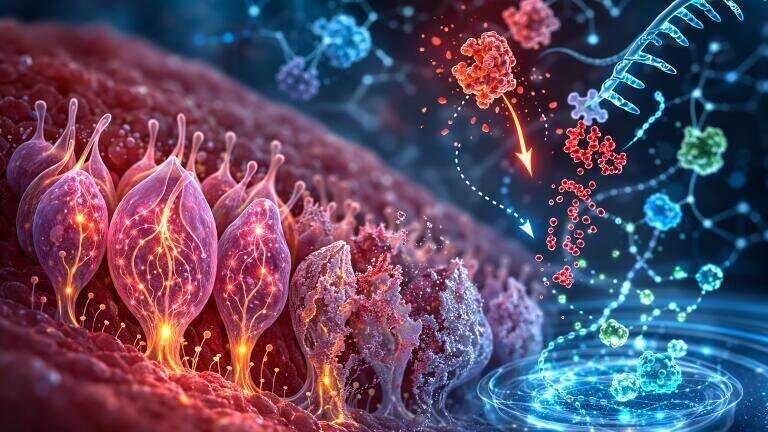
They found reduced levels of messenger RNA responsible for production of phospholipase C beta 2 (PLCβ2) a protein that functions as a critical intracellular signal amplifier in cells that detect sweet, bitter and umami stimuli.
“PLCβ2 acts like a molecular amplifier inside taste cells,” said Dr. Thomas Finger, professor of cell and developmental biology at the UCA Medical Campus and corresponding author of the study.
“It strengthens the signal before it is transmitted to the brain. When levels are reduced, the taste signal weakens,” he said.
Cells that detect salty and sour stimuli rely on separate transduction mechanisms that independent of PLCβ2. The preservation of these modalities in many patients therefore aligns with the molecular findings. The selective reduction in PLCβ2 expression provides a mechanistic explanation for why certain taste qualities diminish while others remain functional.
Microscopic examination also revealed structural differences between individuals. Some participants displayed taste buds with typical cellular architecture whereas others showed disorganisation within the tissue.
“Some subjects had normal-looking taste buds while others showed structural disorganisation.
“This suggests that both molecular and architectural changes may contribute to persistent taste dysfunction,” said Finger.
Under normal physiological conditions, taste receptor cells undergo continuous turnover, with replacement every two to four weeks. This regenerative capacity has led many clinicians to assume that long-term dysfunction would prove unlikely once infection resolved.
However, these findings indicate that disruption to intracellular signalling pathways can, in certain individuals, persist for extended periods after the virus has been eliminated from the body.
“Our findings offer measurable evidence of long-term taste disruption in some post-COVID patients long after the virus has been cleared,” the authors wrote.
The study therefore moves the field beyond anecdotal description to quantitative biological measurement. It establishes that persistent post-COVID taste loss can associate with reduced expression of a defined signalling protein and, in some cases, altered tissue organisation.
The authors concluded that further investigation is required to determine whether PLCβ2 expression can fully recover and whether targeted therapeutic strategies could restore normal taste signal transduction in affected patients.
For further reading please visit: 10.1093/chemse/bjaf068
ILM 51.6 Sept 2026




 Product directory




















,-photo-Karin-Allander.jpg)