Research news
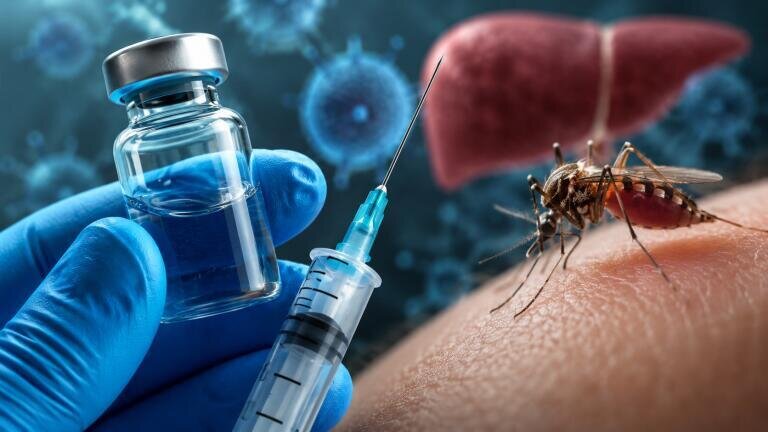
A next-generation malaria vaccine developed at Griffith University has shown potential to provide durable immune protection, reduce liver-stage infection and limit parasite transmission by mosquitoes, while its lack of cold-chain dependence could improve access in malaria-affected regions
Malaria remains one of the world’s most persistent infectious disease threats responsible for more than half a million deaths each year. A next-generation vaccine developed by researchers at Griffith University, Gold Coast, Queensland, Australia, has shown promise not only to provide strong and lasting protection but also to inhibit transmission of the malaria parasite by the female Anopheles mosquito.
The vaccine is also expected to be low cost, while its independence from strict cold-chain storage could markedly improve its practical use in rural and remote regions of the world where malaria remains endemic. Such features are significant because vaccine distribution in many malaria-affected areas can be limited by infrastructure, storage conditions and transport capacity.
Professor Bernd Rehm, director of the Centre for Cell Factories and Biopolymers within Griffith University’s Institute for Biomedicine and Glycomics, led the team that developed the next-gen vaccine, said:
“Existing vaccines offer only partial and short-lived protection and are difficult to distribute across the globe as they require strict refrigeration.
“The difference with our vaccine is that not only does it not require refrigeration but it also takes a different approach when targeting the malaria parasite.
“It attacks two critical stages at once – before infection and during transmission by stopping the parasite from reaching and infecting the liver, [but] also by preventing parasites from developing inside mosquitoes and spreading to others,” Rehm added.
The vaccine uses tiny, safe particles produced by engineered bacteria. These particles acted as a scaffold to display key malaria proteins on their surface, to help train the immune system to recognise and attack the parasite. By targeting more than one stage of the parasite’s life cycle, the approach was designed to give the immune system additional routes to control infection and to reduce the likelihood that the parasite could continue its transmission cycle between mosquitoes and humans.
The dual-target strategy focused on both the early stage of human infection and the mosquito stage of parasite development. In practical terms, this means the vaccine aimed to stop the parasite from reaching and infecting the liver after a mosquito bite, while also reducing the parasite’s ability to develop inside mosquitoes and pass on to other people.
Results from the study showed that the vaccine reduced malaria infection in the liver by up to 80 per cent and completely protected one in four recipients from developing malaria. It also produced antibody levels well above those required for protection and reduced parasite transmission by mosquitoes by approximately two-thirds.
“One of the biggest challenges in malaria-affected regions is keeping vaccines cold and viable while in storage, and during transportation,” said lead author Dr Nivethika Sivakumaran, a research fellow in the Rehm Research Group at Griffith.
The vaccine also provided immune protection for at least six months, a duration that exceeded that of many existing malaria vaccine candidates. This durability may be important for public health programmes because malaria control often depends on sustained protection across seasonal transmission periods and in communities where repeated exposure is common.
“This … vaccine remains stable and effective for at least a month in [up to] 37 °C weather drastically improving [the ability to] access … rural and remote areas,” said co-author Dr Shuxiong Chen, a postdoctoral researcher at the Centre for Cell Factories and Biopolymers at Griffith.
For further reading please visit: 10.1002/smll.202508762
ILM 51.6 Sept 2026



 Product directory




















,-photo-Karin-Allander.jpg)







.jpg)
