Research news
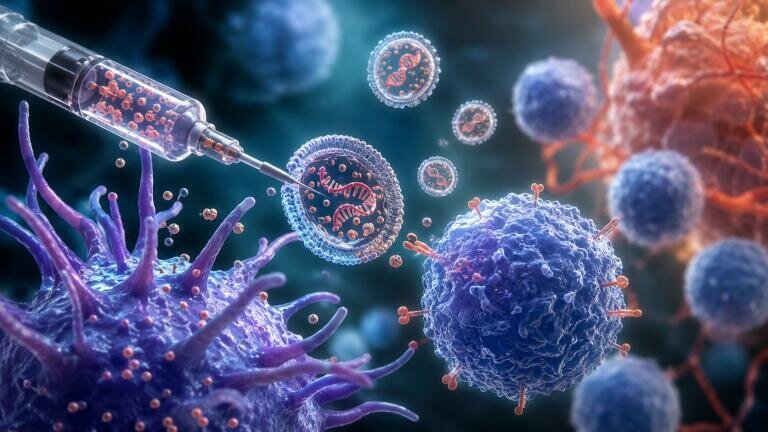
Massachusetts Institute of Technology and Massachusetts General Hospital researchers have developed a messenger RNA vaccine adjuvant that reprogrammed antigen-presenting cells and produced stronger T-cell responses against tumours, influenza and coronavirus disease 2019 in preclinical studies
Massachusetts Institute of Technology (MIT) engineers and collaborators at Massachusetts General Hospital (MGH) have developed a messenger RNA (mRNA) vaccine adjuvant that has amplified T-cell responses in mice, a finding that could support more potent cancer vaccines and stronger protection against infectious diseases.
The study described a strategy to deliver mRNA molecules that encode immune-activating genes directly to antigen-presenting cells. These cells, which include dendritic cells, are central to the way vaccines educate the immune system. They process vaccine antigens and present them to T cells, which can then recognise infected or malignant cells and mount a targeted immune response.
Most vaccines aim to generate both antibodies and T cells against a vaccine antigen. Antibodies can bind to viruses or other targets outside cells, while T cells are especially important when the threat is inside a cell, as in viral infection or cancer. The research team sought to strengthen this cellular arm of immunity through a novel class of adjuvant. Adjuvants are materials added to vaccines to help stimulate immune activity and improve the quality or magnitude of the response.
In the study, the adjuvant consisted of mRNA molecules that encoded two genes, interferon regulatory factor 8 and NF-kappa-B-inducing kinase. Interferon regulatory factor 8 (IRF8) is a transcription factor involved in dendritic cell identity and function. NF-kappa-B-inducing kinase (NIK) is an enzyme that activates immune and inflammatory signalling pathways. Together, the two encoded factors appeared to push dendritic cells towards a more active, T-cell-stimulating state.
In mouse models, the mRNA-encoded adjuvant enabled the immune system to eradicate most tumours, either when used alone or when delivered with a tumour antigen. It also increased the T-cell response to experimental vaccines against influenza and COVID-19.
“When these adjuvant mRNAs are included in the vaccines, the number of antigen-targeted T cells is substantially increased. These T cells play an important role in the immune response, assisting in the clearance of virally infected cells or, in the case of cancer, killing cancerous cells,” said Dr. Daniel Anderson, a professor in the MIT department of chemical engineering and a member of the MIT Koch Institute for Integrative Cancer Research and the Institute for Medical Engineering and Science. Anderson and Dr. Christopher Garris, an assistant professor at Harvard Medical School and MGH, were the senior authors of the study.
Cancer vaccines that stimulate the immune system to attack tumours have shown promise in clinical trials and a small number have received approval from the US Food and Drug Administration (FDA) for specific cancer indications. However, responses can vary between patients. Some individuals generate strong anti-tumour immunity while others mount weaker responses that fail to eliminate malignant cells.
The MIT and MGH team set out to make those responses more powerful. One possible route would be to administer cytokines alongside a vaccine. Cytokines are immune-signalling proteins that can intensify immune activity but they can also overstimulate the immune system and cause serious adverse effects.
The researchers therefore explored a more targeted alternative by using mRNA to make selected immune cells produce intracellular immune regulators. Rather than rely on external immune-stimulating molecules, the approach sought to reprogramme antigen-presenting cells from within.
“We see that the dendritic cells start shifting toward a more conventional type 1 dendritic cells phenotype, which is the most important dendritic cell phenotype and can generate a stronger T-cell response,” Gupta said.
Conventional type 1 dendritic cells are particularly effective at activating cytotoxic T cells, the immune cells that can kill infected or cancerous cells. By encouraging dendritic cells to acquire this phenotype, the adjuvant appeared to strengthen the immunological pathway most relevant to anti-tumour activity.
The team packaged the mRNA in lipid nanoparticles similar in principle to those used for mRNA COVID-19 vaccines. However, the researchers used a different chemical composition to favour delivery to the spleen after intravenous injection. The spleen is rich in immune cells – including dendritic cells – and therefore provides a useful site from which to initiate systemic immune responses.
After the particles reached the spleen, antigen-presenting cells took them up and began to express IRF8 and NIK within 24 hours. The two pathways helped dendritic cells mature and become activated. Over several days to a week, T-cell populations expanded, and those T cells, together with other immune cells such as natural killer cells, could recognise and attack tumours.
“Most cancer immunotherapies rely on external signals to activate immune cells. We take a different approach – reprogramming immune cells from within by targeting their internal signalling machinery, enabling a more potent and durable anti-tumour response,” Das said.
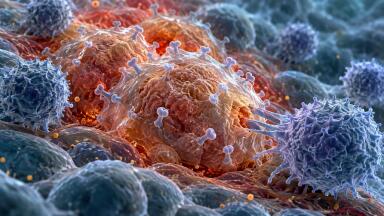
The researchers tested the immune-remodelling mRNAs in several mouse models of cancer, including aggressive bladder cancer, colon carcinoma, melanoma and metastatic lung cancer. In nearly all of the mice, the injected mRNA stimulated a strong T-cell response that significantly slowed tumour growth. In many cases, it completely eradicated tumours.
Notably, anti-cancer effects occurred even when the mice did not receive a vaccine against a defined cancer antigen. When the adjuvant was combined with a cancer-specific antigen, the response was stronger.
“We showed that you can get an anti-cancer response with these adjuvants without including the antigen, just by activating the immune system. However, cancer-specific antigens with the adjuvants in a vaccine further improved the responses,” Anderson said.
The mRNA adjuvant also enhanced responses to checkpoint blockade inhibitors, a class of immunotherapy drug designed to release inhibitory signals that prevent T cells from attacking tumours. Checkpoint inhibitors have been approved by the FDA for several cancer types but they do not benefit all patients. The researchers said the combination of checkpoint blockade with the mRNA adjuvant could offer one route to improve treatment efficacy.
“The microenvironment of solid tumours is often hostile to T cells and represents a major barrier to effective immunotherapy. We find that immune remodelling with these adjuvants creates a T cell–permissive environment and promotes tumour rejection,” Garris said.
The team also examined whether the adjuvant could strengthen vaccine responses against viral infections. When the mRNA particles were delivered with COVID-19 or influenza vaccines, the vaccines generated a 10- to 15-fold stronger T-cell response in mouse models.
The researchers now plan to assess the approach in additional animal models, with the longer-term aim to develop it for both cancer vaccines and infectious disease vaccines. The findings remain preclinical, and results in mice do not guarantee comparable efficacy or safety in humans. However, the work has identified a promising way to use mRNA not only as a vaccine antigen platform, but also as a means to reshape immune-cell behaviour.
“While there are differences between the mouse systems that we’ve worked in and humans, we are optimistic that these adjuvants will work in humans and could improve a range of different vaccines,” Anderson said.
For further reading please visit: 10.1038/s41587-026-03115-2
ILM 51.6 Sept 2026



 Product directory

















,-photo-Karin-Allander.jpg)






.jpg)
