

Research news
Scientists at the La Jolla Institute for Immunology have created a vaccine design pipeline to target conserved T cell epitopes across viral families. The approach could lead to universal vaccines capable of protecting against SARS-CoV-2 variants as well as other pathogens with pandemic potential
Researchers at the La Jolla Institute for Immunology (LJI), California, have developed a vaccine design pipeline intended to protect against multiple viruses, including emerging variants of SARS-CoV-2. The work aims to advance the development of so-called universal vaccines to address entire viral families rather than single pathogens.
“Our pipeline is challenging that approach,” said Dr Alba Grifoni, Research Assistant Professor at LJI, referring to the traditional practice of formulating vaccines to protect against only one pathogen.
She explained that LJI’s method could enable the design of vaccines capable of neutralising novel SARS-CoV-2 variants and other viruses with pandemic potential.
SARS-CoV-2 – which causes COVID-19 – belongs to the coronavirus family that includes the common cold coronaviruses but also Middle East respiratory syndrome coronavirus (MERS-CoV) and severe acute respiratory syndrome coronavirus (SARS-CoV).
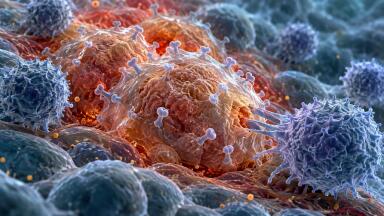
These viruses share conserved protein sequences that have remained unchanged during viral evolution. Such sequences, known as epitopes, have the potential to be recognised by certain cross-reactive T cells – white blood cells that destroy virus-infected cells to prevent infection from spreading.
Previous LJI studies have shown that some of these T cells can target conserved epitopes found in both SARS-CoV-2 and common cold coronaviruses. Dr Grifoni’s group has mapped many of these regions as a foundation for a universal coronavirus vaccine. By identifying where T cells should attack, scientists can design vaccines to elicit robust T cell immunity against a wide range of coronaviruses, potentially including that have not yet emerged.
“It is important to induce a neutralising antibody response.
“But we have shown that T cells are much more stable in the context of viral variants, and that is because T cells look at all the proteins of the virus,” said Dr Grifoni.
The team mined data from the Immune Epitope Database (IEDB) – a public resource created and led by LJI scientists – to examine more than 200 coronavirus epitopes identified globally. Collaborating with virologists at the J. Craig Venter Institute, they applied bioinformatic and artificial intelligence tools to detect hidden similarities across coronaviruses, both in the spike protein and in other viral proteins.
This analysis has yielded a guide to elicit cross-reactive T cell responses, which Dr Grifoni said could help to reduce the severity of disease if a novel coronavirus emerges. Beyond coronaviruses, the pipeline could be applied to other viral families, such as paramyxoviruses, enteroviruses, and haemorrhagic fever viruses, to identify conserved T cell targets.
“Our laboratory is collaborating with research groups that are interested in many different viral families.
“We need to fill the knowledge gaps,” said Dr Grifoni.
For further reading please visit: 10.1016/j.cell.2025.07.015
ILM 51.6 Sept 2026



 Product directory


















,-photo-Karin-Allander.jpg)







.jpg)
