Research news
Memorial Sloan Kettering researchers have developed an investigational CAR T cell therapy that targets U5 snRNP200, a protein found on many leukaemia cells but largely absent from healthy blood-forming cells
A research team at Memorial Sloan Kettering Cancer Center, New York , USA has developed an investigational chimeric antigen receptor T (CAR T) cell therapy that may address one of the central obstacles in the treatment of acute myeloid leukaemia (AML): how to kill malignant blood cells without damaging the healthy cells required to restore normal blood production.
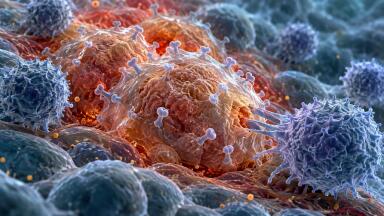
AML is a fast-moving blood cancer in which immature white blood cells proliferate in the bone marrow and interfere with normal haematopoiesis – the process by which the body produces healthy blood cells. Immunotherapy has transformed care in some blood cancers but progress in AML has been limited because many of the proteins available as therapeutic targets are also present on vital blood-forming stem and progenitor cells. Treatment directed at those proteins can therefore injure the very system the patient needs to recover.
The Memorial Sloan Kettering team has now described a novel CAR T cell approach that targets U5 small nuclear ribonucleoprotein 200 (U5 snRNP200). This protein is usually found inside the cell nucleus, where it has a role in RNA processing, but the researchers found that it unexpectedly appeared on the surface of leukaemia cells in about half of patients with AML. Crucially, it was not found at comparable levels on healthy blood-forming cells.
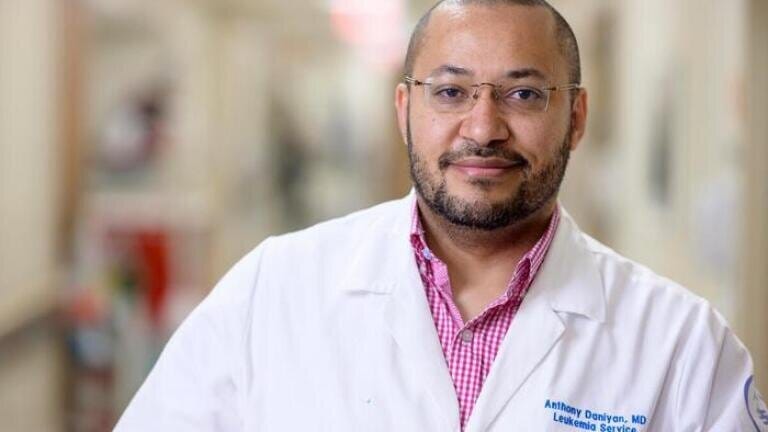
The work was led by Dr Anthony Daniyan, a leukaemia specialist, and Dr Omar Abdel-Wahab, chair of the molecular pharmacology programme at Memorial Sloan Kettering’s Sloan Kettering Institute. The study’s first authors were Dr Takeshi Fujino, a postdoctoral fellow, and Jennifer Lewis, a medical student, both in the Abdel-Wahab laboratory.
The research drew on an unusual source of biological insight whereby antibodies identified in patients with AML whose cancer entered long-term remission after bone marrow transplantation. Antibodies are immune proteins that recognise and bind to specific molecular targets. In this case, the antibodies recognised U5 snRNP200 on the surface of leukaemia cells, which suggested that the immune system had already revealed a possible route to attack the disease more selectively.
“We don’t yet know why this protein ends up on the cell surface but it may create an opportunity to safely target AML cells without damaging a patient’s healthy cells,” said Daniyan.
“We figured out a way to engineer CAR T cells to mirror what was happening in patients in remission, as well as a method to make the approach even more effective by coaxing the cancer cells produce even more of this surface protein,” he added.
CAR T cells are immune cells that have been genetically modified to recognise a selected target on diseased cells. Once the engineered T cells encounter that target, they can bind to the malignant cell and initiate an immune attack.
“Rather than focusing on why treatment fails in AML, we looked for what helps people survive and learned from their success,” said Abdel-Wahab.
Bone marrow transplantation can provide long-term disease control for some patients with AML but many people are not fit enough to undergo the procedure or don’t find a suitable donor. Overall, only about three in 10 patients with AML live for five years or more post-diagnosis. And among those whose cancer is resistant to treatment – or returns after treatment – survival is closer to just one in 10.
“That’s right up there with the cancers we usually talk about as being the most deadly, like lung and pancreatic cancer,” Abdel-Wahab said.
Bone marrow transplantation involves the use of chemotherapy to destroy diseased blood-forming cells in the bone marrow, followed by the infusion of healthy donor blood stem cells to rebuild the patient’s blood production system.
“The procedure can also provide what is known as a graft-versus-leukaemia effect, in which immune cells from the donor identify and attack residual cancer cells in the patient.
“These donors’ antibodies are actually what drive the leukaemia into remission.
“So we said: ‘Why don’t we just let nature be our guide?’ And T cells, which get modified into CAR T cells, are even more potent than antibodies – so our approach combines the best of both worlds,” Daniyan said.
To create the investigational therapy, the researchers used genetic sequences from the remission-associated antibodies and engineered them into CAR T cells. In effect, they created immune cells designed to mimic a successful natural immune response observed after transplantation.
The team then sought to strengthen the therapeutic effect by adding what it described as an ‘armoured’ design. The engineered CAR T cells were genetically modified to secrete interleukin-18 a signalling molecule that can enhance immune responses. According to the researchers, this modification had two important effects by increasing the amount of U5 snRNP200 visible on the surface of cancer cells and helping to support the wider immune response against leukaemia.
In mouse models, the Memorial Sloan Kettering-developed CAR T cells eliminated leukaemia in models of both adult and paediatric AML. The treatment also appeared to generate durable immune protection. When mice that had been successfully treated were exposed to leukaemia again nearly a year later, they remained cancer-free, which suggested that their immune systems had developed a form of long-lasting anti-leukaemia memory.
Importantly, the experimental treatment spared healthy blood-forming cells in laboratory studies. That finding is central to the potential value of the approach because toxicity to healthy haematopoietic cells has been a major barrier to effective immunotherapy in AML.
The researchers also found that the strategy may have relevance beyond AML. The engineered CAR T cells showed activity against B-cell acute lymphoblastic leukaemia (B-ALL), a rapidly progressing blood cancer in which immature B cells accumulate in the bone marrow and blood. The unusual surface expression of U5 snRNP200 was detected in nearly 90 per cent of the B-ALL patient samples tested.
In laboratory studies, the CAR T cells targeted B-ALL cells, including cells that had lost CD19. CD19 is the protein targeted by current CAR T cell therapies for this form of leukaemia but loss of CD19 can allow the disease to escape treatment.
“CD19 loss is a major mechanism of treatment resistance in B-ALL patients who relapse after CD19-directed CAR T cell therapy,” Abdel-Wahab said.
“Our approach could potentially address that challenge,” he added.
The researchers have stressed that the work remains preclinical and will require further development before it can move from the laboratory into clinical trials. However, they have said there are reasons to be encouraged. The target was identified through immune responses seen in patients who achieved long-term remission which may support the case for safety.
In addition, U5 snRNP200 is essential for cell survival, which may make it difficult for leukaemia cells to discard the protein as a route to resist therapy.
“We’re encouraged about our ability to bring these innovations to the clinic to benefit patients with leukaemia,” Abdel-Wahab concluded.
For further reading please visit: 10.1158/2159-8290.CD-25-0920
ILM 51.6 Sept 2026



 Product directory













,-photo-Karin-Allander.jpg)




.jpg)
