Research news
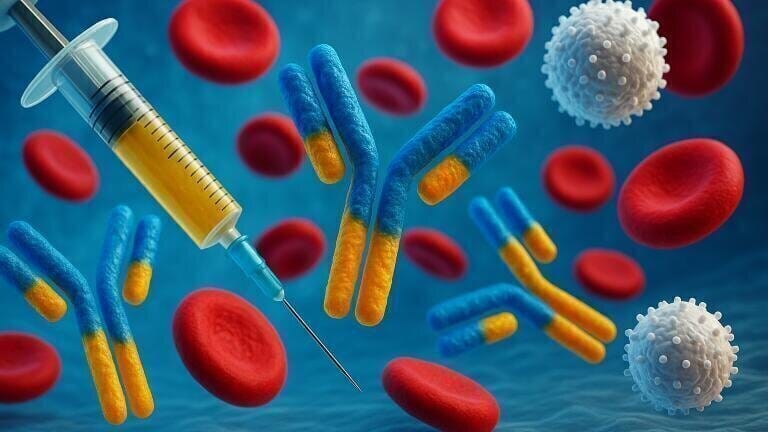
A team of scientists from the University of Virginia (UVA) School of Medicine, Charlottesville, and the University of Michigan, Ann Arbor, has reported the development of a monoclonal antibody which can halt sepsis, a life-threatening systemic infection often referred to as ‘blood poisoning’. The findings have also suggested that the antibody could treat a wide range of other inflammatory conditions, including autoimmune disorders.
In initial experiments in mouse models, the antibody demonstrated versatility and, according to the researchers, showed ‘transformative potential for combatting life-threatening inflammatory diseases’. Possible applications include acute respiratory distress syndrome, which became widely recognised during the COVID-19 pandemic, as well as ischaemia–reperfusion injury, a major challenge in organ transplantation that arises when blood supply is cut off and then restored.
“This is the kind of breakthrough that can change the standard of care,” said Dr. Jianjie Ma, professor of surgery at the UVA and member of the UVA Cancer Center.
“By combining complementary expertise in basic science, innovation and translational medicine – and by working closely with our industry partners – we’ve developed a first-in-class antibody with the potential to save countless lives from sepsis and other severe inflammatory diseases,” he said.
Sepsis affects more than 50 million people worldwide each year and is the cause of around 11 million deaths. It is a leading cause of mortality in hospitals across the United States. The syndrome occurs when the immune system spirals out of control in response to infection, triggering organ failure and in severe cases death. Even with intensive medical intervention, as many as 40% of patients with the most advanced stage of sepsis will die.
Ma and his colleagues have said that their antibody may become the first therapy to directly target the dysregulation of the immune response which lies at the root of sepsis. It is designed to block the cytokine storms that became notorious during the COVID-19 pandemic and so cuts off the immune system’s self-destructive ‘runaway response’ before organ damage can develop.
Early studies have indicated that the antibody achieves this without the side effects of current treatments, such as the unintended suppression of immunity. In preclinical models it halted inflammatory cytokines, restored the function of macrophages, and protected against sepsis-induced lung damage.
The team has also emphasised the diagnostic potential of their work. Their platform which is the pre-equilibrium digital enzyme-linked immunosorbent assay – known as PEdELISA – can measure six cytokines from a single plasma drop, within a two hour period, and in so doing provides a tool to detect and monitor sepsis.
“Our humanised antibody has shown both safety and effectiveness in blocking the cytokine storm and restoring healthy immune function,” said Dr. Yongqing Li, professor at the University of Michigan Medical School.
“Beyond treating acute infections, it has the potential to address a spectrum of diseases caused by faulty immune regulation, including autoimmune disorders, cancer and diabetes,” he added.
The research group has secured $800,000 in funding from Virginia Catalyst to initiate a clinical trial at UVA Health and Virginia Commonwealth University. Virginia Catalyst is a not‑for‑profit organisation – also known as the Virginia Biosciences Health Research Corporation – that accelerates the translation of biomedical research into product commercialisation, to generate high‑quality jobs and strengthen life‑science innovation across the Commonwealth (State) of Virginia.
The antibody has been engineered extensively for clinical use and is seen as having substantial translational potential, particularly in combination with the PEdELISA diagnostic system.
“Integrating PEdELISA with this first-in-class antibody therapy enables a comprehensive approach to sepsis management, allowing not only earlier and more accurate diagnosis but also continuous, near real-time monitoring of the patient’s immune status throughout treatment.
“This integration could facilitate timely therapeutic adjustments, prevent disease progression and ultimately increase the likelihood of achieving complete resolution,” said industry collaborator Guidong Zhu.
As part of their investigations, the scientists have uncovered new details of the molecular drivers of sepsis. They reported that alterations in macrophages create damaging feedback loops that fuel unchecked inflammation – their antibody interrupts these mechanisms.
“UVA is proud to be part of this groundbreaking discovery,” said Dr Melina Kibbe, dean of the University of Virginia School of Medicine.
“Our [UVA] leadership is eager to work hand-in-hand with clinicians and industry partners to move this [laboratory] discovery into the clinic, where it could make the difference between life and death,” she said.
The UVA has filed a patent application relating to the discovery. Ma and Li are co-founders of HTIC Inc., which develops antibodies to regulate immune responses. In January, Ma received the Dean’s Excellence in Faculty Research Award from the UVA School of Medicine.
For further reading please visit: 10.1038/s41467-025-62788-6
ILM 51.6 Sept 2026




 Product directory




















,-photo-Karin-Allander.jpg)