Research news
Study has shown that obesity impairs antibody durability through germinal centre dysfunction while enhancing lung-resident T-cell protection, with implications for vaccine design against antibiotic-resistant pathogens
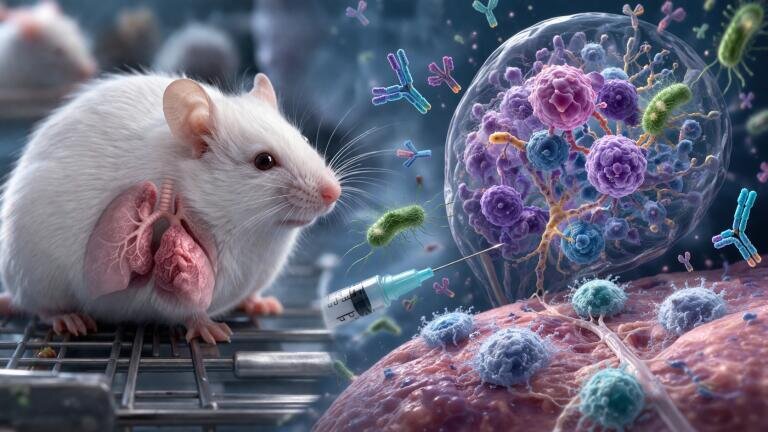
Obesity has significantly impaired both the quality and persistence of antibody responses to a Pseudomonas aeruginosa vaccine in a mouse model, according to recent findings. The study has provided mechanistic insight into how metabolic state can influence vaccine performance and has suggested a need to reconsider how immunisation strategies are designed for populations with obesity.
The research team from the University of Missouri, Columbia, Missouri, USA, reported that defective germinal centre formation lay at the centre of this impaired response. Germinal centres are transient but highly specialised structures within secondary lymphoid organs where B lymphocytes undergo affinity maturation, class switching and clonal expansion to produce high-quality antibodies and long-term immunological memory. In mice with obesity, these processes appeared compromised which resulted in reduced antibody production and diminished durability of the humoral response.
These findings have offered a plausible biological explanation for clinical observations that conventional vaccines – which depend heavily on robust antibody generation – often underperform in individuals with obesity. Given the increasing global prevalence of obesity, this limitation has implications not only for individual protection but also for population-level vaccine effectiveness.
“‘We hope these findings shift the focus of vaccine design and lead to more effective, tailored vaccines for the millions of people living with obesity who are at higher risk for severe respiratory infections,’” said Dr. Wendy L. Picking, a professor in the department of pathobiology and integrative biomedical sciences at the University of Missouri and lead author of the study.
Despite the impaired antibody response, the investigators observed a distinct compensatory mechanism within the lung. The vaccine elicited a strong population of tissue-resident memory T cells within pulmonary tissue. Unlike circulating immune cells, these T lymphocytes remain embedded within the lung epithelium, where they provide rapid, localised immune surveillance at the site of pathogen entry.
In the context of Pseudomonas aeruginosa exposure, these resident memory T cells mediated early and effective protection against infection. Notably, this protective effect was not observed in mice maintained on normal or low-fat diets which suggested that obesity may selectively enhance certain arms of the immune response while suppressing others.
This divergence has underscored the complexity of immune regulation in metabolic disease and has indicated that protective immunity cannot be assessed solely through circulating antibody titres.
“Instead of just trying to boost blood antibody levels, we should intentionally design vaccines that prioritise tissue-resident immunity, ensuring protection directly where pathogens like Pseudomonas enters the body,” Picking added.
Pseudomonas aeruginosa remains a major cause of severe pneumonia, particularly in individuals with obesity where altered immune function and comorbidities can increase susceptibility. The pathogen has also become progressively more difficult to treat due to rising antimicrobial resistance which has intensified efforts to develop effective prophylactic vaccines.
However, vaccine research against Gram-negative bacteria has historically received less attention than viral vaccine development, and studies that examine vaccine efficacy specifically in the context of obesity have been limited.
By establishing a link between metabolic state, germinal centre integrity and tissue-specific immunity, the study has addressed a notable gap in immunological research. It has also raised broader questions about how chronic inflammation, a hallmark of obesity, reshapes immune architecture and function at both systemic and tissue levels.
The research team has indicated that future work will focus on the molecular signals that permit lung tissue-resident memory T cells to activate and function effectively despite the inflammatory environment associated with obesity. Identification of these pathways could enable rational vaccine design to enhance these protective cell populations.
Such an approach could support the development of vaccines that provide consistent and durable protection across diverse metabolic profiles. In doing so, it may be possible to move beyond a one-size-fits-all model of vaccination towards strategies that account for host physiology and immune heterogeneity, particularly in populations at elevated risk of severe respiratory infection.
For further reading please visit: 10.1093/jimmun/vkag052
ILM 51.6 Sept 2026




 Product directory




















,-photo-Karin-Allander.jpg)