Research news
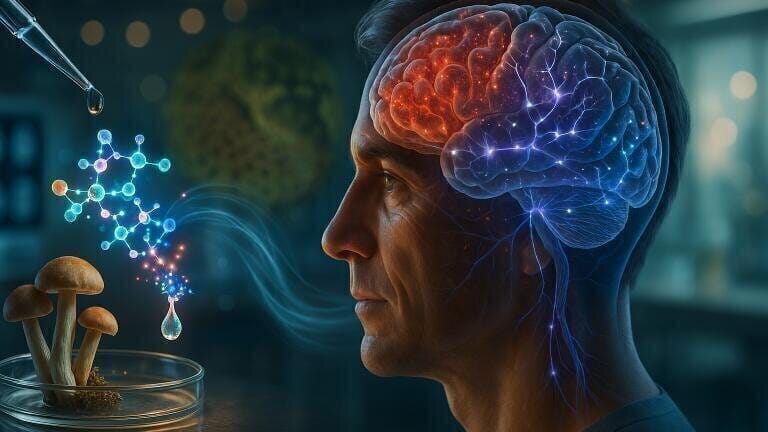
Researchers in Canada have reviewed evidence that psilocybin and 5-MeO-DMT – a tryptamine alkaloid which is a naturally occurring compound in a variety of plant species – may stimulate brain repair after concussion and other forms of traumatic brain injury by reducing inflammation and enhancing neuroplasticity
Concussion and other traumatic brain injuries affect an estimated 69 million people each year as a result of sport collisions, falls, road accidents and other forms of violence. Few treatments exist, and there are no approved pharmacological therapies that have demonstrated consistent benefit.
A review by scientists in the Christie Laboratory at the University of Victoria (UVic), British Colombia, Canada, has highlighted the therapeutic potential of two psychedelic compounds – psilocybin and 5-methoxy-N,N-dimethyltryptamine (5-MeO-DMT) – to repair brain injury by enhancing neuroplasticity and reducing inflammation. Their paper summarises the growing body of preclinical and clinical evidence and saw collaboration with researchers Dr. Leah Mayo at the University of Calgary and Dr. Sandy Shultz at Vancouver Island University.
Psilocybin is found in several species of mushrooms, while 5-MeO-DMT occurs in both toad venom and in certain plants. Over the past decade, clinical research has demonstrated the safety of psilocybin and suggested benefits of both compounds for applications in depression, anxiety, end-of-life distress, substance-use disorders and obsessive-compulsive disorder.
“When someone receives a blow to the head, this sets off a cascade of events in the brain,” said Dr. Josh Allen, a fellow in neuroscience at UVic and one of the review’s authors.
“One of these is inflammation, which can initially help brain tissue to repair.” he added, outlining that when this inflammatory response becomes prolonged, it can cause persistent problems including learning and memory deficits, depression, anxiety and post-traumatic stress disorder.
“These conditions share features such as impaired neuroplasticity that keep patients trapped in rigid loops of thought and behaviour,” said Allen.
“This can occur even after mild traumatic brain injuries – what we call concussion – and many people who play sports or serve in the military experience these injuries repeatedly,” he added.
The researchers emphasised that further study is needed to clarify how psychedelics influence recovery from traumatic brain injury, and to determine how age, sex and other health conditions affect their safety and efficacy. With continued research, these compounds could offer an important therapeutic route for patients and relieve pressure on increasingly burdened health-care systems.
“Our review concluded that classical psychedelics have the potential to reduce inflammation in an injured brain while also increasing neuroplasticity and helping the brain to reorganise, creating new neural pathways to compensate for lost or damaged connections,” said Professor Brian Christie, director of the UVic Concussion Laboratory.
“By reopening windows of plasticity, psychedelics may also help prevent the development of depression, anxiety and other psychiatric disorders associated with brain injury, and offer pathways to recovery,” he concluded.
For further reading please visit: 10.1016/j.pnpbp.2025.111448
ILM 51.6 Sept 2026



 Product directory




















,-photo-Karin-Allander.jpg)








.jpg)
