Research news
Cornell University researchers have shown that transient disruption of meiosis can halt sperm production safely and reversibly, with fertility restored and healthy offspring produced in preclinical models
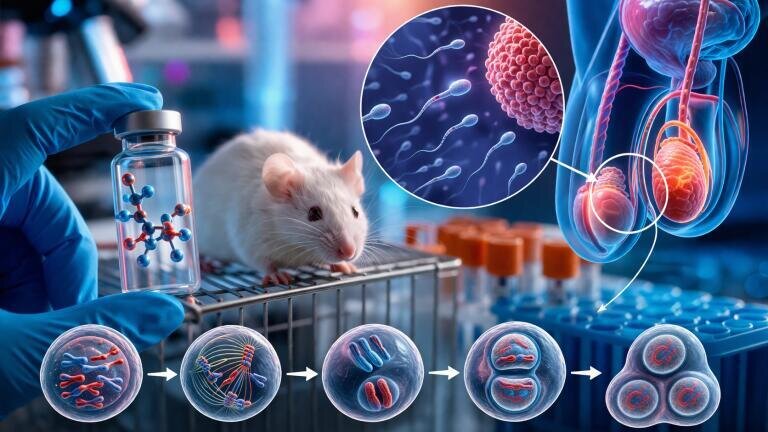
A research team at Cornell University, Ithaca, New York, USA, has reported a significant step towards the long-sought goal of a safe, reversible and long-acting non-hormonal male contraceptive, after a preclinical study has demonstrated complete but temporary suppression of sperm production in mouse models.
The work – which has taken six years to complete – has provided proof of principle that a natural checkpoint within meiosis can serve as an effective and controllable target for contraception. Meiosis is the specialised form of cell division that produces gametes, including sperm and its precise regulation is essential for fertility. By intervening at a defined stage within this process, the researchers have shown that it is possible to halt sperm production without risking permanent damage to the reproductive system.
The team used JQ1, a small-molecule inhibitor originally developed as a research tool to study cancer and inflammatory disease. Although JQ1 has not proved suitable as a therapeutic agent because of neurological side effects, it has remained well characterised for its ability to disrupt prophase I of meiosis, a critical stage during which homologous chromosomes pair and exchange genetic material. This property allowed the investigators to test whether selective interruption of meiosis could provide a viable contraceptive mechanism.
“We’re practically the only group that has pushed the idea that contraception targets in the testis are a feasible way to stop sperm production,” said Dr. Paula Cohen, professor of genetics and director of the Cornell Reproductive Sciences Center.
The study focused on a strategy to arrest spermatogenesis at an early stage – well before the formation of mature spermatozoa. This approach aimed to avoid disruption to spermatogonial stem cells which maintain the capacity for long-term sperm production. Preservation of this stem cell population is critical, as its loss would lead to irreversible infertility. The researchers also sought to prevent progression to later stages such as spermiogenesis where partially developed sperm could retain the capacity to fertilise an egg.
“We did not want to impact the spermatogonial stem cells – because if you kill those a man will never become fertile again,” Cohen said.
In experimental work, male mice received JQ1 over a three-week period. During treatment, the animals produced no detectable sperm, and molecular analyses confirmed widespread disruption of meiotic processes, including altered chromosomal dynamics during prophase I. The intervention effectively shut down the gene expression programmes required to proceed to spermiogenesis.
Crucially, the effect proved reversible meaning that at the cessation of treatment, researchers observed recovery of meiotic activity within six weeks, accompanied by restoration of normal sperm production. Functional testing confirmed that treated males regained fertility and subsequent breeding experiments demonstrated that offspring were healthy and themselves fertile.
“It shows that we recover complete meiosis, sperm function, and more importantly, that the offspring are [entirely] normal,” Cohen said.
The findings address a longstanding challenge in male contraception. At present, options remain limited to barrier methods such as condoms and surgical procedures such as vasectomy. Although vasectomy in some cases is reversable, it is generally regarded as permanent and reversing it requires further surgical intervention. Efforts to develop hormonal male contraceptives have progressed slowly.
By contrast, the present strategy targets a defined biological process within the testis without reliance on systemic hormonal manipulation. This distinction may prove important in efforts to achieve a favourable safety profile, particularly for long-term use in otherwise healthy individuals.
The researchers have suggested that a clinically viable formulation could take the form of a periodic injection – potentially administered every three months – or a transdermal patch designed to maintain consistent drug exposure. Such delivery approaches would need to balance efficacy, reversibility and tolerability, while also addressing the limitations that have been observed with JQ1 itself.
Although translation to human use remains at an early stage, the study has established a mechanistic foundation for non-hormonal male contraception based on reversible control of meiosis. Further work will need to identify compounds with suitable pharmacological properties and minimal off-target effects, as well as to confirm safety and efficacy in human systems.
Taken together, the results have demonstrated that targeted disruption of spermatogenesis at a specific meiotic checkpoint can achieve complete but reversible infertility, with preservation of reproductive capacity and normal offspring outcomes.
For further reading please visit: 10.1073/pnas.2517498123
ILM 51.6 Sept 2026



 Product directory



















,-photo-Karin-Allander.jpg)






.jpg)
