Research news
A team from the universities of Umeå and Ghent has discovered that neutrophils carefully control zinc levels to weaken and kill microbes. The findings overturn long-held assumptions about nutritional immunity and could open novel strategies to boost immune defences and develop treatments for infectious diseases
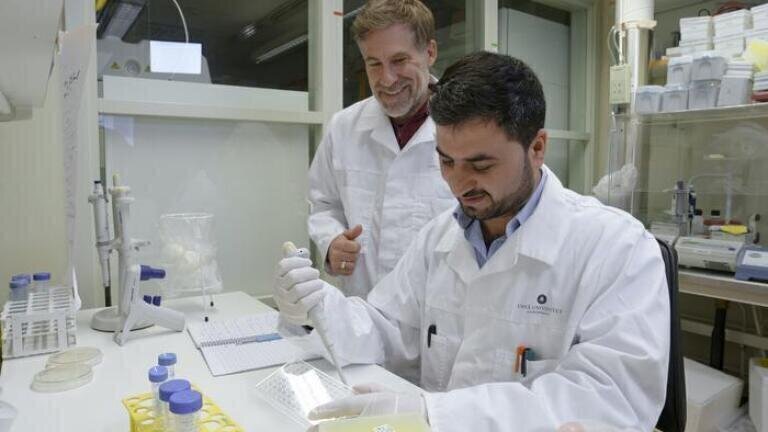
Researchers from Umeå University in Sweden, working with colleagues at Ghent University in Belgium, have reported a significant discovery about the role of zinc in the body’s first line of immune defence. The group has demonstrated how neutrophils – specialised immune cells – orchestrate the mobilisation of zinc to weaken and destroy microbes.
“We show that immune cells drain microbes of zinc, making them more vulnerable. At the same time, the ability of neutrophils to kill microbes is clearly affected by how much zinc is available. Our results reveal the delicate balance of trace metals in the immune system,” said Dr. Constantin Urban, professor at the Department of Clinical Microbiology at Umeå University.
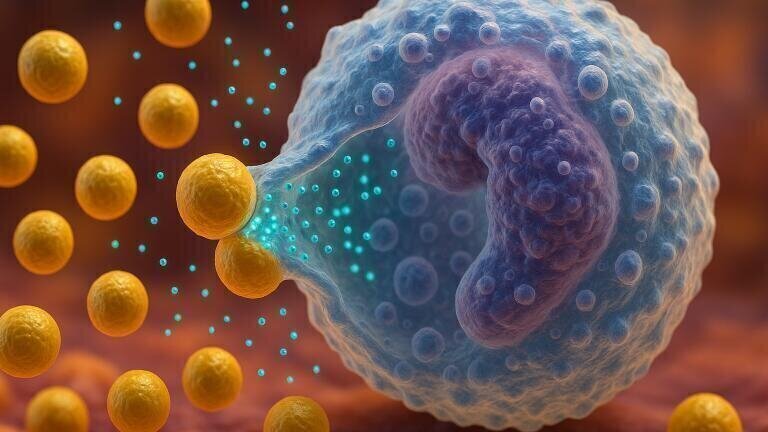
Neutrophils are known to respond rapidly to infections by capturing and killing invading microbes through a process called phagocytosis. During this process, the neutrophil engulfs the microbe with its membrane to form a fluid-filled vesicle – phagosome – inside which the pathogen is digested.
Trace metals such as zinc, copper and manganese are essential for the survival of all living organisms, including both animals and microbes. When infection occurs, the immune system and microbes engage in an intense competition to control these metals, a phenomenon known as nutritional immunity.
Until recently, it was uncertain whether neutrophils could extract zinc ions from microbes once inside the phagosome. The prevailing model suggested that neutrophils poisoned pathogens by flooding the phagosome with excess zinc.
To test this, Urban and his colleagues used high-resolution chemical imaging techniques to observe zinc redistribution in neutrophils in real time during phagocytosis. The researchers employed the model organism Saccharomyces cerevisiae – yeast – to trace these processes. Contrary to expectations, the data revealed that the traditional model was incorrect.
“We can show that the movement of zinc is tightly coordinated by the neutrophils, which dynamically regulate the availability of zinc in the phagosome,” said Dr. Nadeem Ullah, postdoctoral fellow at the Department of Clinical Microbiology at Umeå University.
The study demonstrated that zinc levels influence the efficiency of neutrophils. Low zinc levels enabled yeast cells to be killed more effectively, whereas high zinc levels within the phagocytosed yeast cells significantly impaired the neutrophils’ ability to destroy them. The findings underline the importance of maintaining a finely regulated balance of trace metals to secure an effective immune response.
“Our findings open up novel ways to strengthen the immune system,” said Ullah. He explained that careful adjustment of zinc levels could help neutrophils fight infections more efficiently. A deeper understanding of how metal ions, especially zinc, affect immune cell function could support the development of new therapies for infectious diseases and conditions in which immune activity is compromised.
The team now intends to pursue further studies to investigate the molecular mechanisms behind zinc mobilisation.
“In upcoming projects, we want to identify the membrane transporters that control the flow of zinc ions between the phagosome and the microbe,” said Urban.
For further reading please visit: 10.1016/j.jbc.2025.110485
ILM 51.6 Sept 2026



 Product directory





















,-photo-Karin-Allander.jpg)








.jpg)
