Research news
Researchers at the University of California, San Francisco, have shown that a novel class of spatial insecticides can cut mosquito bites by more than half and protect against malaria, dengue, Zika, yellow fever and West Nile virus for up to one year
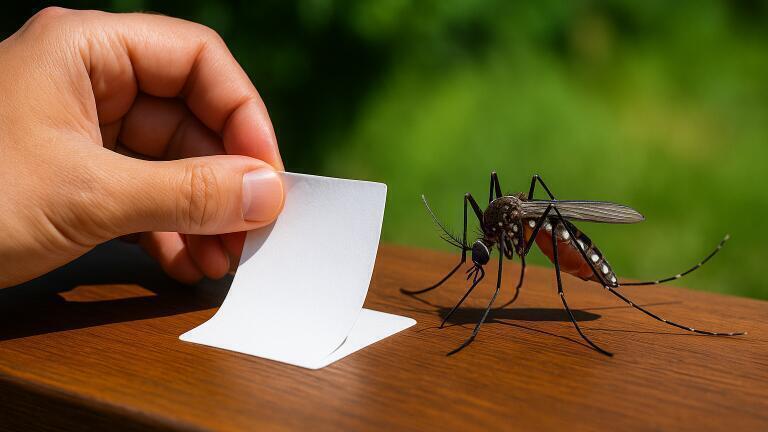
A novel class of insecticide that can be applied to a surface the size of a sheet of paper has offered protection for up to one year against mosquitoes that spread malaria, dengue, West Nile virus, yellow fever, and Zika, according to researchers at the University of California, San Francisco.
In a systematic review of more than 25 years of data covering around 1.7 million mosquitoes, the researchers concluded that this form of repellent – known as a spatial emanator because it releases chemicals into the air – can prevent more than one in every two mosquito bites. The analysis has coincided with a World Health Organization (WHO) recommendation issued in August that supported the use of spatial emanators, marking the first novel vector control product class in more than 40 years.
Spatial emanators can function both day and night and do not require heating or electricity, which makes them suitable for remote areas in Africa, South America and Southeast Asia where malaria remains prevalent.
“We finally have a new way to protect against mosquito bites, especially one that fills in some of the gaps of our existing methods,” said Dr. Ingrid Chen, associate professor of epidemiology and biostatistics at UCSF and first author of the study.
“It’s lightweight, affordable, and easy to use, so it can be used to help save lives in all parts of the world,” she said.
Malaria killed 597,000 people in 2023, most of them children under five years old in sub-Saharan Africa. The disease has not been endemic in the United States since the 1950s, although locally transmitted cases still occasionally occur in states such as Florida and Texas.
WHO has set a goal to reduce malaria mortality rates by at least 90% from 2015 levels and to eliminate the disease in at least 35 countries by 2030. However, progress has slowed in recent years due to factors such as the COVID-19 pandemic, reduced and insufficient funding and increasing levels of resistance to insecticides.
More than 40 mosquito species transmit malaria, each with different biting and resting habits. The Anopheles mosquito – which carries the malaria parasite – mainly bites at night, while the Aedes mosquito – which spreads viruses such as dengue and Zika – tends to bite during the day. This diversity has made it difficult for one strategy to work universally. Insecticide-treated nets protect only at night and indoors, topical repellents are costly and require frequent reapplication and insecticide-treated coils provide limited protection and generate smoke.
Spatial repellents seek to overcome these gaps. They use chemicals similar to those in insecticide-treated bed nets – which are regarded as safe – but in a more volatile form. By pooling research data, the team determined that spatial emanators provide an average protectiveness of 56%, preventing more than half of mosquito bites that would otherwise occur. The devices work against all mosquito species that carry disease, though their efficacy varies.
Three products – BiteBarrier, Mosquito Shield and Guardian – are already in production. BiteBarrier, is the first to reach the US market and provides protection for up to 21 days. Mosquito Shield is effective for around 30 days but Guardian can last up to a year. The WHO recommendation of 13 August enables major donors to subsidise the use of spatial emanators in malaria-endemic countries, specifically with Mosquito Shield and Guardian.
Read the full open access article at: eBiomedicine
ILM 51.6 Sept 2026



 Product directory




















,-photo-Karin-Allander.jpg)







.jpg)
