Research news
Researchers at the University of California San Diego and La Jolla Institute of Immunology have reported a preclinical immunotherapy strategy that redirected pre-existing cytomegalovirus-specific T cells towards pancreatic tumours, delaying tumour growth and extending survival in mouse models
Researchers at the University of California (UC) San Diego, in collaboration with La Jolla Institute of Immunology, have reported a preclinical treatment strategy that used immune memory against cytomegalovirus to attack pancreatic cancer in mouse models. The team said the approach significantly delayed tumour growth and extended survival in preclinical experimentation for one of the most lethal and treatment-resistant malignancies.
Pancreatic cancer remains one of the most difficult cancers to treat. While accounting for a relatively small proportion of cancer diagnoses worldwide, it causes a disproportionately high share of all cancer deaths. That imbalance reflects the nature of this cancer which often presents late, resists treatment and then responds poorly to many therapies that perform well in other tumour types. Standard immunotherapies – which are transforming outcomes for patients with melanoma and lung cancer – have largely failed to deliver the same in pancreatic cancer.
The San Diego research team sought to address that problem through an indirect route. Instead of trying to identify a patient-specific tumour mutation and then build an immune response around it, they used a feature already present in many people, namely pre-existing immunity to cytomegalovirus, a common virus that usually causes little or no illness in healthy individuals but leaves behind a strong and durable immune memory. The strategy was to exploit that pre-existing immune response and redirect it towards cancer cells.
“We were thrilled to see such a strong response in our preclinical studies. By delivering small pieces of viral proteins – cytomegalovirus peptides – to pancreatic tumours, we were able to redirect the virus-specific T cells against the cancer cells,” said co-senior author Dr Tatiana Hurtado de Mendoza, assistant professor of surgery at the UC San Diego School of Medicine.
“Because our strategy relies only on previous immunity against cytomegalovirus and not on the specific characteristics of an individual’s tumour, it has the potential to be an off-the-shelf solution that could be applicable to a large number of patients,” she said.
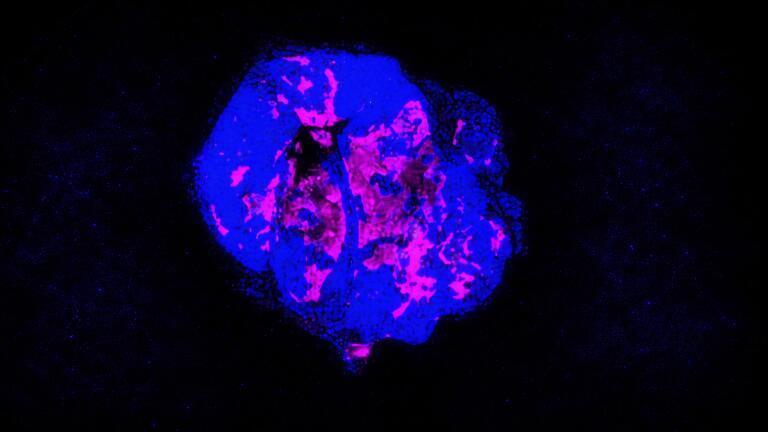
In practical terms, the therapy involved systemic injection of cytomegalovirus-derived peptides, which are short fragments of viral proteins. In mice with prior cytomegalovirus exposure, these peptides re-activated memory T cells that already recognised the virus. When the peptides became associated with the tumour environment, those same immune cells infiltrated the tumour and attacked cancer cells.
The researchers reported that this sequence effectively turned an immunologically ‘cold’ tumour into a target that the immune system could detect and respond to more efficiently.
“Some tumours have plenty of mutations and all of those mutations make these tumours easy for the immune system to see and target,” said co-first author Dr Remi Marrocco, a postdoctoral fellow at La Jolla Institute of Immunology.
“Pancreatic cancer has fewer mutations and a lot of immunosuppressive cells that inhibit immune responses against the tumour. It is a ‘cold’ tumour,” he said.
That distinction matters because many cancer immunotherapies depend on the immune system to recognise abnormal tumour markers. Pancreatic tumours often evade this process, both because they carry fewer obvious molecular signals and because they create a local environment that suppresses immune activity.
By contrast, cytomegalovirus-specific memory T cells are abundant and highly active in many individuals, which makes them an attractive immune population to recruit.
“There are more memory T cells that recognise cytomegalovirus than probably recognise any other known virus or bacteria at this point,” said co-senior author Dr Christopher Benedict, associate professor at La Jolla Institute of Immunology.
“These cells make up literally 10 per cent or more of our memory T cells, which is a huge number,” he said.
The preclinical results were striking. In mice with prior cytomegalovirus infection, treatment with cytomegalovirus peptides delayed tumour growth and increased survival from 25 days in control animals to 42 days in treated animals, which represented a 70 per cent increase.
The researchers also reported minimal toxicity at a well-tolerated dose. Although the peptides were delivered systemically, the immune response appeared to concentrate in the tumours, with no detectable damage to other organs during treatment. The team further reported changes in tumour gene-expression patterns that suggested the cancer cells had become more susceptible to immune attack.
“This therapy represents a significant step forward in the fight against pancreatic cancer, and we’re hopeful that it could provide novel treatment options for patients with limited alternatives,” said co-first author Jay Patel, a research assistant at the UC San Diego.
“Cytomegalovirus-specific T cells have the potential to become a powerful tool in the fight against cancer, and we’re only just beginning to unlock their possibilities,” he added.
The investigators have also begun to extend the concept to other difficult solid tumours, including triple-negative breast cancer. Benedict and Hurtado de Mendoza have recently received funding from a Curebound Discovery Award to support related work in that area. To move the pancreatic cancer strategy closer to clinical evaluation, the team said it is now using humanised mouse models that combine a patient’s tumour tissue with blood-derived immune components in order to recreate cytomegalovirus immunity more faithfully.
The group is also characterising a panel of human cytomegalovirus peptides identified by the Benedict and Sette laboratories at La Jolla Institute of Immunology. That work may help researchers match peptide candidates to an individual patient’s genetic background and optimise immune activation.
“This approach has the potential to be tumour-agnostic, meaning it could be effective against a range of cancer types, including breast cancer, lung cancer and others,” said Hurtado de Mendoza.
“We’re excited to explore its potential in humanised mouse models to bring it one step closer to clinical trials,” she concluded.
If subsequent studies confirm the same pattern in human systems, the approach could offer a practical complement to existing immunotherapy strategies, particularly for cancers that remain resistant to checkpoint inhibitors and other immune-based treatments. For pancreatic cancer, where progress has been slow and prognosis remains poor, that would represent a meaningful shift in the therapeutic landscape.
For further reading please visit: 10.1136/jitc-2025-012969
ILM 51.6 Sept 2026




 Product directory




















,-photo-Karin-Allander.jpg)