Research news
Scientists at UCL have demonstrated how ribonucleic acid and amino acids could have spontaneously linked together four billion years ago, offering fresh insight into the origin of life on Earth
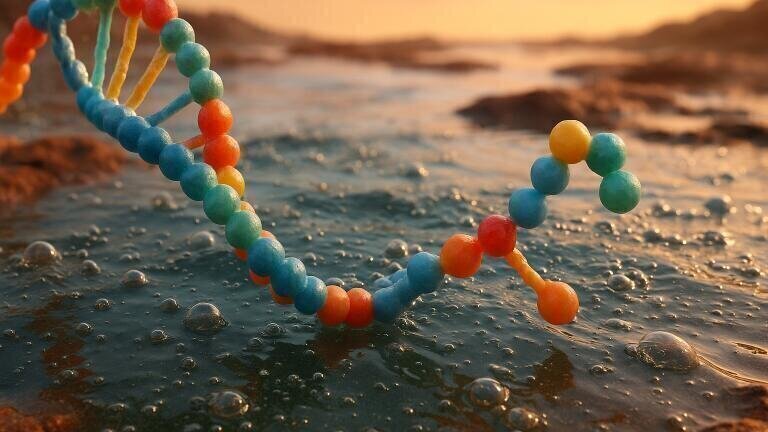
Chemists at University College London (UCL) have demonstrated how two of life’s most fundamental ingredients, ribonucleic acid (RNA) and amino acids, could have spontaneously linked together in the early period of development of the Earth, four billion years ago.
Amino acids form the building blocks of proteins, the ‘workhorses’ of biology that support almost every living process. Yet proteins cannot replicate or create themselves, as they require instructions. These instructions are carried by RNA, the close chemical relative of deoxyribonucleic acid (DNA).
In the study the researchers linked amino acids to RNA under conditions that could have existed on the primordial Earth – a feat that has eluded chemists since the early 1970s.
“Life relies on the ability to synthesise proteins – they are life’s key functional molecules. Understanding the origin of protein synthesis is fundamental to understanding where life came from,” said Professor Matthew Powner, senior author from UCL’s Department of Chemistry.
“Our study is a big step towards this goal, showing how RNA might have first come to control protein synthesis. We have achieved the first part of that complex process, using very simple chemistry in water at neutral pH to link amino acids to RNA.
“The chemistry is spontaneous, selective and could have occurred on the early Earth,” he added.
Life today depends on the ribosome, an elaborate molecular machine that reads instructions from messenger RNA and assembles amino acids one by one to build proteins. By contrast, the UCL team achieved the initial stage of this process through far simpler chemistry.
Earlier attempts to attach amino acids to RNA used highly reactive intermediates that degraded in water and caused the amino acids to react with each other instead of binding to RNA. The UCL group instead took inspiration from biology, using a milder method to activate amino acids by converting them into thioesters – high-energy compounds already theorised to have powered early biochemistry.
“Our study unites two prominent origin of life theories – the ‘RNA world’, where self-replicating RNA is proposed to be fundamental, and the ‘thioester world’, in which thioesters are seen as the energy source for the earliest forms of life,” said Professor Powner.
“There are numerous problems to overcome before we can fully elucidate the origin of life, but the most challenging and exciting remains the origins of protein synthesis,” he added.
The activation step required pantetheine, a sulphur-containing compound. The same team had previously shown that pantetheine could form under prebiotic conditions, suggesting it was likely to have played a role in life’s origins.
“Imagine the day that chemists might take simple, small molecules, consisting of carbon, nitrogen, hydrogen, oxygen, and sulphur atoms, and from these LEGO pieces form molecules capable of self-replication.
This would be a monumental step towards solving the question of life’s origin. Our study brings us closer to that goal by demonstrating how two primordial chemical LEGO pieces (activated amino acids and RNA) could have built peptides, short chains of amino acids that are essential to life,” said Dr Jyoti Singh, lead author from UCL Chemistry.
“What is particularly groundbreaking is that the activated amino acid used in this study is a thioester, a type of molecule made from Coenzyme A, a chemical found in all living cells. This discovery could potentially link metabolism, the genetic code and protein building,” she concluded.
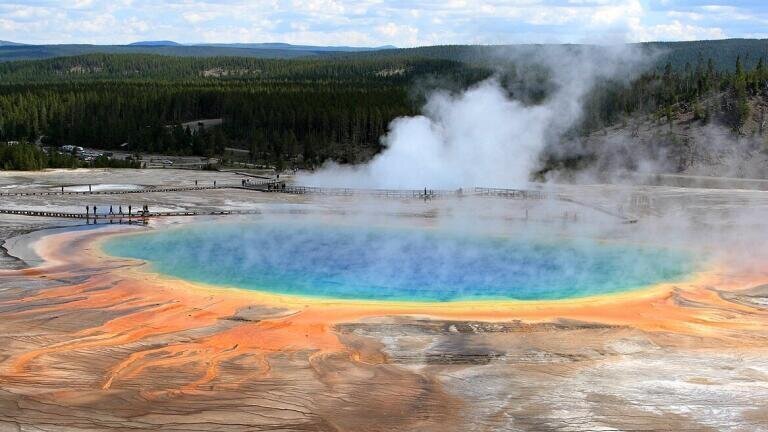
Although the paper focused on chemistry rather than geochemistry, the team said the reactions could plausibly have taken place in small pools or lakes on the early Earth, though they were unlikely to occur in the oceans where concentrations would have been too dilute.
The reactions – invisible under a light microscope – were tracked with techniques that probe molecular structure, including nuclear magnetic resonance and mass spectrometry.
The work received funding from the Engineering and Physical Sciences Research Council, the Simons Foundation and the Royal Society.
For further reading please visit: 10.1038/s41586-025-09388-y
ILM 51.6 Sept 2026



 Product directory













,-photo-Karin-Allander.jpg)




.jpg)
