Research news
Researchers have developed a synthetic biological strategy to enable Clostridium sporogenes to thrive in the low oxygen environments of solid cancers but can still survive with oxygen present
A research team led by the University of Waterloo, Ontario, Canada, has developed a novel synthetic biology platform to treat solid cancers by engineering bacteria that consume tumours from the inside-out. The approach centres on Clostridium sporogenes, a soil-dwelling bacterium that only usually grows in the complete absence of oxygen to exploit a long-recognised feature of tumour biology that the necrotic, oxygen-deprived core that forms as malignant cells outstrip their blood supply.
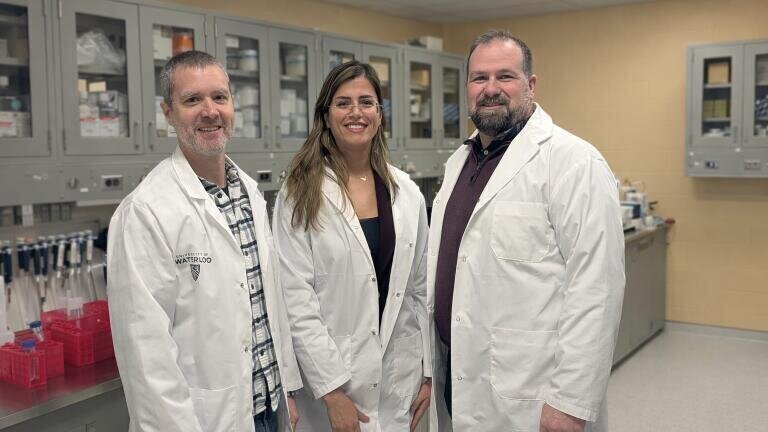
“Bacteria spores enter the tumour, finding an environment where there are lots of nutrients and no oxygen – which this organism prefers – and so it starts eating those nutrients and growing in size,” said Dr Marc Aucoin, a professor of chemical engineering at the University of Waterloo.
“So, we are now colonising that central space and the bacterium is essentially ridding the body of the tumour,” he added.
Solid tumours frequently contain a hypoxic core composed of dead and dying cells. This region lacks functional blood vessels and therefore an oxygen supply. For obligate anaerobes – such as Clostridium sporogenes – this hostile microenvironment for human cells represents a permissive niche in the fight against cancer.
Once spores reach this region, they germinate, proliferate and consume available nutrients. The concept of bacterium-mediated tumour therapy has existed for decades, but clinical translation has proved difficult because of safety concerns and incomplete tumour clearance.
The central obstacle lies at the tumour periphery. As bacteria proliferate and approach the outer margin of a mass, they encounter low but measurable oxygen concentrations. For strict anaerobes, even limited oxygen exposure proves lethal. The result is incomplete tumour destruction, as bacteria die before they can eradicate malignant cells at the invasive front.
To address this biological constraint, the Waterloo team introduced a gene from a related bacterium that confers improved tolerance to oxygen. The modification aimed to extend bacterial survival in partially oxygenated regions without allowing unrestricted growth in healthy, well-oxygenated tissues. The researchers first demonstrated in one study that Clostridium sporogenes could tolerate oxygen after genetic modification.
However, enhanced oxygen tolerance carries inherent risk. If bacteria survive too well in oxygen-rich environments such as blood, they could proliferate outside the tumour and cause systemic infection. To mitigate this danger, the team incorporated a regulatory mechanism based on quorum sensing, a process through which bacteria communicate via chemical signals.
In quorum sensing, individual bacteria release small signalling molecules into their environment. As the bacterial population expands, the concentration of these molecules rises. Only when a threshold concentration is reached does gene expression activate. The researchers designed their system so that the oxygen-resistance gene would switch on only after sufficient bacterial accumulation within a tumour. This strategy sought to ensure that gene activation occurs at the correct time and place.
In a follow-up study, the team validated the quorum sensing circuit by programming bacteria to produce a green fluorescent protein, a commonly used biological reporter. The appearance of fluorescence confirmed that the genetic switch responded as designed to population density.
“Using synthetic biology, we built something like an electrical circuit, but instead of wires we used pieces of DNA,” said Dr Brian Ingalls, a professor of applied mathematics at the University of Waterloo.
“Each piece has its job. When assembled correctly, they form a system that works in a predictable way,” he added.
The use of synthetic gene circuits reflects a broader shift in biomedical engineering. Rather than rely on naturally occurring regulation pathways, researchers now design modular systems with defined inputs and outputs. In this case, the input consists of a quorum sensing signal that reflects bacterial density within a tumour, while the output is activation of oxygen tolerance. The objective is to achieve spatial and temporal control over bacterial behaviour.
The investigators have now planned to combine the oxygen-resistant gene and the quorum sensing regulatory module within a single bacterial strain. Pre-clinical trials in tumour models are expected to assess both efficacy and safety. Such studies must evaluate not only tumour regression but also biodistribution, immune response and potential systemic toxicity.
The project has emerged from doctoral research led by Bahram Zargar, who received supervision from Dr Ingalls and Dr Pu Chen, a retired professor of chemical engineering at the University of Waterloo.
The University of Waterloo partnered with the Center for Research on Environmental Microbiology, known as CREM Co Labs, a Toronto-based company co-founded by Dr Zargar. The group includes Dr Sara Sadr, a former Waterloo doctoral student who played a leading role in the research.
Although bacterium-based cancer therapy remains experimental, the controlled genetic engineering described in this programme represents a measured attempt to address longstanding limitations. If pre-clinical data confirm safety and tumour eradication, the approach could expand the repertoire of biologically targeted cancer treatments that complement surgery, chemotherapy and immunotherapy.
For further reading please visit: 10.1021/acssynbio.5c00628
ILM 51.6 Sept 2026



 Product directory



















,-photo-Karin-Allander.jpg)