
Research news
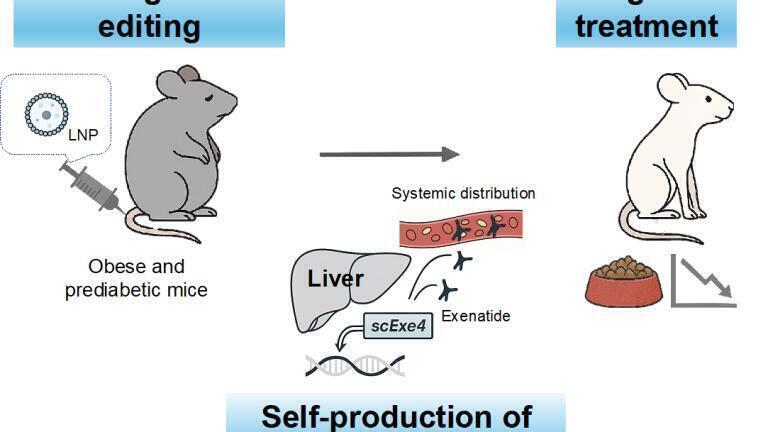
Researchers at Osaka University, Japan have reported a genome editing strategy that allowed mice to produce their own weight loss ‘medication’ following a single intervention. The approach resulted in prolonged appetite suppression, improved blood glucose control and reduced weight gain – with no observable adverse effects.
The team introduced a protein-coding gene that enabled the mice’s liver cells to manufacture Exenatide – a glucagon-like peptide-1 (GLP-1) receptor agonist – typically administered by injection to treat obesity and pre-diabetes. Unlike traditional genome editing methods that correct faulty genes, this approach added a gene with therapeutic function.
Genome editing potential to be transformative offering novel treatment strategies for monogenic conditions. However, its applicability to multifactorial diseases such as obesity, diabetes and cardiovascular disorders has remained limited. These diseases are leading contributors to global mortality and require novel therapeutic solutions.
“An alternative to genome editing for many complex and non-genetic diseases is biologic medications, which are essentially injectable proteins,” said Keiichiro Suzuki, senior author of the study.
“These medications do not persist in the body, and so they often require frequent injections to maintain therapeutic levels,” he added.
To address this limitation, the researchers combined elements of biologics with gene therapy. Following the gene insertion, the mice maintained elevated blood levels of Exenatide for several months. This effect was achieved by creating a reservoir of the therapeutic agent in the liver, ensuring a continuous release into the bloodstream.
Compared with untreated animals, the genome-edited mice showed reduced food intake and significantly less weight gain. They also demonstrated better glucose metabolism and insulin sensitivity – both critical to the control of Type 2 diabetes – without signs of toxicity or immune reaction.
Suzuki noted that the one-time genetic treatment could potentially be adapted to other complex diseases that lack a single genetic cause. The work has suggested a route to sustained in vivo drug production, which may improve treatment adherence and long-term outcomes.
For further reading please visit: 10.1038/s43856-025-00959-8
ILM 51.6 Sept 2026



 Product directory





















,-photo-Karin-Allander.jpg)








.jpg)
