Research news
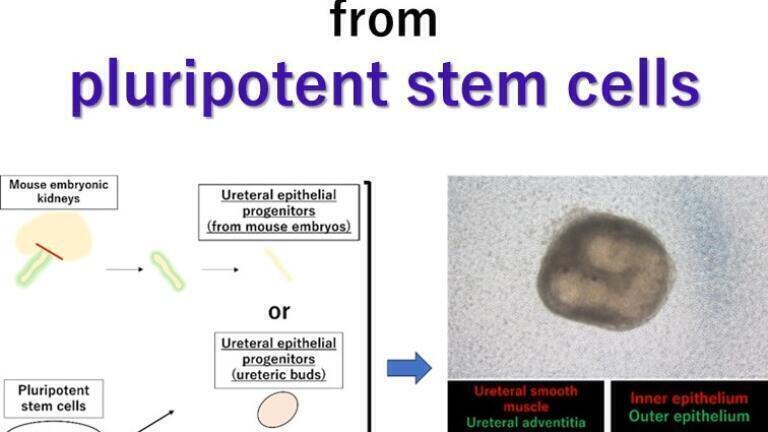
Scientists at Kumamoto University have achieved a breakthrough in regenerative medicine by creating functional ureter tissue - miniature organoids that mimic the urinary tract - from pluripotent stem cells. This advance brings the development of lab-grown kidneys capable of producing and expelling urine one step closer to reality.
The ureter, the tube connecting kidneys to the bladder, has been absent in previous kidney organoid models, limiting their ability to simulate full organ function. By combining induced ureteral stromal progenitors with epithelial components derived from mouse embryos or stem cells, the researchers produced three-layered ureteral structures capable of rhythmic contractions similar to natural urine flow.
The team also used this platform to model genetic ureteral disorders, offering a new tool for studying congenital urinary tract diseases. Professor Ryuichi Nishinakamura, leading the project, highlighted that integrating these ureter organoids with kidney organoids could eventually enable the creation of fully functional, transplantable kidneys.
This study [1] is part of the ‘Creating a Kidney: A Global Network to Generate Transplantable Kidney Organoids’ project, supported by the Japan Society for the Promotion of Science (JSPS), which unites researchers worldwide to advance kidney regenerative therapies.
More information online
1. In vitro generation of a ureteral organoid from pluripotent stem cells published in Nature Communications,
ILM 51.6 Sept 2026



 Product directory


















,-photo-Karin-Allander.jpg)






.jpg)
